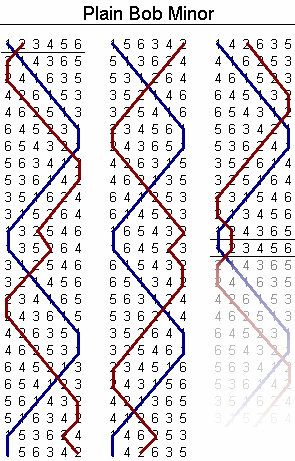
File:Plain-bob-minor_2.png · Wikimedia Commons · See Wikimedia Commons
combinatorics
Sign in to saveAlso known as combinatorial analysis, combinatorial mathematics, combinatorial theory
Combinatorics is an area of mathematics primarily concerned with counting, both as a means and as an end to obtaining results, and certain properties of finite structures. It is closely related to many other areas of mathematics and has many applications ranging from logic to statistical physics and from evolutionary biology to computer science.
Combinatorics is the branch of mathematics focused on counting things and understanding the properties of finite collections—tools that turn out to be surprisingly useful across many fields. It matters because these counting techniques help solve practical problems in areas as varied as computer science, biology, physics, and logic.
AI-generated from the Wikipedia summary — may contain errors.
Wikidata facts
- Part of
- discrete mathematics
- Named after
- combination
- Image
- Countingprinciple.svg
Show 7 more facts
- Commons category
- Combinatorics
- topic's main category
- Category:Combinatorics
- is the study of
- combination
- ACM Classification Code (2012)
- 10003625
- on focus list of Wikimedia project
- Wikipedia:Vital articles/Level/4
- maintained by WikiProject
- WikiProject Mathematics
- Stack Exchange tag
- or.stackexchange.com/tags/combinatorics
Sources (7)
via Wikidata · CC0
~20 min read
Encyclopedic overview
29 sectionsContents
- Definition
- History
- Approaches and subfields of combinatorics
- Enumerative combinatorics
- Analytic combinatorics
- Partition theory
- Graph theory
- Design theory
- Finite geometry
- Order theory
- Matroid theory
- Extremal combinatorics
- Probabilistic combinatorics
- Algebraic combinatorics
- Combinatorics on words
- Geometric combinatorics
- Topological combinatorics
- Arithmetic combinatorics
- Infinitary combinatorics
- Related fields
- Combinatorial optimization
- Coding theory
- Discrete and computational geometry
- Combinatorics and dynamical systems
- Combinatorics and physics
- See also
- Notes
- References
- External links
Combinatorics is an area of mathematics primarily concerned with counting, both as a means and as an end to obtaining results, and certain properties of finite structures. It is closely related to many other areas of mathematics and has many applications ranging from logic to statistical physics and from evolutionary biology to computer science.
Combinatorics is well known for the breadth of the problems it tackles. Combinatorial problems arise in many areas of pure mathematics, notably in algebra, probability theory, topology, and geometry, as well as in its many application areas. Many combinatorial questions have historically been considered in isolation, giving an ad hoc solution to a problem arising in some mathematical context. In the later twentieth century, however, powerful and general theoretical methods were developed, making combinatorics into an independent branch of mathematics in its own right. One of the oldest and most accessible parts of combinatorics is graph theory, which by itself has numerous natural connections to other areas. Combinatorics is used frequently in computer science to obtain formulas and estimates in the analysis of algorithms.
Excerpted from Wikipedia’s “combinatorics” article, available under the CC BY-SA 4.0 licence.
Gallery (350)
Available in 80 languages
- Español
- Français
- Deutsch
- 中文
- 日本語
- Русский
- Português
- Italiano
- العربية
- हिन्दी
- Albanian
- Amharic
- Armenian
- Asturian
- Azerbaijani
- Bahasa Indonesia
- Bangla
- Basque
Show 61 more
- bat_smg
- be_x_old
- Belarusian
- Bosnian
- Bulgarian
- Burmese
- Catalan
- Chuvash
- Croatian
- Czech
- Danish
- Esperanto
- Estonian
- Filipino
- Finnish
- Galician
- Gan Chinese
- gcr
- Georgian
- Greek
- Hebrew
- Hungarian
- Iban
- Icelandic
- Ido
- Jamaican Creole English
- Kazakh
- Kyrgyz
- Latin
- Latvian
- Lingua Franca Nova
- Lithuanian
- Macedonian
- Malay
- Mongolian
- Nederlands
- Norwegian
- Norwegian Nynorsk
- Polski
- Romanian
- Serbian
- Serbian (Latin)
- simple
- Slovak
- Slovenian
- Svenska
- Tamil
- Tatar
- Tiếng Việt
- Türkçe
- Ukrainian
- Urdu
- Uzbek
- Welsh
- Wu Chinese
- Yakut
- Yiddish
- zh_yue
- فارسی
- ไทย
- 한국어
via Wikidata sitelinks · CC0