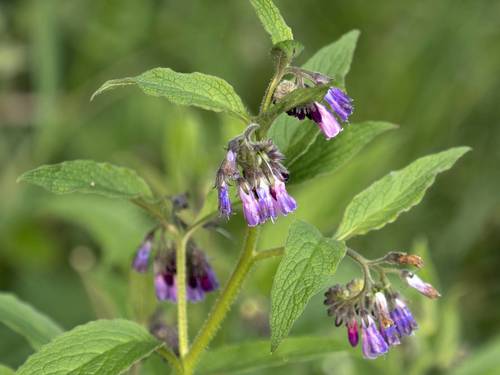
(c) Wolfgang Bettighofer, some rights reserved (CC BY-NC), uploaded by Wolfgang Bettighofer · cc-by-nc
Consolida
Sign in to saveConsolida is a genus of about 40 species of annual flowering plants in the family Ranunculaceae, native to western Europe, the Mediterranean and Asia. Phylogenetic studies show that Consolida is actually an annual clade nested within the genus Delphinium and it has been treated as a synonym of Delphinium in Kew's Plants of the World Online. The name of the genus comes from an archaic use of consolidation, meaning "healing", in reference to the plant's medieval use for healing wounds.
Species
common comfrey
CLASS
- KingdomPlantae
- PhylumTracheophyta
- ClassMagnoliopsida
Die Feldrittersporne (Consolida) sind eine Pflanzengattung aus der Familie der Hahnenfußgewächse (Ranunculaceae). Sie sind den Ritterspornen (Delphinium) ähnlich und mit ihnen nahe verwandt. Es gibt etwa 40 Arten in dieser Gattung, alle sind einjährige Pflanzen. Die Pflanzenteile enthalten Diterpen-Alkaloide und sind deshalb giftig.
via GBIF · Kew POWO
Museum specimens
- Specimen records
- 178
- With media
- 62
- Family
- Ranunculaceae
- Collections
- MICH, NHMUK, MEL, CAS, UCSC
- Recorded in
- Kazakhstan, United Kingdom, Turkey, Romania, Pakistan, Croatia, Austria, Belgium
Wikidata facts
- Instance of
- taxon
- Parent taxon
- Ranunculaceae
- Image
- Consolida regalis 030705.jpg
Show 7 more facts
- taxon rank
- genus
- taxon name
- Consolida
- Commons category
- Consolida
- topic's main category
- Category:Consolida
- taxon common name
- ostrožica
- described by source
- Encyclopædia Britannica 11th edition
Sources (2)
via Wikidata · CC0
~4 min read
Encyclopedic overview
3 sectionsContents
- Species
- Toxicity
- References
Consolida is a genus of about 40 species of annual flowering plants in the family Ranunculaceae, native to western Europe, the Mediterranean and Asia. Phylogenetic studies show that Consolida is actually an annual clade nested within the genus Delphinium and it has been treated as a synonym of Delphinium in Kew's Plants of the World Online. The name of the genus comes from an archaic use of consolidation, meaning "healing", in reference to the plant's medieval use for healing wounds.
Consolida differs from other species of Delphinium (mostly perennials) in the flower structure, with only one united petal, rather than the four separate petals (or more in cultivars) found in other delphiniums, and in the fruit, which comprises a single follicle, instead of a cluster of three to five together.
Excerpted from Wikipedia’s “Consolida” article, available under the CC BY-SA 4.0 licence.