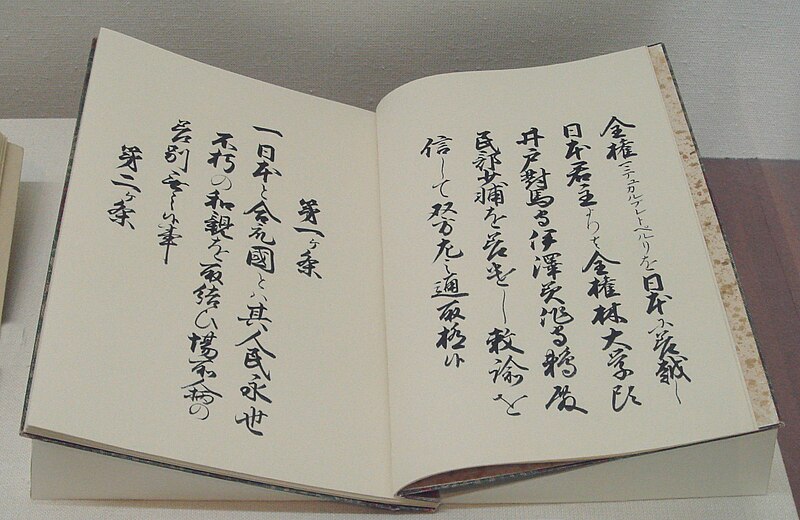
Convention of Kanagawa
Also known as Kanagawa Treaty, Treaty of Kanagawa, Japan–US Treaty of Peace and Amity, Japan-US Treaty of Peace and Amity
treaty
Key facts
- Signed
- 31 March 1854 ( 1854-03-31 )
- Location
- Yokohama , Japan
- Sealed
- March 31, 1854
- Effective
- September 30, 1855
- Condition
- Ratification by US Congress, signing by President Franklin Pierce and signing by Emperor Kōmei
- Signatories
- Japan United States
- Depositary
- Diplomatic Record Office of the Ministry of Foreign Affairs (Japan)
- Languages
- English Japanese
via Wikipedia infobox
Wikidata facts
- Official name
- 日本国米利堅合衆国和親条約
- Image
- Ratification of the Japan USA Treaty of Peace and Amity 21 February 1855.jpg
Show 3 more facts
~13 min read
Article
The Convention of Kanagawa, also known as the Kanagawa Treaty (神奈川条約, Kanagawa Jōyaku) or the Japan–US Treaty of Peace and Amity (日米和親条約, Nichibei Washin Jōyaku), was a treaty signed between the United States and the Tokugawa Shogunate on March 31, 1854. Signed under threat of force, it effectively meant the end of Japan's 220-year-old policy of national seclusion (sakoku) by opening the ports of Shimoda and Hakodate to American vessels. It also ensured the safety of American castaways and established the position of an American consul in Japan. The treaty precipitated the signing of similar treaties establishing diplomatic relations with other Western powers.
Isolation of Japan