File:Copyleft.svg · Wikimedia Commons · See Wikimedia Commons
copyleft
Sign in to saveAlso known as 🄯, copyleft licensing
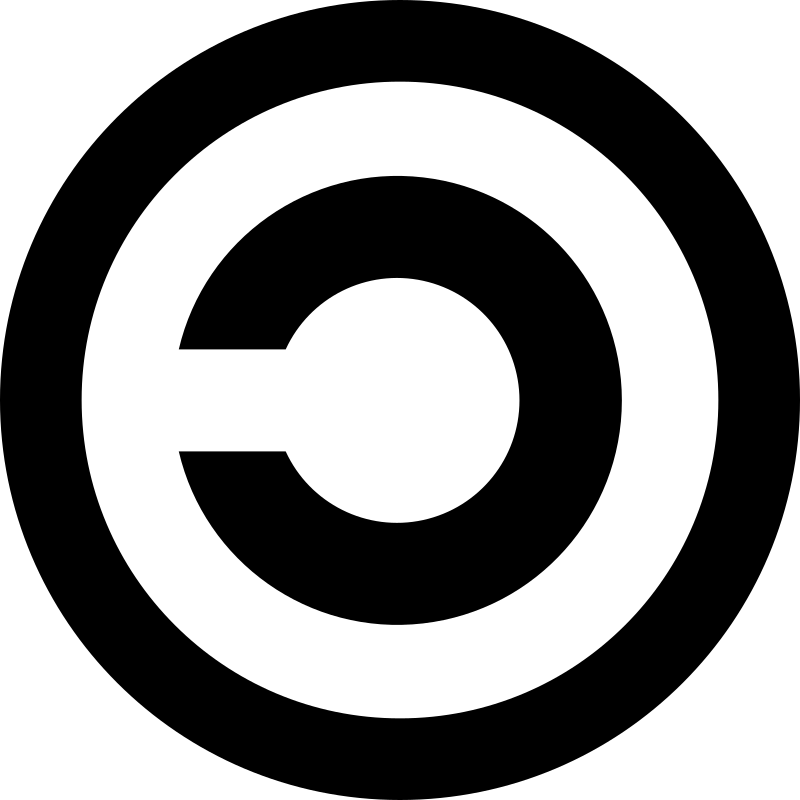
265px|thumb|alt=Capital letter C flipped around its vertical axis, surrounded by a single line forming a circle.|Copyleft symbol
Copyleft is a licensing approach that uses copyright law to ensure software (or other creative works) remains free and open for others to use, modify, and share. It matters because it creates a legal framework that prevents people from taking these freely available works and turning them into proprietary products, keeping them accessible to everyone.
AI-generated from the Wikipedia summary — may contain errors.
Key facts
- Symbol.mark
- ©
- Symbol.name
- Copyleft symbol
- Symbol.unicode
- 🄯
via Wikipedia infobox
Wikidata facts
- Subclass of
- economics of property rights
- Named after
- left-wing
- Based on
- copyright
- Movement
- free-culture movement
- Developer
- الجميع
- Has use
- free content
Show 10 more facts
- described at URL
- [email protected]
- different from
- share-alike
- discoverer or inventor
- Richard Stallman
- topic's main category
- Category:Copyleft
- Commons category
- Copyleft
- Unicode character
- 🄯
- partially coincident with
- open educational resource
- uses
- share-alike
- opposite of
- copyright
- P13411
- Jim Clark
via Wikidata · CC0
~24 min read
Encyclopedic overview
17 sectionsContents
- History
- Copyleft principles
- Freedom
- Reciprocity
- Economic incentive
- Copyleft application
- Types and relation to other licenses
- Strong and weak copyleft
- Full and partial copyleft
- Share-alike
- Permissive licenses
- Debate and controversy
- "Viral" licensing
- Symbol
- See also
- References
- External links
265px|thumb|alt=Capital letter C flipped around its vertical axis, surrounded by a single line forming a circle.|Copyleft symbol
Copyleft is the legal technique of granting certain freedoms over copies of copyrighted works with the requirement that the same rights be preserved in derivative works. In this sense, freedoms refers to the use of the work for any purpose, and the ability to modify, copy, share, and redistribute the work, with or without a fee. Licenses which implement copyleft can be used to maintain copyright conditions for works ranging from computer software, to documents, art, and scientific discoveries. Similar approaches have been applied to certain patents.
Excerpted from Wikipedia’s “copyleft” article, available under the CC BY-SA 4.0 licence.
Gallery (5)
Available in 64 languages
- Español
- Français
- Deutsch
- 中文
- 日本語
- Русский
- Português
- Italiano
- العربية
- हिन्दी
- Afrikaans
- Albanian
- Armenian
- Asturian
- Azerbaijani
- Bahasa Indonesia
- Bangla
- Basque
Show 45 more
- be_x_old
- Bulgarian
- Catalan
- Croatian
- Czech
- Danish
- Esperanto
- Estonian
- Finnish
- Galician
- Greek
- Hebrew
- Hungarian
- Icelandic
- Interlingua
- Kara-Kalpak
- Kurdish
- Latin
- Latvian
- Lithuanian
- Lombard
- Macedonian
- Malay
- Malayalam
- Mari
- Nederlands
- Norwegian
- Norwegian Nynorsk
- Polski
- Romanian
- Serbian
- Serbian (Latin)
- simple
- Slovak
- Slovenian
- Svenska
- Tamil
- Telugu
- Tiếng Việt
- Türkçe
- Ukrainian
- Wu Chinese
- فارسی
- ไทย
- 한국어
via Wikidata sitelinks · CC0