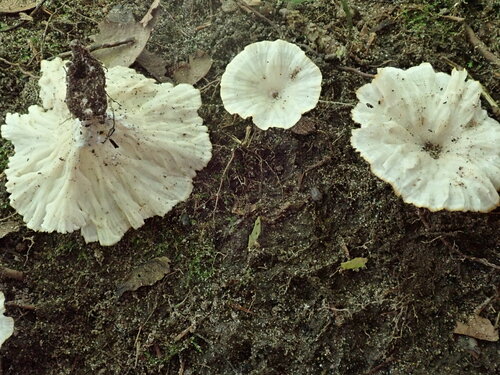
(c) Greg Thorn, some rights reserved (CC BY-NC), uploaded by Greg Thorn · cc-by-nc
Cotylidia
Sign in to saveCotylidia is a fungal genus characterized by small to moderately sized, white to palely yet brightly colored, stalked, fan-shaped to funnel-shaped fruit bodies [https://web.archive.org/web/20070821184454/http://www.fungaljungal.org/family_pages/Cotylidia.htm with a smooth to wrinkled hymenium, tissues composed of monomitic hyphae, basidia producing smooth, nonamyloid spores, the absence of clamp connections, and bearing projecting cylindrical, thin-walled, hymenial cystidia. The genus is classified in the Hymenochaetales, however the type species, C. undulata has not yet been sequenced. P
Species
White Fan Fungus
GENUS
- KingdomFungi
- PhylumBasidiomycota
- ClassAgaricomycetes
- OrderHymenochaetales
- FamilyRickenellaceae
via GBIF
Museum specimens
- Specimen records
- 160
- With media
- 57
- Family
- Rickenellaceae
- Collections
- ECOSUR, NY, LSUM, INSTITUTO NACIONAL DE PESQUISAS DA AMAZÔNIA (INPA)
- Recorded in
- Mexico, United Kingdom, Peru, Brasil
Wikidata facts
- Instance of
- taxon
- Parent taxon
- Repetobasidiaceae
- Image
- Cotylidia aurantiaca 13979.jpg
Show 4 more facts
- Commons category
- Cotylidia
- taxon name
- Cotylidia
- taxon rank
- genus
- taxon author citation
- P.Karst.
Sources (2)
via Wikidata · CC0
~2 min read
Encyclopedic overview
3 sectionsContents
- Etymology
- Species
- References
Cotylidia is a fungal genus characterized by small to moderately sized, white to palely yet brightly colored, stalked, fan-shaped to funnel-shaped fruit bodies [https://web.archive.org/web/20070821184454/http://www.fungaljungal.org/family_pages/Cotylidia.htm with a smooth to wrinkled hymenium, tissues composed of monomitic hyphae, basidia producing smooth, nonamyloid spores, the absence of clamp connections, and bearing projecting cylindrical, thin-walled, hymenial cystidia. The genus is classified in the Hymenochaetales, however the type species, C. undulata has not yet been sequenced. Phylogenetically-related agaricoid fungi to the two species of Cotylidia thus far sequenced are in the genera Rickenella, Contumyces, Gyroflexus, Loreleia, Cantharellopsis and Blasiphalia, and Muscinupta and the clavarioid genus, Alloclavaria.
The ecological status of Cotylidia remains unresolved. They fruit on soil or plant debris, sometimes on burn sites or among bryophytes. The culture characteristics are unknown.
Excerpted from Wikipedia’s “Cotylidia” article, available under the CC BY-SA 4.0 licence.