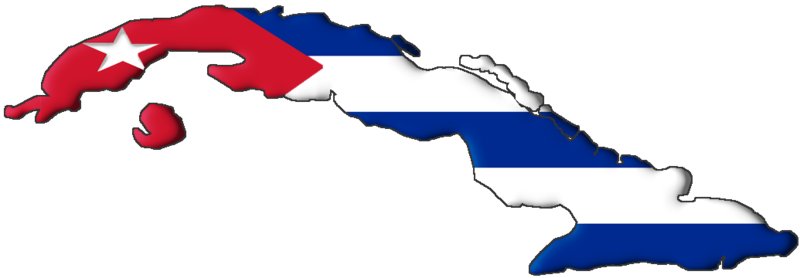
File:Cuba_flag.png · Wikimedia Commons · See Wikimedia Commons
Cubans
Sign in to saveAlso known as Cuban people, Cuba residents
Cubans () are the citizens and nationals of Cuba. The Cuban people have varied origins with the most spoken language being Spanish. The larger Cuban diaspora includes individuals that trace ancestry to Cuba and self-identify as Cuban but are not necessarily Cuban by citizenship. The United States has the largest Cuban population in the world after Cuba.
Key facts
- Ethnic group.group
- CubansCubanos
- Ethnic group.image
- 200px|framelessframeless|250px
- Ethnic group.caption
- Map of the Cuban diaspora around the world
- Ethnic group.population
- Cubans: ~14 million (2024) Diaspora: ~4.3 million
- Ethnic group.popplace
- 9,748,007 (2024)
- Ethnic group.pop1
- 2,948,426 (2024)
- Ethnic group.pop2
- 252,290 (2024)
- Ethnic group.pop7
- 21,305 (2023)
- Ethnic group.pop5
- 28,976 (2025)
- Ethnic group.pop4
- 44,959 (2024)
- Ethnic group.pop6
- 25,976 (2020) **
- Ethnic group.pop8
- 19,545 (2021)
- Ethnic group.pop11
- 10,769 (2020)
- Ethnic group.region10
- Puerto Rico (United States)
- Ethnic group.pop10
- 12,627 (2024)
- Ethnic group.pop9
- 16,116 (2020)
- Ethnic group.pop13
- 6,908 (2020)
- Ethnic group.pop14
- 5,466 (2020)
via Wikipedia infobox
Wikidata facts
- Instance of
- human population
- Named after
- Cuba
- Citizenship
- Cuba
- Languages spoken
- Spanish
- Country
- Cuba
- Located in
- Cuba
- Country of origin
- Cuba
Show 4 more facts
- topic's main category
- Category:Cuban people
- Commons category
- People of Cuba
- female form of label
- cubanes
- indigenous to
- Cuba
Sources (4)
via Wikidata · CC0
~19 min read
Encyclopedic overview
18 sectionsContents
- Racial and ethnic groups
- Census
- White or European
- Multiracial
- Black or African
- East Asian
- Amerindian
- Arabs
- Population changes
- Genetics
- Cuban diaspora
- History
- Culture and traditions
- Religion
- Symbols
- See also
- References
- External links
Cubans () are the citizens and nationals of Cuba. The Cuban people have varied origins with the most spoken language being Spanish. The larger Cuban diaspora includes individuals that trace ancestry to Cuba and self-identify as Cuban but are not necessarily Cuban by citizenship. The United States has the largest Cuban population in the world after Cuba.
The modern nation of Cuba, located in the Caribbean, emerged as an independent country following the Spanish-American War of 1898, which led to the end of Spanish colonial rule. The subsequent period of American influence, culminating in the formal independence of Cuba in 1902, initiated a complex process of national identity formation. This identity is characterized by a blend of Indigenous Taíno, African, and Spanish cultural elements, reflecting a unique multicultural heritage. The Cuban Revolution of 1959, which brought Fidel Castro to power, marked a significant turning point as it transformed the political landscape, reinforced a sense of national identity centered around revolutionary and socialist ideals and led to the continuing Cuban exodus, establishing the Cuban Diaspora.
Excerpted from Wikipedia’s “Cubans” article, available under the CC BY-SA 4.0 licence.
Gallery (28)
Available in 38 languages
- Español
- Français
- 中文
- Русский
- Português
- العربية
- Albanian
- Armenian
- Azerbaijani
- Bahasa Indonesia
- Basque
- Belarusian
- Catalan
- Chechen
- Croatian
- Egyptian Arabic
- Esperanto
- Estonian
Show 19 more
via Wikidata sitelinks · CC0