(c) christiankishida, some rights reserved (CC BY-NC) · cc-by-nc
cui-ui
Sign in to saveAlso known as Chasmistes cujus
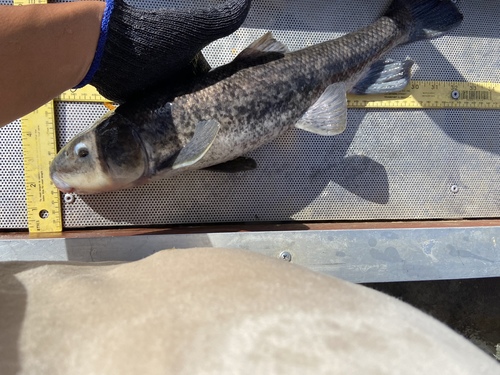
The cui-ui (Chasmistes cujus) is a large sucker fish endemic to Pyramid Lake and, prior to its desiccation in the 20th century, Winnemucca Lake in northwestern Nevada. It feeds primarily on zooplankton and possibly on nanoplankton (such as algae and diatoms). The maximum size of male cui-ui is approximately and , while females reach approximately and . A cui-ui typically lives for 40 years but does not reach sexual maturity until at least age eight. The cui-ui is an endangered species, and one of the few surviving members of its genus.
Species
Cui-ui
Species
- PhylumChordata
- ClassTeleostei
- OrderCypriniformes
- FamilyCatostomidae
via
Wikidata facts
- Instance of
- taxon
- Parent taxon
- Chasmistes
- Image
- Marble bluff cui ui3.jpg
Show 7 more facts
- taxon rank
- species
- IUCN conservation status
- Endangered status
- Commons category
- Chasmistes cujus
- taxon name
- Chasmistes cujus
- taxon common name
- Cui-ui
- CITES Appendix
- Appendix I of CITES
- short name
- C. cujus
Sources (1)
via Wikidata · CC0
~5 min read
Encyclopedic overview
6 sectionsContents
- Pyramid Lake water quality
- Spawning behavior
- Cultural history
- See also
- References
- External links
The cui-ui (Chasmistes cujus) is a large sucker fish endemic to Pyramid Lake and, prior to its desiccation in the 20th century, Winnemucca Lake in northwestern Nevada. It feeds primarily on zooplankton and possibly on nanoplankton (such as algae and diatoms). The maximum size of male cui-ui is approximately and , while females reach approximately and . A cui-ui typically lives for 40 years but does not reach sexual maturity until at least age eight. The cui-ui is an endangered species, and one of the few surviving members of its genus.
The cui-ui population is generally improving in numbers, having attained an estimated population exceeding one million in 1993, thanks to the efforts of the U.S. Environmental Protection Agency in analysis of the Truckee River spawning grounds and of the Nevada Department of Environmental Protection and EPA in following up on protection measures. The reason the cui-ui remains endangered (though upgraded from critically endangered in 2014) is the recent history of recruitment variation, illustrating that in many years of the 1970s and 1980s there was virtually no recruitment whatsoever due to unsuccessful spawning in an unfavorable water quality and water flow environment of the Truckee River. The species' outlook is uncertain since a recovery plan based on an enhanced understanding of Pyramid Lake and Truckee River water quality has been published and U.S. Congress adopted a protection plan.
Excerpted from Wikipedia’s “cui-ui” article, available under the CC BY-SA 4.0 licence.