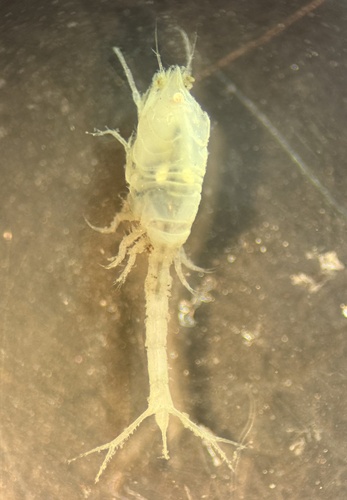
(c) larvalfishguy, some rights reserved (CC BY-NC) · cc-by-nc
Cumacea
Sign in to saveCumacea is an order of small marine crustaceans of the superorder Peracarida, occasionally called hooded shrimp or comma shrimp. Their unique appearance and uniform body plan makes them easy to distinguish from other crustaceans. They live in soft-bottoms such as mud and sand, mostly in the marine environment. There are more than 1,500 species of cumaceans formally described. The species diversity of Cumacea increases with depth.
Species
cumaceans
ORDER
- KingdomAnimalia
- PhylumArthropoda
- ClassMalacostraca
- OrderCumacea
via GBIF
Museum specimens
- Specimen records
- 3,978
- With media
- 266
- Collections
- CAS, USNM, YPM, LACM, MUSEU NACIONAL/UFRJ
- Recorded in
- United States, Panama, Japan, French Polynesia, British Virgin Islands, Brasil
Wikidata facts
- Instance of
- taxon
- Parent taxon
- Peracarida
- Image
- Iphinoe trispinosa.jpg
Show 5 more facts
- Commons category
- Cumacea
- taxon name
- Cumacea
- taxon rank
- order
- topic's main category
- Category:Cumacea
- taxon common name
- halekrepser
Sources (1)
via Wikidata · CC0
~6 min read
Encyclopedic overview
10 sectionsContents
- Anatomy
- Ecology
- Importance
- Reproduction and development
- History of research
- Fossil record
- Taxonomy
- See also
- References
- External links
Cumacea is an order of small marine crustaceans of the superorder Peracarida, occasionally called hooded shrimp or comma shrimp. Their unique appearance and uniform body plan makes them easy to distinguish from other crustaceans. They live in soft-bottoms such as mud and sand, mostly in the marine environment. There are more than 1,500 species of cumaceans formally described. The species diversity of Cumacea increases with depth.
==Anatomy== thumb|left|General body plan of a cumacean Cumaceans have a strongly enlarged cephalothorax with a carapace, a slim abdomen, and a forked tail. The length of most species varies from .
Excerpted from Wikipedia’s “Cumacea” article, available under the CC BY-SA 4.0 licence.