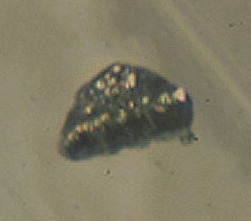
File:Curium.jpg · Wikimedia Commons · See Wikimedia Commons
curium
Sign in to saveAlso known as Cm, element 96
Curium is a synthetic chemical element; it has symbol Cm and atomic number 96. This transuranic actinide element was named after eminent scientists Marie and Pierre Curie, both known for their research on radioactivity. Curium was first intentionally made by the team of Glenn T. Seaborg, Ralph A. James, and Albert Ghiorso in 1944, using the cyclotron at Berkeley. They bombarded the newly discovered element plutonium (the isotope 239Pu) with alpha particles. This was then sent to the Metallurgical Laboratory at the University of Chicago where a tiny sample of curium was eventually separated and
OverviewAI-generated
Curium is a chemical element with the symbol Cm and atomic number 96. Its IUPAC name is curium, and it has a mass of 247.07. The element is represented by the Unicode character "鋦" and the canonical SMILES string "[Cm]". It possesses an electronegativity of 1.28 and an ionic radius of 0.97.
The element was discovered in 1944. In chemical databases, it is identified by the CID 23979 and the InChIKey NIWWFAAXEMMFMS-UHFFFAOYSA-N. Its molecular weight is recorded as 247.07035, with a charge of 0 and a topological polar surface area of 0. It has zero hydrogen bond donors and acceptors.
References to curium appear in 1251 PubMed articles. Additionally, the subject is referenced by 770 other encyclopedia articles. Visual materials related to the element are available in the "Curium" Commons gallery and category.
Synthesized by Vinony from 23 facts across 4 sources: Wikidata, PubChem, PubMed, Vinony graph. Generated from structured data (not the Wikipedia text) and checked against those facts — may still contain errors.
Chemical data
- Formula
- Cm
- Molecular weight
- 247.07035 g/mol
- IUPAC name
- curium
- SMILES
- [Cm]
- InChIKey
- NIWWFAAXEMMFMS-UHFFFAOYSA-N
- Polar surface area
- 0 Ų
- H-bond donors
- 0
- H-bond acceptors
- 0
- Formal charge
- 0
via PubChem
Research
1,251 papers- Curious curium.Nature chemistry · 2016Abergel RJ, Ansoborlo EDOI: 10.1038/nchem.2512
- Curium(III) luminescence spectroscopy as a tool for species determination.ReviewChemical Society reviews · 2025Schmidt M, Skerencak-Frech A, Panak PJ et al.DOI: 10.1039/d5cs00764j
- Radiopharmaceutical therapy in cancer: clinical advances and challenges.ReviewNature reviews. Drug discovery · 2020Sgouros G, Bodei L, McDevitt MR et al.DOI: 10.1038/s41573-020-0073-9
- Prostate cancer.ReviewLancet (London, England) · 2026Fonteyne V, Tree A, Castro E et al.DOI: 10.1016/S0140-6736(25)02221-4
- PSMA PET/CT: joint EANM procedure guideline/SNMMI procedure standard for prostate cancer imaging 2.0.European journal of nuclear medicine and molecular imaging · 2023Fendler WP, Eiber M, Beheshti M et al.DOI: 10.1007/s00259-022-06089-w
- Editorial Comment.The Journal of urology · 2023Eifer M, Hope TA, Calais J et al.DOI: 10.1097/JU.0000000000003493.01
- Compression of curium pyrrolidine-dithiocarbamate enhances covalency.Nature · 2020Sperling JM, Warzecha EJ, Celis-Barros C et al.DOI: 10.1038/s41586-020-2479-2
- The biokinetics and radiotoxicology of curium: a comparison with americium.ReviewApplied radiation and isotopes : including data, instrumentation and methods for use in agriculture, industry and medicine · 2008Ménétrier F, Taylor DM, Comte ADOI: 10.1016/j.apradiso.2007.12.002
via PubMed
Wikidata facts
- Instance of
- chemical element
- Part of
- period 7
- Named after
- Pierre Curie
- Mass
- 247.07
- Image
- Cm-Fluoreszenz.png
Show 15 more facts
- described by source
- The Catholic Encyclopedia
- topic's main category
- Category:Curium
- atomic number
- 96
- Commons gallery
- Curium
- electronegativity
- 1.28
- element symbol
- Cm
- Commons category
- Curium
- discoverer or inventor
- Glenn T. Seaborg
- time of discovery or invention
- 1944-01-01
- Unicode character
- 鋦
- canonical SMILES
- [Cm]
- chemical formula
- Cm
- ionic radius
- 0.95
- on focus list of Wikimedia project
- Wikipedia:Vital articles/Level/4
- topic has template
- Template:Infobox curium
Sources (7)
via Wikidata · CC0
~31 min read
Encyclopedic overview
21 sectionsContents
- History
- Characteristics
- Physical
- Chemical
- Isotopes
- Occurrence
- Synthesis
- Isotope preparation
- Metal preparation
- Compounds and reactions
- Oxides
- Halides
- Chalcogenides and pnictides
- Organocurium compounds and biological aspects
- Applications
- Radionuclides
- X-ray spectrometer
- Safety
- References
- Bibliography
- External links
Curium is a synthetic chemical element; it has symbol Cm and atomic number 96. This transuranic actinide element was named after eminent scientists Marie and Pierre Curie, both known for their research on radioactivity. Curium was first intentionally made by the team of Glenn T. Seaborg, Ralph A. James, and Albert Ghiorso in 1944, using the cyclotron at Berkeley. They bombarded the newly discovered element plutonium (the isotope 239Pu) with alpha particles. This was then sent to the Metallurgical Laboratory at the University of Chicago where a tiny sample of curium was eventually separated and identified. The discovery was kept secret until after the end of World War II. The news was released to the public in November 1947. Most curium is produced by bombarding uranium or plutonium with neutrons in nuclear reactors – one tonne of spent nuclear fuel contains ~20 grams of curium.
Curium is a hard, dense, silvery metal with a high melting and boiling point for an actinide. It is paramagnetic at ambient conditions, but becomes antiferromagnetic upon cooling, and other magnetic transitions are also seen in many curium compounds. In compounds, curium usually has valence +3 and sometimes +4; the +3 valence is predominant in solutions. Curium readily oxidizes, and its oxides are a dominant form of this element. It forms strongly fluorescent complexes with various organic compounds. If it gets into the human body, curium accumulates in bones, lungs, and liver, where it promotes cancer.
Excerpted from Wikipedia’s “curium” article, available under the CC BY-SA 4.0 licence.
Gallery (35)
Available in 132 languages
- Español
- Français
- Deutsch
- 中文
- 日本語
- Русский
- Português
- Italiano
- العربية
- हिन्दी
- Afrikaans
- Albanian
- Amharic
- Angika
- Armenian
- Asturian
- Azerbaijani
- Bahasa Indonesia
Show 113 more
- Balinese
- Bangla
- Bashkir
- Basque
- be_x_old
- Belarusian
- Bhojpuri
- Bosnian
- Breton
- Bulgarian
- Burmese
- Catalan
- cdo
- Cebuano
- Central Kurdish
- Chuvash
- Cornish
- Corsican
- Croatian
- Czech
- Danish
- Egyptian Arabic
- Esperanto
- Estonian
- Faroese
- Fiji Hindi
- Filipino
- Finnish
- Friulian
- Galician
- Georgian
- Greek
- Gujarati
- Hakka Chinese
- Hebrew
- Hungarian
- Icelandic
- Ido
- Interlingua
- Irish
- Javanese
- Kalmyk
- Kannada
- Kazakh
- kbp
- Komi
- Kyrgyz
- Latin
- Latvian
- Ligurian
- Limburgish
- Lithuanian
- Lojban
- Luxembourgish
- Macedonian
- Malay
- Malayalam
- Manipuri
- Manx
- Marathi
- Mongolian
- Moroccan Arabic
- Nederlands
- Newari
- Northern Frisian
- Norwegian
- Norwegian Nynorsk
- Novial
- Odia
- olo
- Pashto
- Piedmontese
- Polski
- Quechua
- roa_rup
- Romanian
- Sanskrit
- Sardinian
- Saterland Frisian
- Scottish Gaelic
- Serbian
- Serbian (Latin)
- Sicilian
- simple
- Slovak
- Slovenian
- Svenska
- Swahili
- Tajik
- Tamil
- Tatar
- Telugu
- Tiếng Việt
- Türkçe
- Ukrainian
- Urdu
- Uyghur
- Uzbek
- Veps
- Waray
- Welsh
- Western Mari
- Western Panjabi
- Wu Chinese
- Yakut
- Yoruba
- zh_classical
- zh_min_nan
- zh_yue
- Zulu
- فارسی
- ไทย
- 한국어
via Wikidata sitelinks · CC0