Encyclopedia of Life · EOL (see source)
Cyrillaceae
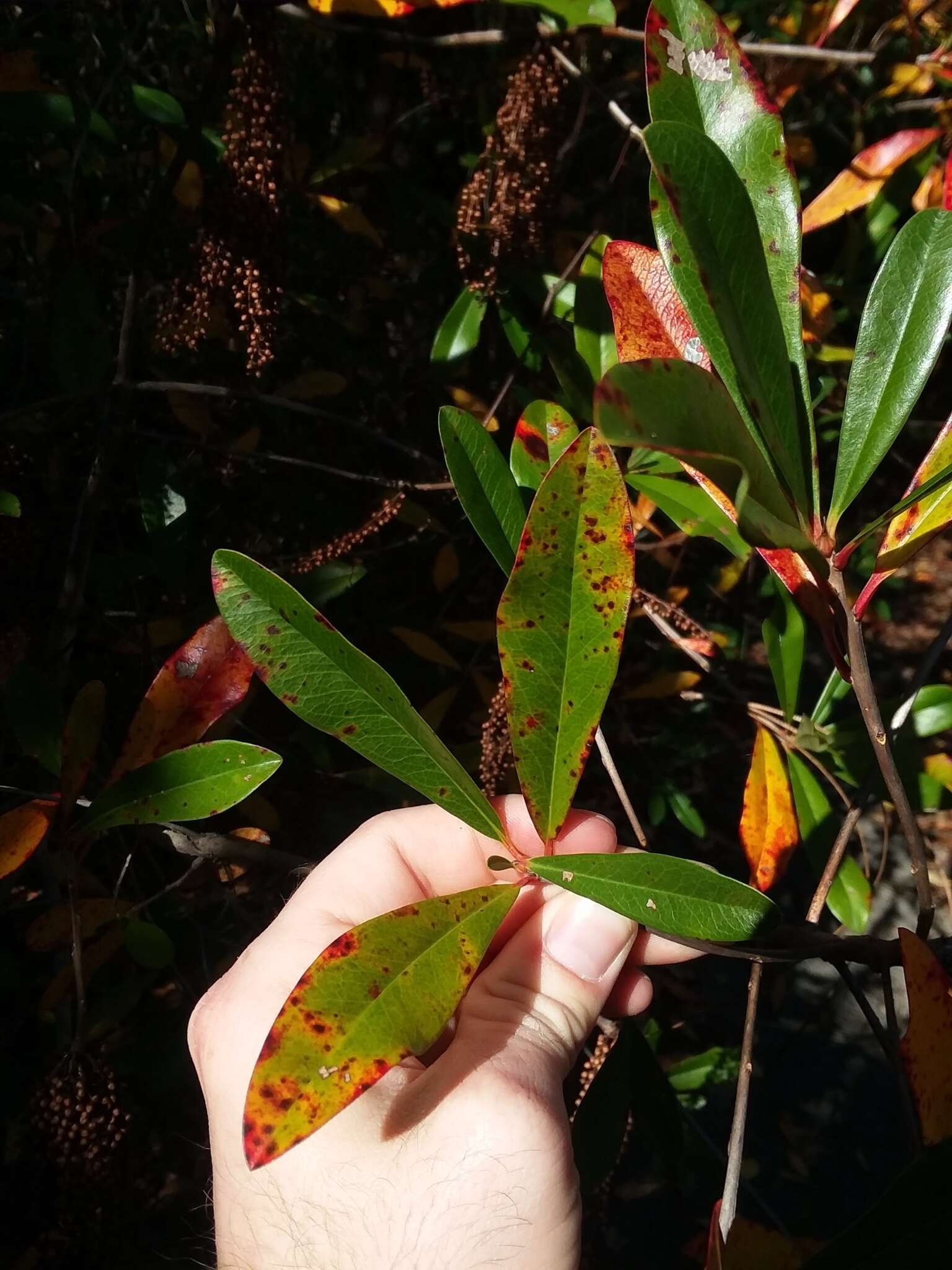
Sign in to saveThe Cyrillaceae are a small family of flowering plants in the order Ericales, native to warm temperate to tropical regions of the Americas. The family comprises two genera, Cliftonia and Cyrilla, each containing a single species, Cliftonia monophylla and Cyrilla racemiflora. However, additional species of Cyrilla are now often recognized and the genus is in need of taxonomic revision.
Species
FAMILY
- KingdomPlantae
- PhylumTracheophyta
- ClassMagnoliopsida
- OrderEricales
- FamilyCyrillaceae
翅萼树科,也叫鞣木科,是生长在美洲热带和亚热带地区的特有科,只包括两个属,每个属都只有一个种—鞣木(Cyrilla racemiflora,也叫多花荞麦树)和荞麦树(Cliftonia monophylla)。都是灌木或小乔木。 以前的分类法将Purdiaea属也分到本科,但根据基因检测已经重新将其划分到山柳科。
via GBIF · Kew POWO
Museum specimens
- Specimen records
- 25
- With media
- 6
- Family
- Cyrillaceae
- Collections
- INSTITUTO NACIONAL DE PESQUISAS DA AMAZÔNIA (INPA), NY, MEL, MO, NHMUK, VT
- Recorded in
- Brasil, Venezuela, United States, Costa Rica, Belize, Dominica
Wikidata facts
- Instance of
- taxon
- Image
- CyrillaRacemosa.jpg
Show 7 more facts
- Commons category
- Cyrillaceae
- taxon rank
- family
- taxon name
- Cyrillaceae
- topic's main category
- Category:Cyrillaceae
- taxon common name
- 鞣木科
- taxonomic type
- Cyrilla
Sources (1)
via Wikidata · CC0
~1 min read
Encyclopedic overview
2 sectionsContents
- Fossil record
- References
The Cyrillaceae are a small family of flowering plants in the order Ericales, native to warm temperate to tropical regions of the Americas. The family comprises two genera, Cliftonia and Cyrilla, each containing a single species, Cliftonia monophylla and Cyrilla racemiflora. However, additional species of Cyrilla are now often recognized and the genus is in need of taxonomic revision.
In the past, many botanists included a third genus, Purdiaea, in the family, though recent research has shown this genus is better placed in the closely related family Clethraceae. __TOC__ ==Fossil record== Fossil Cyrilla and Cliftonia leaves, wood and pollen have been reported from the Neogene Lower Rhine region brown coal. Leaf fragments of Cyrilla have been found frequently in brown coals of central Europe. The Cyrillaceae formed part of the Tertiary bog flora where they constituted an important component of the shrubby vegetation. Among fossil Cyrilla from the Tertiary of Europe is †Cyrilla thomsonii described from the Miocene of Librar, Germany and the Bełchatów, Poland. † Cyrilla hungarica described from the Miocene of Magyaregregy in Hungary.
Excerpted from Wikipedia’s “Cyrillaceae” article, available under the CC BY-SA 4.0 licence.