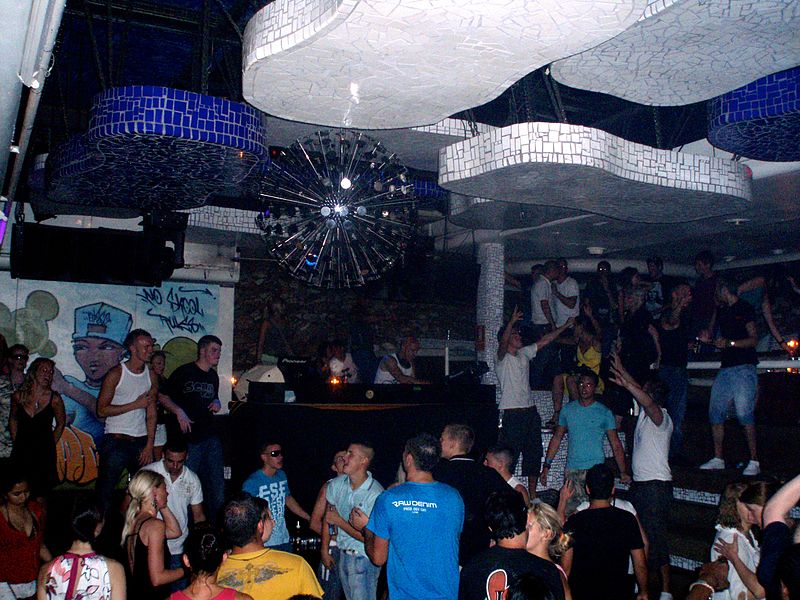
File:Pacha_room_2_an_up-for-it_crowd_(2616544196).jpg · Wikimedia Commons · See Wikimedia Commons
dance music
Sign in to savemusic of any genre intended to accompany dancing
Key facts
- Stylistic origins
- Folk
- Cultural origins
- Ancient, worldwide
- Derivative forms
- Disco
via Wikipedia infobox
Wikidata facts
- Instance of
- music genre
Show 6 more facts
- Commons category
- Dance
- topic's main category
- Category:Dance music
- WordLift URL
- data.thenextweb.com/tnw/entity/dance_music
- different from
- club/dance music
- on focus list of Wikimedia project
- Wikipedia:Vital articles/Level/4
via Wikidata · CC0
~13 min read
Encyclopedic overview
An example of dance music
Dance music is music composed specifically to facilitate or accompany dancing. It can be either a whole piece or part of a larger musical arrangement. In terms of performance, the major categories are live dance music and recorded dance music. While there exist attestations of the combination of dance and music in ancient history (for example Ancient Greek vases sometimes show dancers accompanied by musicians), the earliest Western dance music that we can still reproduce with a degree of certainty are old-fashioned dances. In the Baroque period, the major dance styles were noble court dances (see Baroque dance). In the classical music era, the minuet was frequently used as a third movement, although in this context it would not accompany any dancing. The waltz also arose later in the classical era. Both remained part of the romantic music period, which also saw the rise of various other nationalistic dance forms like the barcarolle, mazurka, ecossaise, ballade and polonaise.
Excerpted from Wikipedia’s “dance music” article, available under the CC BY-SA 4.0 licence.