File:Mahavir.jpg · Wikimedia Commons · See Wikimedia Commons
digambara
Sign in to saveAlso known as sky-clad, Digambar
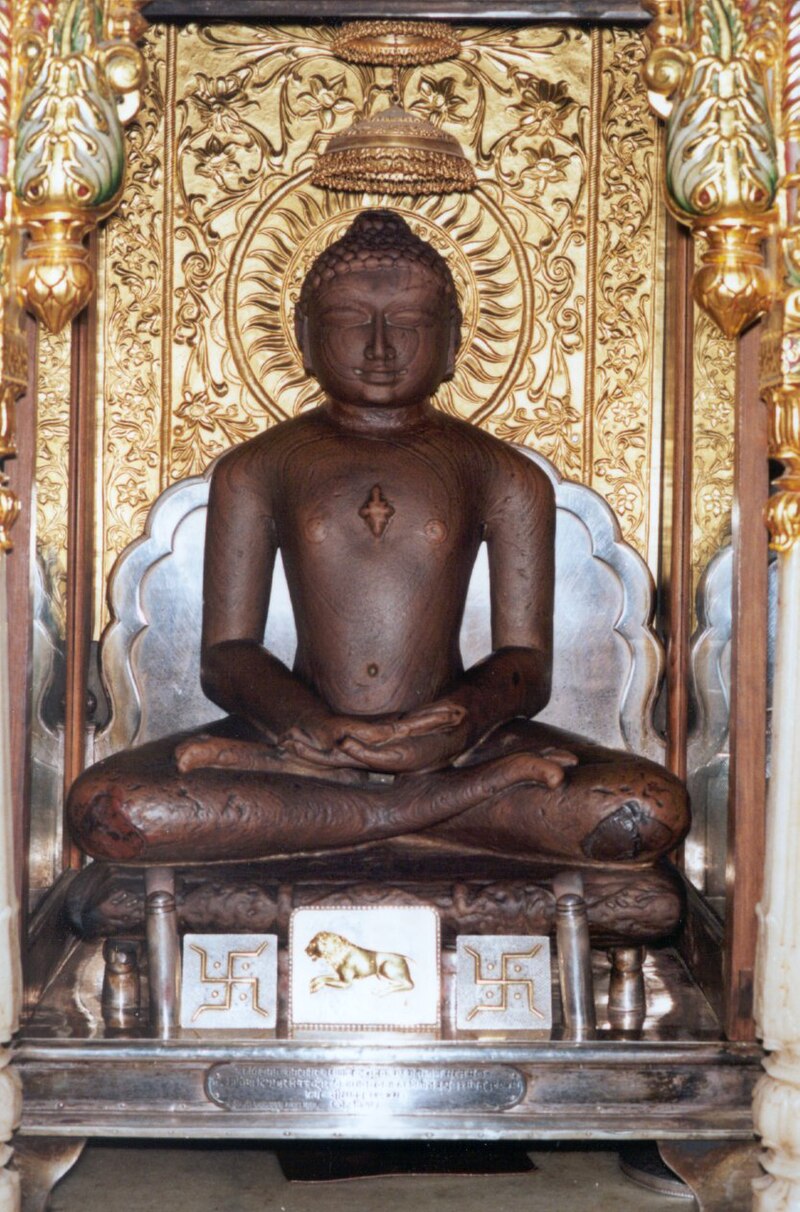
thumb|The famous idol of Mahavira|Shree Mahavir Swami at Shri Digambar Jain Atishay Kshetra, Shri Mahavir Ji depicting Digambar Iconography. thumb|Image depicting Acharya Kundakunda
Wikidata facts
- Subclass of
- Jainism
- Named after
- sky
- Image
- Digambar Jain monk bowing to a Tirthankara idol inside a Jain temple.png
Show 6 more facts
- Commons category
- Digambara
- OpenStreetMap tag
- denomination=digambara
- inception
- 0500-00-00
- location of formation
- Vallabhi
- has characteristic
- nudity
- P8248
- Luxembourg
Sources (1)
via Wikidata · CC0
~42 min read
Encyclopedic overview
27 sectionsContents
- Nomenclature
- Core philosophy
- ''Aparigraha'' – non-attachment
- ''Ahimsa'' – non-violence
- ''Anekāntavāda'' – many-sided reality
- History and Influence
- Origins and Schism
- Golden Age: Royal Patronage
- Medieval and Modern Eras (Sub-sects)
- Scripture and literature
- Practices
- Monasticism
- Nuns
- Digambar akhara
- Worship
- Comparison with ''Śvetāmbara'' Tradition
- Criticism
- Padmanabh Jaini
- Nalini Balbir
- Kristi L. Wiley
- Other religions
- See also
- Notes
- References
- Citations
- Sources
- External links
thumb|The famous idol of Mahavira|Shree Mahavir Swami at Shri Digambar Jain Atishay Kshetra, Shri Mahavir Ji depicting Digambar Iconography. thumb|Image depicting Acharya Kundakunda
Digambara (; "sky-clad") is one of the two major schools of Jainism, the other being Śvetāmbara (white-clad). The Sanskrit word Digambara means "sky-clad", referring to their traditional monastic practice of neither possessing nor wearing any clothes. Nakedness was the ideal practice of lord Mahavira and his immediate followers. Mahavira emphasised the importance of nakedness for monks. It symbolizes complete detachment and is an ideal form of conduct. Mahavira believed that renouncing clothes made the body immune to external influences like heat and cold, increasing resilience. Without clothes, a monk would avoid the distractions of acquiring, maintaining, and washing garments, allowing him to focus on spiritual growth and self-discipline.
Excerpted from Wikipedia’s “digambara” article, available under the CC BY-SA 4.0 licence.