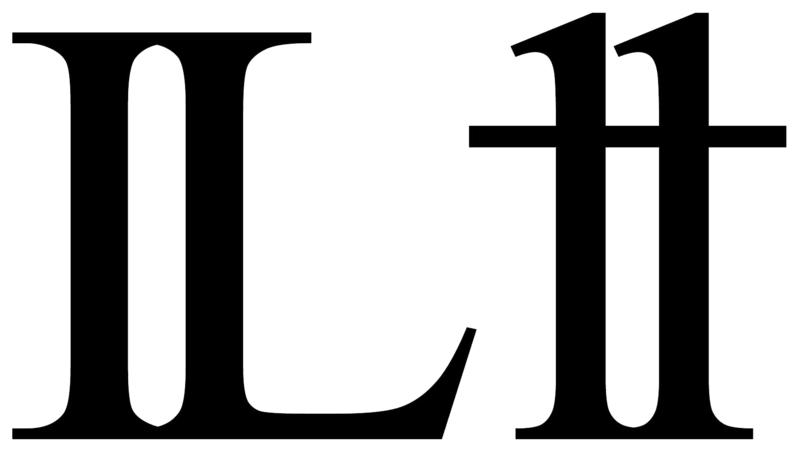
File:Lldigraph.png · Wikimedia Commons · See Wikimedia Commons
A digraph is a pair of letters that work together to represent a single sound in a language. They matter because they allow written languages to represent more sounds than they have individual letters for, making it possible to write words accurately and consistently.
AI-generated from the Wikipedia summary — may contain errors.
Wikidata facts
- Subclass of
- ordered pair
- Has part
- letter
- Followed by
- trigraph
- Image
- Lldigraph.png
Show 3 more facts
- topic's main category
- Category:Digraphs (orthography)
- described by source
- Nordisk familjebok
- different from
- Digraph
Sources (3)
via Wikidata · CC0
~27 min read
Encyclopedic overview
In Welsh, the digraph ⟨ll⟩ fused for a time into a ligature.
A digraph (from Ancient Greek δίς (dís) 'double' and γράφω (gráphō) 'to write') or digram is a pair of characters used in the orthography of a language to write either a single phoneme (distinct sound), or a sequence of phonemes that does not correspond to the normal values of the two characters combined.
Excerpted from Wikipedia’s “digraph” article, available under the CC BY-SA 4.0 licence.
Available in 61 languages
- Español
- Français
- Deutsch
- 中文
- 日本語
- Русский
- Português
- Italiano
- العربية
- Albanian
- Aragonese
- Armenian
- Asturian
- Bahasa Indonesia
- Basque
- be_x_old
- Belarusian
- Breton
Show 42 more
- Bulgarian
- Catalan
- Croatian
- Danish
- Esperanto
- Estonian
- Finnish
- Galician
- Georgian
- Hebrew
- Hungarian
- Ido
- Iloko
- Kashubian
- Kurdish
- Latin
- Latvian
- Macedonian
- Malay
- Nederlands
- Norwegian
- Norwegian Nynorsk
- Papiamento
- Polski
- Quechua
- Romanian
- Serbian
- simple
- Slovenian
- Svenska
- Türkçe
- Ukrainian
- Upper Sorbian
- Uzbek
- Venetian
- Welsh
- Western Frisian
- Wu Chinese
- zh_yue
- فارسی
- ไทย
- 한국어
via Wikidata sitelinks · CC0