(c) Drainstamp, all rights reserved, uploaded by Drainstamp
Diploria
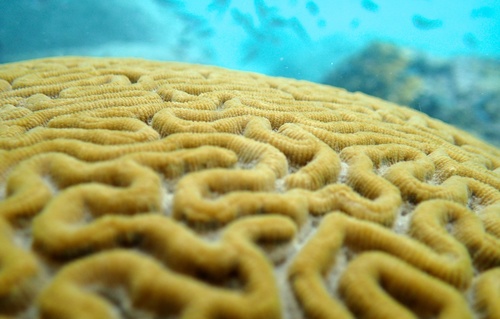
Sign in to saveDiploria is a monotypic genus of massive reef building stony corals in the family Mussidae. It is represented by a single species, Diploria labyrinthiformis, commonly known as grooved brain coral, and is found in the western Atlantic Ocean and Caribbean Sea. It has a familiar, maze-like appearance.
Species
brain coral
GENUS
- KingdomAnimalia
- PhylumCnidaria
- ClassAnthozoa
- OrderScleractinia
- FamilyFaviidae
Diploria es un género de coral pétreo que pertenece a la familia Mussidae. Agrupaba a 3 especies hasta una revisión taxonómica de 2012 que dejó solo la especie tipo. Es un gran coral, en forma de cerebro, que se destaca en el arrecife, además de por su bello y particular diseño, por su gran tamaño, que alcanza los 2 metros.
via GBIF
Museum specimens
- Specimen records
- 145
- With media
- 10
- Family
- Faviidae
- Collections
- YPM, UCMP, UF
- Recorded in
- Barbados, United States, Panama
Wikidata facts
- Instance of
- taxon
- Image
- Brain coral.jpg
Show 4 more facts
- Commons category
- Diploria
- taxon name
- Diploria
- taxon rank
- genus
- topic's main category
- Category:Diploria
Sources (1)
via Wikidata · CC0
~5 min read
Encyclopedic overview
13 sectionsContents
- Description
- Distribution and habitat
- Status
- Relationships with other species
- Symbiotic
- Predators
- Parasites
- Taxonomy
- Reproduction
- Postage stamps
- See also
- References
- External links
Diploria is a monotypic genus of massive reef building stony corals in the family Mussidae. It is represented by a single species, Diploria labyrinthiformis, commonly known as grooved brain coral, and is found in the western Atlantic Ocean and Caribbean Sea. It has a familiar, maze-like appearance.
==Description== thumbnail|left|Grooved brain coral, Caribbean Sea, [[Vieques, Puerto Rico]] This species of reef-building coral has a hemispherical, brain-like shape with a brown, yellow, or grey colour. It has characteristic deep, interconnected double-valleys. These polyp-bearing valleys are each separated by grooved ambulacral ridges. There may be a difference in colour between the valleys and the grooves.
Excerpted from Wikipedia’s “Diploria” article, available under the CC BY-SA 4.0 licence.