Encyclopedia of Life · EOL (see source)
Doronicum
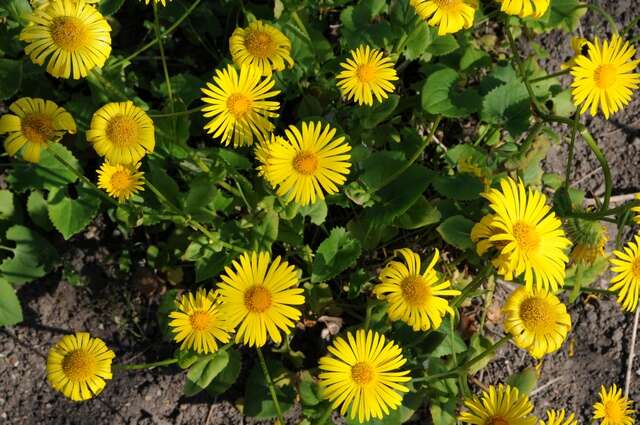
Sign in to saveDoronicum is a genus of flowering plants in the sunflower family, known as '''leopard's bane'. They are all herbaceous perennials native to Europe, southwest Asia and Siberia. They produce yellow, daisy-like flowerheads in spring and summer. The plants typically thrive in cool, mountainous regions and prefer well-drained soil with partial to full sunlight exposure. Due to their bright and vibrant flowers, Doronicum'' species are often cultivated as ornamental plants in gardens, particularly for early-season color.
OverviewAI-generated
Doronicum is a genus of plants within the family Asteraceae. It belongs to the order Asterales and the class Magnoliopsida, under the phylum Tracheophyta in the kingdom Plantae. The genus is part of the tribe Senecioneae. Common names for the group include false leopardbane and Leopard's bane. The taxonomic authority for the genus is L., and its status is accepted.
Records for Doronicum have been documented in China, the United Kingdom, Mexico, Switzerland, and Vietnam. These records are held by institutions including A, NHMUK, GH, IBUNAM, and CAS. The total number of occurrence records is 100,493, with 409 specific records and 349 media items noted in one dataset.
Synthesized by Vinony from 35 facts across 7 sources: Wikidata, GBIF, Gbif Occ, Plants of the World, iDigBio, WoRMS, Vinony graph. Generated from structured data (not the Wikipedia text) and checked against those facts — may still contain errors.
Species
Leopard's bane
GENUS
- KingdomPlantae
- PhylumTracheophyta
- ClassMagnoliopsida
- OrderAsterales
- FamilyAsteraceae
Die Gämswurzen (Doronicum), auch Gamswurzen und Gemswurzen genannt, sind eine Pflanzengattung innerhalb der Familie der Korbblütler (Asteraceae). Die etwa 35 Arten sind in Eurasien und Nordafrika verbreitet. Sorten weniger Arten werden als Zierpflanzen für Parks und Gärten in den Gemäßigten Breiten verwendet.
via GBIF · Kew POWO
Museum specimens
- Specimen records
- 409
- With media
- 349
- Family
- Asteraceae
- Collections
- A, NHMUK, GH, IBUNAM, CAS, MO
- Recorded in
- China, United Kingdom, Mexico, Switzerland, Vietnam, Bulgaria, Norway
Wikidata facts
- Instance of
- taxon
- Parent taxon
- Senecioneae
- Image
- Doronicum plantagineum StG 040418B.jpg
Show 7 more facts
- Commons category
- Doronicum
- taxon rank
- genus
- taxon name
- Doronicum
- topic's main category
- Category:Doronicum
- Commons gallery
- Doronicum
- taxon common name
- 多榔菊属
Sources (3)
via Wikidata · CC0
~1 min read
Encyclopedic overview
2 sectionsContents
- References
- External links
Doronicum is a genus of flowering plants in the sunflower family, known as '''leopard's bane'. They are all herbaceous perennials native to Europe, southwest Asia and Siberia. They produce yellow, daisy-like flowerheads in spring and summer. The plants typically thrive in cool, mountainous regions and prefer well-drained soil with partial to full sunlight exposure. Due to their bright and vibrant flowers, Doronicum species are often cultivated as ornamental plants in gardens, particularly for early-season color.
Although the genus is often classified in the tribe Senecioneae, there is evidence that a classification elsewhere in the subfamily Asteroideae may be more appropriate. Species
Excerpted from Wikipedia’s “Doronicum” article, available under the CC BY-SA 4.0 licence.