File:Da_Vinci_Vitruve_Luc_Viatour.jpg · Wikimedia Commons · See Wikimedia Commons
drawing
Sign in to saveAlso known as drawing (artwork), drawings
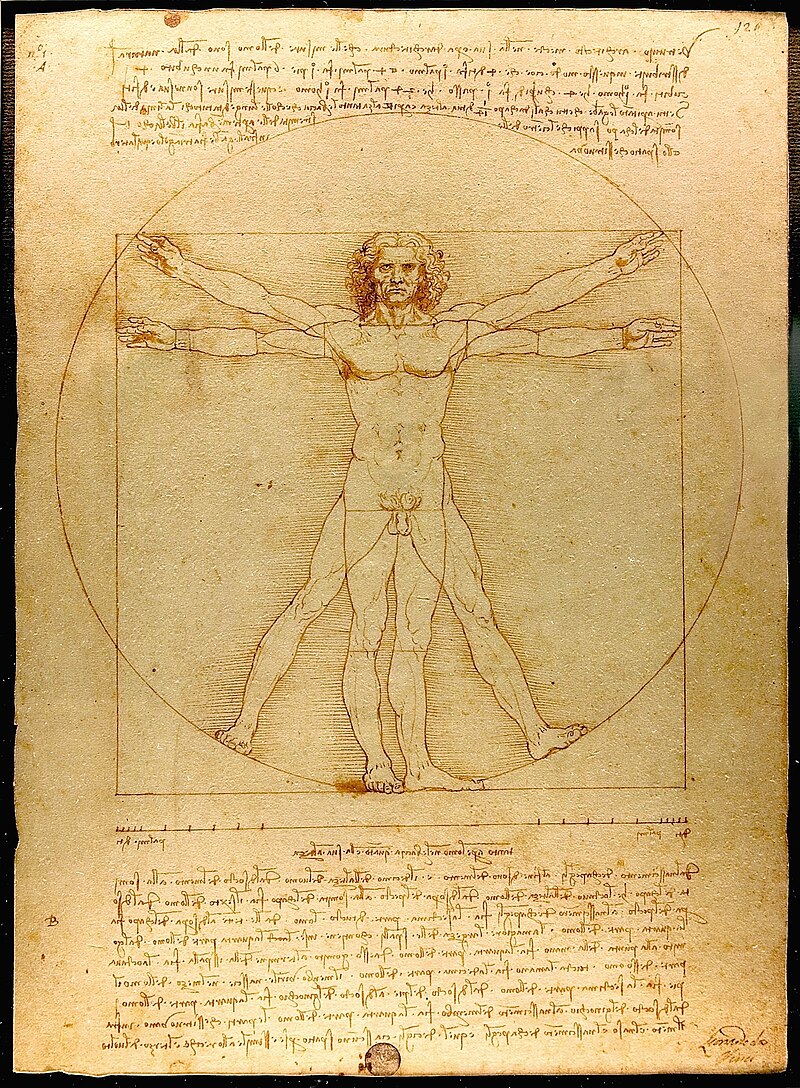
thumb|Leonardo da Vinci's [[Vitruvian Man () Accademia, Venice]] Drawing is a visual art that uses an instrument to mark paper or another two-dimensional surface, or a digital representation of such. Traditionally, the instruments used to create a drawing include pencils, crayons, and ink pens, sometimes in combination. More modern tools include computer styluses with mice and graphics tablets and gamepads in VR drawing software.
Drawing is a visual art created by using tools like pencils, pens, or crayons to make marks on paper, or using digital tools like styluses and graphics tablets to create images on screens. It matters because it's a fundamental way people express ideas and creativity, and has been practiced throughout history by artists like Leonardo da Vinci.
AI-generated from the Wikipedia summary — may contain errors.
Research
89,308 papers- Drawing as a versatile cognitive tool.Nature reviews psychology · 2023Fan JE, Bainbridge WA, Chamberlain R et al.DOI: 10.1038/s44159-023-00212-w
- Representational drawing following brain injury.Neuropsychologia · 2019Carson L, Filipowicz A, Anderson B et al.DOI: 10.1016/j.neuropsychologia.2019.107154
- Drawing on medical school experiences.International review of psychiatry (Abingdon, England) · 2023Li ODOI: 10.1080/09540261.2023.2259464
- How Drawing to Distract Improves Mood in Children.Frontiers in psychology · 2021Drake JEDOI: 10.3389/fpsyg.2021.622927
- Silverpoint drawing for scientific illustration.ReviewThe Journal of biocommunication · 1996Hodge GP
- AuDrA: An automated drawing assessment platform for evaluating creativity.Behavior research methods · 2024Patterson JD, Barbot B, Lloyd-Cox J et al.DOI: 10.3758/s13428-023-02258-3
- Drawing conclusions: a re-examination of empirical and conceptual bases for psychological evaluation of children from their drawings.ReviewThe British journal of clinical psychology · 1998Thomas GV, Jolley RPDOI: 10.1111/j.2044-8260.1998.tb01289.x
- Novel Software for Pain Drawing Analysis.Cureus · 2021Kanellopoulos AK, Kanellopoulos EK, Dimitriadis Z et al.DOI: 10.7759/cureus.20422
via PubMed
Wikidata facts
- Image
- Galileo moon phases.jpg
Show 10 more facts
- Commons category
- Drawing
- topic's main category
- Category:Drawing
- Commons gallery
- Drawing
- fabrication method
- art of drawing
- equivalent class
- schema.org/Drawing
- P8168
- Ryan Giggs
- described by source
- Encyclopædia Britannica 11th edition
- on focus list of Wikimedia project
- Wikipedia:Vital articles/Level/4
- different from
- painting
- partially coincident with
- line art
via Wikidata · CC0
~26 min read
Encyclopedic overview
18 sectionsContents
- Overview
- History
- In communication
- In manuscripts
- In science
- As artistic expression
- Notable artists and draftsmen
- Materials
- Technique
- Tone
- Form and proportion
- Perspective
- Composition
- Process
- See also
- References
- Further reading
- External links
thumb|Leonardo da Vinci's [[Vitruvian Man () Accademia, Venice]] Drawing is a visual art that uses an instrument to mark paper or another two-dimensional surface, or a digital representation of such. Traditionally, the instruments used to create a drawing include pencils, crayons, and ink pens, sometimes in combination. More modern tools include computer styluses with mice and graphics tablets and gamepads in VR drawing software.
A drawing instrument releases a small amount of material onto a surface, leaving a visible mark. There are many drawing instruments such as pen, pencils, pastel, crayons, markers, color pencils, water color, and more. The most common support for drawing is paper, although other materials, such as cardboard, vellum, wood, plastic, leather, canvas, and board, have been used. Temporary drawings may be made on a blackboard or whiteboard. Drawing has been a popular and fundamental means of public expression throughout human history. It is one of the simplest and most efficient means of communicating ideas. The wide availability of drawing instruments makes drawing one of the most common artistic activities.
Excerpted from Wikipedia’s “drawing” article, available under the CC BY-SA 4.0 licence.
Gallery (38)
Available in 98 languages
- Español
- Français
- Deutsch
- 中文
- 日本語
- Русский
- Português
- Italiano
- العربية
- हिन्दी
- Albanian
- Armenian
- Asturian
- Azerbaijani
- Bahasa Indonesia
- Balinese
- Bangla
- Basque
Show 79 more
- be_x_old
- Belarusian
- Bikol
- Bosnian
- Bulgarian
- Catalan
- Central Dusun
- Central Kurdish
- Chuvash
- Corsican
- Croatian
- Czech
- Danish
- Egyptian Arabic
- eml
- Esperanto
- Estonian
- Filipino
- Finnish
- Galician
- Gan Chinese
- Georgian
- Greek
- Haitian Creole
- Hausa
- Hebrew
- Hungarian
- Icelandic
- Ido
- Jamaican Creole English
- Javanese
- Latin
- Latvian
- Lingala
- Lingua Franca Nova
- Lithuanian
- lld
- Macedonian
- Malay
- Malayalam
- nds_nl
- Neapolitan
- Nederlands
- Newari
- Norwegian
- Norwegian Nynorsk
- Occitan
- Pashto
- Picard
- Polski
- Punjabi
- Quechua
- Romanian
- Saterland Frisian
- Scots
- Serbian
- Serbian (Latin)
- Shona
- simple
- Sinhala
- Slovak
- Slovenian
- Svenska
- Tajik
- Talysh
- Tamil
- Telugu
- Tiếng Việt
- Toki Pona
- Türkçe
- Ukrainian
- Walloon
- Wu Chinese
- Yiddish
- Zaza
- zh_yue
- فارسی
- ไทย
- 한국어
via Wikidata sitelinks · CC0