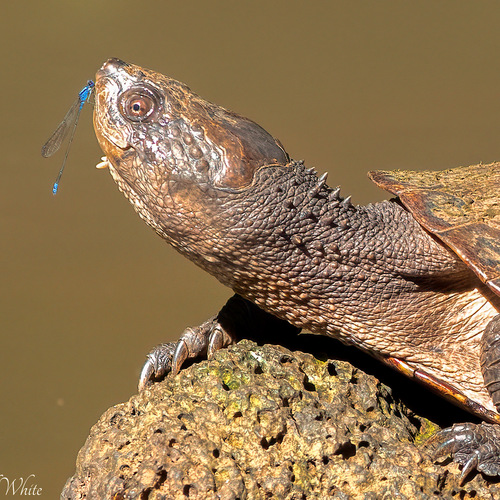
(c) David White, some rights reserved (CC BY-NC), uploaded by David White · cc-by-nc
Elseya
Sign in to saveAlso known as Australian Snapping Turtles
Elseya is a genus of large side-necked turtles, commonly known as Australian snapping turtles, in the family Chelidae. Species in the genus Elseya are found in river systems in northern and northeastern Australia and throughout the river systems of New Guinea. They are identified by the presence of alveolar ridges on the triturating surfaces of the mouth and the presence of a complex bridge strut.
Species
Eastern Saw-shelled Turtle
PHYLUM
- KingdomAnimalia
- PhylumChordata
- OrderTestudines
- FamilyChelidae
via GBIF
Museum specimens
- Specimen records
- 250
- Family
- Chelidae
- Collections
- YPM, ANWC
- Recorded in
- Indonesia, Papua New Guinea
Wikidata facts
- Instance of
- taxon
- Parent taxon
- Chelodininae
- Image
- Elseya dentata 3.jpg
Show 6 more facts
- taxon rank
- genus
- topic's main category
- Category:Elseya
- taxon name
- Elseya
- Commons category
- Elseya
- taxonomic type
- Elseya dentata
- taxon author citation
- Gray, 1867
Sources (2)
via Wikidata · CC0
~4 min read
Encyclopedic overview
7 sectionsContents
- Systematics
- Etymology
- List of species
- Extinct species
- Notes
- References
- External links and further reading
Elseya is a genus of large side-necked turtles, commonly known as Australian snapping turtles, in the family Chelidae. Species in the genus Elseya are found in river systems in northern and northeastern Australia and throughout the river systems of New Guinea. They are identified by the presence of alveolar ridges on the triturating surfaces of the mouth and the presence of a complex bridge strut.
The Australian snapping turtles are largely herbivorous, with specialized mouth structures for eating fruits. However, they will eat animal products if opportunity arises. The various species can be found in large numbers where they are still abundant, e.g., Northern Territory of Australia. However, a number of the populations have become increasingly rare, and some are now listed as endangered.
Excerpted from Wikipedia’s “Elseya” article, available under the CC BY-SA 4.0 licence.