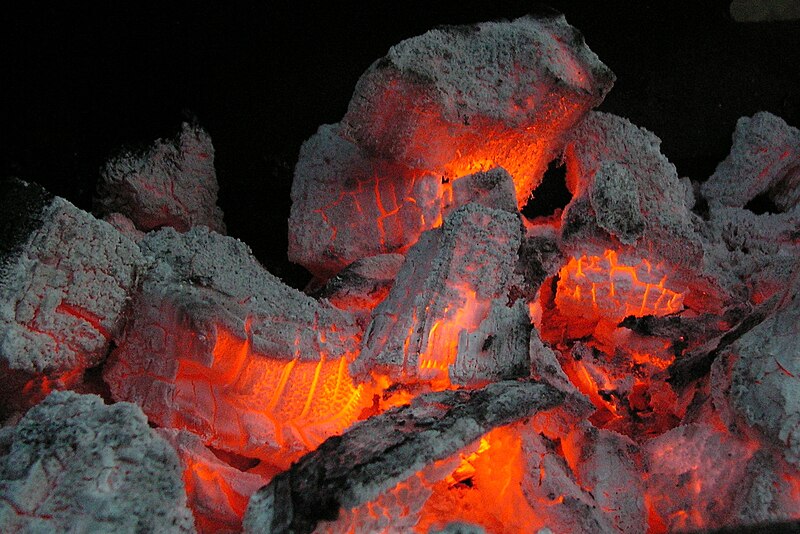
File:Embers_01.JPG · Wikimedia Commons · See Wikimedia Commons
ember
Sign in to saveAlso known as cinder
thumb|Embers of coal thumb|A bonfire in rural [[Australia, with a large number of sparks being blown by the wind; sparks are akin to embers in a similar way that dust is to stone.]] thumb|Embers of firewood used in [[sauna stove]]
Wikidata facts
- Subclass of
- ash
- Part of
- combustion
- Image
- Aljamer SM.BOUALAM.jpg
- Said to be same as
- spark
Show 1 more fact
- Commons category
- Embers
Sources (1)
via Wikidata · CC0
~3 min read
Encyclopedic overview
2 sectionsContents
- References
- External links
thumb|Embers of coal thumb|A bonfire in rural [[Australia, with a large number of sparks being blown by the wind; sparks are akin to embers in a similar way that dust is to stone.]] thumb|Embers of firewood used in [[sauna stove]]
An ember, also called a hot coal, is a hot lump of smouldering solid fuel, typically glowing, composed of greatly heated wood, coal, or other carbon-based material. Embers (hot coals) can exist within, remain after, or sometimes precede, a fire. Embers are, in some cases, as hot as the fire which created them. They radiate a substantial amount of heat long after the fire has been extinguished, and if not taken care of properly can rekindle a fire that is thought to be completely extinguished and can pose a fire hazard. In order to avoid the danger of accidentally spreading a fire, many campers pour water on the embers or cover them in dirt. Alternatively, embers can be used to relight a fire after it has gone out without the need to rebuild the fire – in a conventional fireplace, a fire can easily be relit up to 12 hours after it goes out, provided that there is enough space for air to circulate between the embers and the introduced fuel.
Excerpted from Wikipedia’s “ember” article, available under the CC BY-SA 4.0 licence.