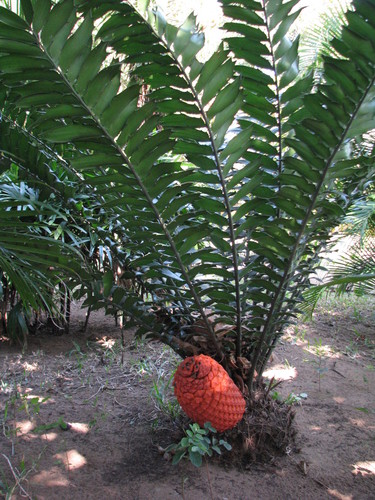
(c) Octávio Mateus, some rights reserved (CC BY-NC), uploaded by Octávio Mateus · cc-by-nc
Encephalartos
Sign in to saveAlso known as bread palms, kaffir bread
thumb|Encephalartos friderici-guilielmi Encephalartos is a genus of cycad native to Africa. Several species of Encephalartos are commonly referred to as bread trees, bread palms or kaffir bread, since a bread-like starchy food can be prepared from the centre of the stem. The genus name is derived from Ancient Greek ἐγκέφαλος (encéphalos), meaning "head", and ἄρτος (ártos), meaning "bread", referring to the use of the pith to make food. They are, in evolutionary terms, some of the most primitive living gymnosperms.
Species
Maputaland Cycad
GENUS
- KingdomPlantae
- PhylumTracheophyta
- ClassCycadopsida
- OrderCycadales
- FamilyZamiaceae
Common Name: umpanga
via GBIF · Kew POWO
Museum specimens
- Specimen records
- 127
- With media
- 63
- Family
- Zamiaceae
- Collections
- INECOL, NY, MO, CSUSB, YPM, UCR
- Recorded in
- Mexico, South Africa, United States, Argentina, Tanzania, Honduras, Zimbabwe, Cameroon
Wikidata facts
Show 9 more facts
- taxon rank
- genus
- taxon name
- Encephalartos
- Commons category
- Encephalartos
- topic's main category
- Category:Encephalartos
- Commons gallery
- Encephalartos
- CITES Appendix
- Appendix I of CITES
- described by source
- Encyclopædia Britannica 11th edition
- taxon common name
- 非洲铁属
Sources (1)
via Wikidata · CC0
~13 min read
Encyclopedic overview
12 sectionsContents
- Description
- Cones
- Roots
- Food value
- Human consumption
- Animal food
- Insects
- Taxonomy
- Species
- See also
- References
- External links
thumb|Encephalartos friderici-guilielmi Encephalartos is a genus of cycad native to Africa. Several species of Encephalartos are commonly referred to as bread trees, bread palms or kaffir bread, since a bread-like starchy food can be prepared from the centre of the stem. The genus name is derived from Ancient Greek ἐγκέφαλος (encéphalos), meaning "head", and ἄρτος (ártos), meaning "bread", referring to the use of the pith to make food. They are, in evolutionary terms, some of the most primitive living gymnosperms.
All the species are endangered, some critically, due to their exploitation by collectors and traditional medicine gatherers. The whole genus is listed under CITES Appendix I which prohibits international trade in specimens of these species except for certain non-commercial motives, such as scientific research.
Excerpted from Wikipedia’s “Encephalartos” article, available under the CC BY-SA 4.0 licence.