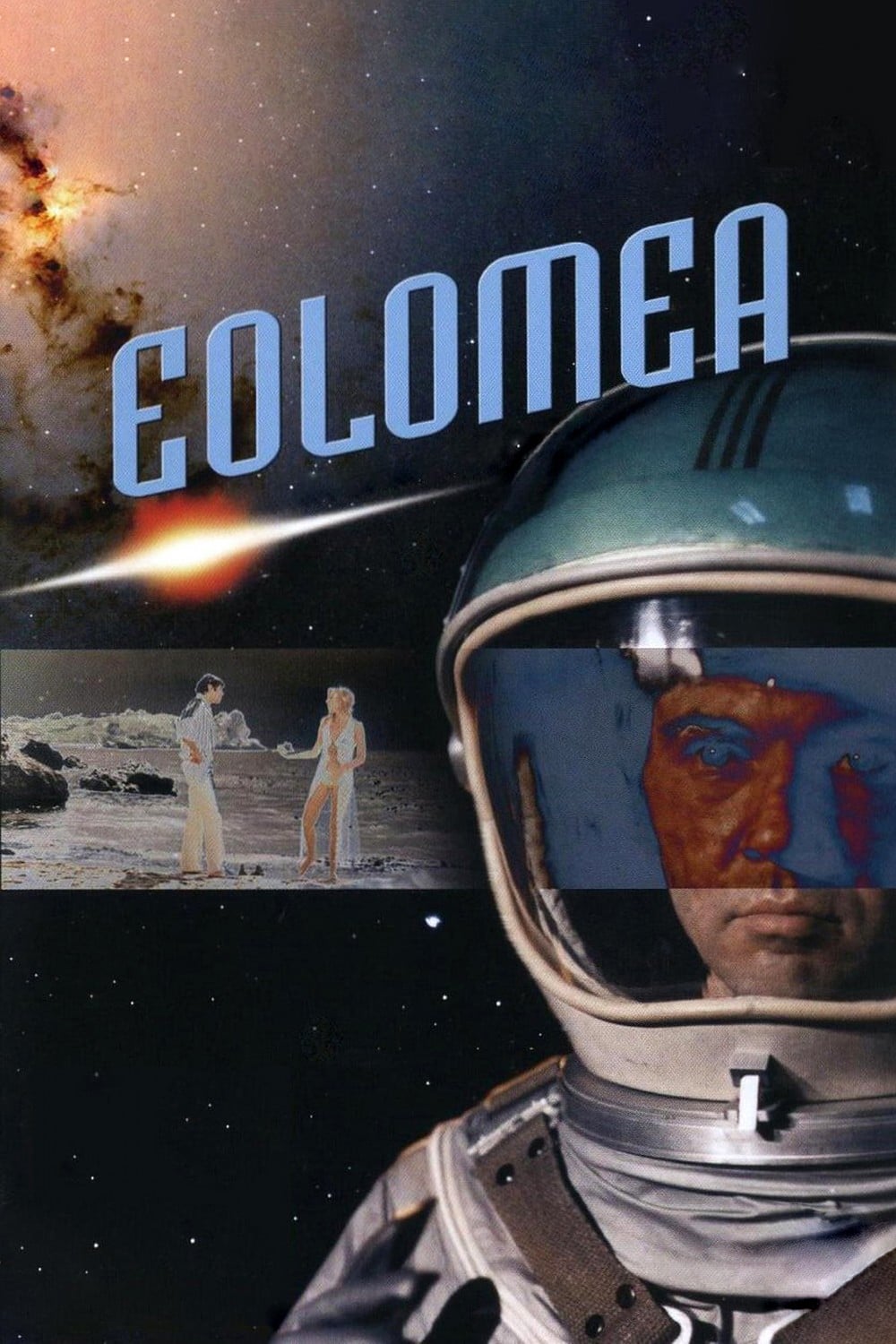
Poster from TMDB
Eolomea
Sign in to saveEolomea is a 1972 science fiction drama film directed by Herrmann Zschoche, based on the book of the same name by Angel Wagenstein. The film was an East German/Soviet/Bulgarian coproduction.
Film · TMDB
5.4Eight space cargo-ships disappear without a trace within three days, and the orbit station "Margot" has suddenly fallen silent. It’s down to science officer Maria Scholl to find out what happened to them.
Cast
- Cox Habbema as Professor Maria Scholl
- Ivan Andonov as Daniel Lagny
- Rolf Hoppe as Olo Tal
- Holger Mahlich as Navigator
- Vsevolod Sanayev as Kun
- Benjamin Besson as Sima Kun
Themes
- starship
- aircraft grounding
- astronaut
- space centre
This product uses the TMDB API but is not endorsed or certified by TMDB.
Key facts
- Film.name
- Eolomea
- Film.image
- Eolomea.jpg
- Film.caption
- Cover of 2005 re-release
- Film.director
- Herrmann Zschoche
- Film.writer
- Willi Brückner
- Film.music
- Günther Fischer
- Film.cinematography
- Günter Jaeuthe
- Film.editing
- Helga Gentz
- Film.runtime
- 79 minutes
- Film.language
- German, Russian
via Wikipedia infobox
Wikidata facts
- Instance of
- film
- Genre
- drama film
- Country of origin
- People's Republic of Bulgaria
- Original language
- Russian
- Director
- Herrmann Zschoche
- Screenwriter
- Angel Wagenstein
- Cast member
- Vsevolod Sanayev
- Duration
- 82
- FilmAffinity ID
- 685192
- Distribution format
- video on demand
Show 3 more facts
- publication date
- 1972-01-01
- title
- Eolomea
- distributed by
- Netflix
via Wikidata · CC0
~3 min read
Encyclopedic overview
6 sectionsContents
- Plot
- Cast
- Editions
- References
- Bibliography
- External links
Eolomea is a 1972 science fiction drama film directed by Herrmann Zschoche, based on the book of the same name by Angel Wagenstein. The film was an East German/Soviet/Bulgarian coproduction.
==Plot== Authorities responsible for Earth’s spaceflight safety grow increasingly concerned over unexplained incidents at the "Margo" space base, where several ships and their crews have mysteriously disappeared over three days. Following a special session, the Institute of Space Research issues a temporary flight ban until the cause is identified. Professor Maria Scholl suspects that fellow scientist Professor Oli Tal is withholding key information. She arranges a private meeting and learns about an unusual phenomenon observed in the late 19th century by British astronomers: a mysterious light in the Cygnus constellation that appears every 24 years. Soviet astronomers, after the first space flights, hypothesized that the light could be an artificial signal, potentially a powerful laser probing the Solar System for signs of life.
Excerpted from Wikipedia’s “Eolomea” article, available under the CC BY-SA 4.0 licence.