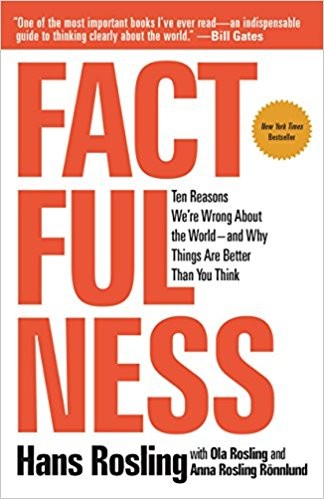
Cover via Open Library · Open Library
Factfulness
Sign in to saveAlso known as Factfulness: Ten Reasons We're Wrong About the World – and Why Things Are Better Than You Think
'''''Factfulness: Ten Reasons We're Wrong About the World – and Why Things Are Better Than You Think''''' is a 2018 book by Swedish physician, professor of international health at Karolinska Institute and statistician Hans Rosling with his son Ola Rosling and daughter-in-law Anna Rosling Rönnlund. The book was published posthumously a year after Hans Rosling died from pancreatic cancer. In the book, Rosling suggests that the vast majority of people are wrong about the state of the world. He demonstrates that his test subjects believe the world is poorer, less healthy, and more dangerous t
Book · Open Library
- Author
- Hans Rosling
- First published
- 2018
- Editions
- 25
- Subjects
- Critical thinking, Information literacy, Prejudices, Social perception, Social indicators, Quality of life, Forecasting, New York Times bestseller
via Open Library
~6 min read
Encyclopedic overview
7 sectionsContents
- Summary
- Four income levels
- World getting better
- Rules of thumb
- Reception
- See also
- References
'''''Factfulness: Ten Reasons We're Wrong About the World – and Why Things Are Better Than You Think''' is a 2018 book by Swedish physician, professor of international health at Karolinska Institute and statistician Hans Rosling with his son Ola Rosling and daughter-in-law Anna Rosling Rönnlund. The book was published posthumously a year after Hans Rosling died from pancreatic cancer. In the book, Rosling suggests that the vast majority of people are wrong about the state of the world. He demonstrates that his test subjects believe the world is poorer, less healthy, and more dangerous than it actually is, attributing this not to random chance but to misinformation.
Rosling recommends thinking about the world as divided into four levels based on income brackets (rather than the prototypical developed/developing framework) and suggests ten instincts that prevent us from seeing real progress in the world.
Excerpted from Wikipedia’s “Factfulness” article, available under the CC BY-SA 4.0 licence.