
File:Fahrenheit_451_1st_ed_cover.jpg · Wikimedia Commons · See Wikimedia Commons
Fahrenheit 451
Sign in to save1953 novel by Ray Bradbury
OverviewAI-generated
Fahrenheit 451 is a work authored by Ray Bradbury. It was created in 1951 and first published in 1953. The text has been issued in 261 editions.
The subject is referenced by 461 other encyclopedia articles. A Guardian article titled "Fahrenheit 451: Reading the 1950s" describes the work.
Synthesized by Vinony from 13 facts across 4 sources: Wikidata, Firecrawl, Open Library, Vinony graph. Generated from structured data (not the Wikipedia text) and checked against those facts — may still contain errors.
Described at
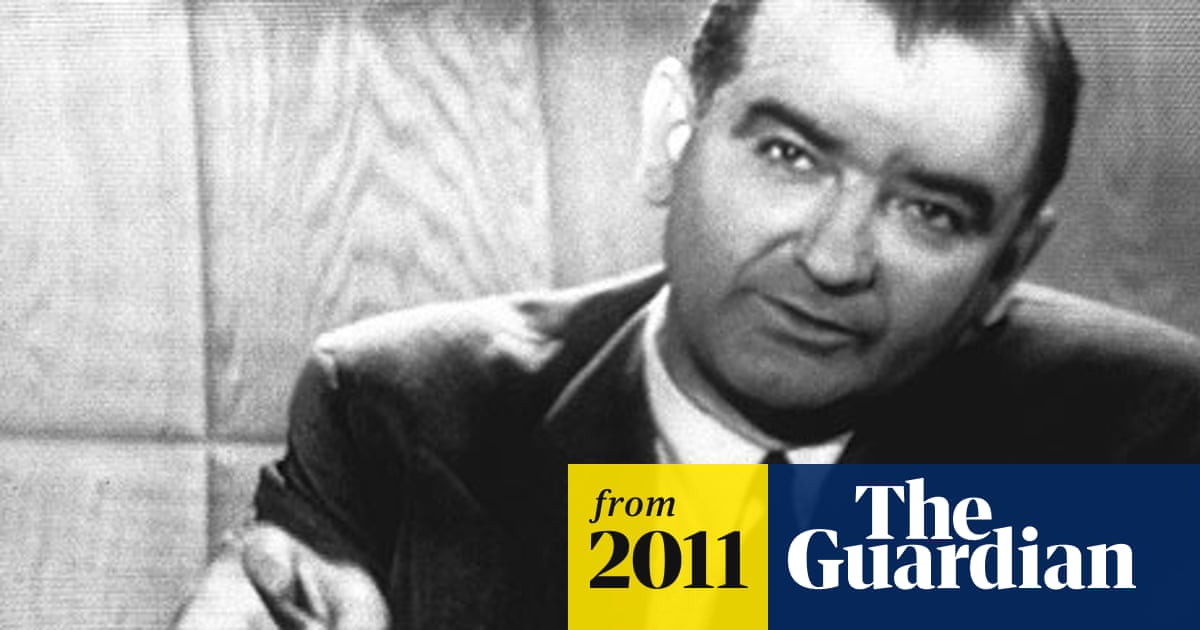
Fahrenheit 451: Reading the 1950s | Ray Bradbury | The Guardian
Sam Jordison: Ray Bradbury's dystopia is clearly humming with the anxieties of its times. But how well do we know the decade that made them?
theguardian.com →Ray Bradbury's dystopia is clearly humming with the anxieties of its times. But how well do we know the decade that made them? Fahrenheit 451 still resonates. Books censorship has never gone away, after all. But, as many people in the Reading Group have pointed out, it's also a book that clearly reflects its time. Ray Bradbury says that one of the main inspirations for Fahrenheit 451 came when he was out walking with a writer friend, and "a police car pulled up and the policeman got out and asked us 'What are you doing?'" Bradbury explained that they were out walking ("putting one foot in front of the other" was his first "smartaleck" response.) The policeman didn't like it. "Don't do it again!" he told Bradbury – which sent the writer into such a rage that he went home and wrote the short story [The Pedestrian [PDF]]( , imagining a time in which everyone who walked was considered a criminal. Later, he took his "midnight criminal stroller" for another walk around the future city – and Fahrenheit 451 was born. It's also impossible to talk about the 1950s without discussion of the Bomb. The book was written less than a decade after Nagasaki and Hiroshima (think about 9/11 to see how raw they must have seemed) and during an ever-escalating arms race. The future, in many ways, looked desperate. Concomitant to the Bomb was, of course, the cold war – and clearly that, too, influenced the book. The Soviets were sending writers to gulags and banning questionable books, while in the US McCarthy was persecuting writers and the HUAC was in full swing. And then, of course, the memory of the Nazis still burned all too bright .
Excerpt from a page describing this subject · 6,519 chars · not written by Vinony
Wikidata facts
- Instance of
- literary work
- Author
- Ray Bradbury
- Genre
- political fiction
- Country of origin
- United States
- Main subject
- conformity
- Narrative location
- United States
- Image
- Fahrenheit451HUNcover.jpg
Show 14 more facts
- epigraph
- If they give you ruled paper, write the other way.
- illustrator
- Josef Albers
- topic's main category
- Category:Fahrenheit 451
- title
- Fahrenheit 451
- Commons category
- Fahrenheit 451
- language of work or name
- English language
- first line
- It was a pleasure to burn. It was a special pleasure to see things eaten, to see things blackened and changed.
- last line
- Yes, thought Montag, that’s the one I’ll save for noon. For noon… When we reach the city.
- derivative work
- Fahrenheit 451
- work available at URL
- grapaharan.org/index.php?title=%C2%AB451_%D5%A1%D5%BD%D5%BF%D5%AB%D5%B3%D5%A1%D5%B6_%D5%A8%D5%BD%D5%BF_%D5%96%D5%A1%D6%80%D5%A5%D5%B6%D5%B0%D5%A1%D5%B5%D5%A9%D5%AB%C2%BB
- inception
- 1951-00-00
- form of creative work
- novel
- publication date
- 1953-00-00
Sources (8)
via Wikidata · CC0
~40 min read
Encyclopedic overview
Fahrenheit 451 is a 1953 dystopian novel by American writer Ray Bradbury. It presents a future American society where books have been outlawed and "firemen" burn any that are found. The novel follows in the viewpoint of Guy Montag, a fireman who becomes disillusioned with his role of censoring literature and destroying knowledge, eventually quitting his job and committing himself to the preservation of literary and cultural writings.
Fahrenheit 451 was written by Bradbury during the Second Red Scare and the McCarthy era, inspired by the book burnings in Nazi Germany and by ideological repression in the Soviet Union. Bradbury said his motivations for writing the novel had changed multiple times. In a 1956 radio interview, Bradbury said that he wrote the book because of his concerns about the threat of burning books in the United States. In later years, he described the book as a commentary on how mass media reduces interest in reading literature. In a 1994 interview, Bradbury cited political correctness as an allegory for the censorship in the book, calling it "the real enemy these days" and labeling it as "thought control and freedom of speech control".
Excerpted from Wikipedia’s “Fahrenheit 451” article, available under the CC BY-SA 4.0 licence.