
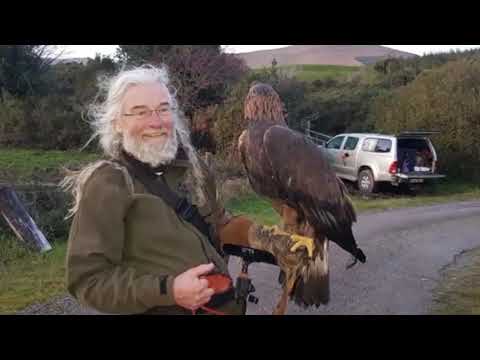
File:GoshawkFalconry.jpg · Wikimedia Commons · See Wikimedia Commons
Falconry is the sport or practice of hunting with trained birds of prey, such as falcons and goshawks, which are flown to catch wild game. It is an ancient pursuit that has been practiced across many cultures throughout history and remains popular today as both a hunting method and a skilled craft.
AI-generated from the Wikipedia summary — may contain errors.
Key facts
- Intangible heritage.Countries
- Austria, Belgium, Croatia, Czechia, France, Germany, Hungary, Ireland, Italy, Kazakhstan, Kyrgyzstan, Mongolia, Morocco, Netherlands, Pakistan, Poland, Portugal, Qatar, Saudi Arabia, Slovakia, South Korea, Spain, Syria, and the United Arab Emirates
- Intangible heritage.ID
- 01708
- Intangible heritage.Year
- 2021
- Intangible heritage.Session
- 16th
- Intangible heritage.List
- Representative
- Intangible heritage.ICH
- Falconry, a living human heritage
via Wikipedia infobox
Described at
Falconry, a living human heritage - UNESCO Intangible Cultural Heritage
ich.unesco.org →Falconry is the traditional art and practice of training and flying falcons (and sometimes eagles, hawks, buzzards and other birds of prey). It has been practised for over 4000 years. The practice of falconry in early and medieval periods of history is documented in many parts of the world. Originally a means of obtaining food, falconry has acquired other values over time and has been integrated into communities as a social and recreational practice and as a way of connecting with nature. Today, falconry is practised by people of all ages in many countries. As an important cultural symbol in many of those countries, it is transmitted from generation to generation through a variety of means, including through mentoring, within families or in training clubs. The modern practice of falconry focuses on safeguarding falcons, quarry and habitats, as well as the practice itself. And while falconers come from different backgrounds, they share universal values, traditions and practices, including the methods of breeding, training and caring for birds, the equipment used and the bonds between the falconer and the bird. The falconry community includes supporting entities such as falcon hospitals, breeding centres, conservation agencies and traditional equipment makers. 1. Knowledge and practices concerning nature and the universe (308) 2. Oral traditions and expressions (384) 3. Social practices, rituals and festive events (584) 4. Traditional craftsmanship (460)
Excerpt from a page describing this subject · 9,856 chars · not written by Vinony
Wikidata facts
- Subclass of
- aviculture
- Country
- Italy
- Image
- 1 raróg.jpg
Show 9 more facts
- Commons category
- Falconry
- topic's main category
- Category:Falconry
- Commons gallery
- Falconry
- practiced by
- falconer
- described by source
- Encyclopædia Britannica 11th edition
- P8168
- Schenker
- indigenous to
- Ireland
- uses
- bird of prey
via Wikidata · CC0
~56 min read
Encyclopedic overview
35 sectionsContents
- Birds used in contemporary falconry
- Species for beginners
- Soaring hawks and the common buzzard (''Buteo'')
- Harris's hawk (''Parabuteo unicinctus'')
- True hawks (''Astur'' and ''Accipiter'')
- Harriers (''Circus'')
- Falcons (''Falco'')
- Owls (Strigidae)
- Large eagles (''Aquila'')
- Sea eagles (''Haliaeetus'')
- Husbandry, training, and equipment
- Falconry around the world
- Falconry today
- Starting Falconry in the 21st Century
- Clubs and organizations
- Captive breeding and conservation
- Hybrid falcons
- Artificial selection and domestication
- Escaped falconry birds
- Regulations
- In Great Britain
- In the United States
- History
- Timeline
- Falconry in [[Great Britain|Britain]] in early [[12th century]]
- The ''Book of St Albans''
- Falconry in Britain in 1973
- Intangible cultural heritage
- Literature and film
- English language words and idioms derived from falconry
- See also
- Notes
- References
- Further reading
- External links
thumb|A Eurasian goshawk thumb|Flying a saker falcon
Falconry is the hunting of wild animals in their natural state and habitat by means of a trained bird of prey. Small animals are hunted; squirrels and rabbits often fall prey to these birds. Two traditional terms are used to describe a person involved in falconry: a "falconer" flies a falcon; an "austringer" (Old French origin) keeps Eurasian goshawks and uses accipiters for hunting. In modern falconry, the red-tailed hawk (Buteo jamaicensis), Harris's hawk (Parabuteo unicinctus), and the peregrine falcon (Falco perigrinus) are some of the more commonly used birds of prey. The practice of hunting with a conditioned falconry bird is also called hawking or "gamehawking", although the words hawking and hawker have become used so much to refer to petty traveling traders, that the terms "falconer" and "falconry" now apply to most use of trained birds of prey to catch game. However, many contemporary practitioners still use these words in their original meaning.
Excerpted from Wikipedia’s “falconry” article, available under the CC BY-SA 4.0 licence.
Gallery (52)
Available in 58 languages
- Español
- Français
- Deutsch
- 中文
- 日本語
- Русский
- Português
- Italiano
- العربية
- हिन्दी
- Asturian
- Bahasa Indonesia
- Bashkir
- Basque
- Bosnian
- Breton
- Bulgarian
- Burmese
Show 39 more
- Catalan
- Croatian
- Czech
- Danish
- Esperanto
- Finnish
- Galician
- Georgian
- Hebrew
- Hungarian
- Icelandic
- Interlingua
- Javanese
- Kannada
- Kyrgyz
- Latin
- Lithuanian
- Macedonian
- Nederlands
- Norwegian
- Polski
- Romanian
- Serbian
- Serbian (Latin)
- Sicilian
- Slovak
- Svenska
- Tajik
- Tamil
- Tiếng Việt
- Türkçe
- Ukrainian
- Walloon
- Western Frisian
- Western Panjabi
- Wu Chinese
- zh_yue
- فارسی
- 한국어
via Wikidata sitelinks · CC0