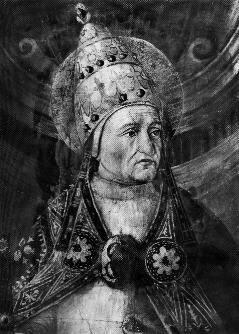
File:PopeFelixI.jpg · Wikimedia Commons · See Wikimedia Commons
Felix I
Sign in to saveAlso known as Pope Felix I, Felix, St. Felix I
Pope and bishop of Rome from 269 to 274
OverviewAI-generated
Felix I was a male Catholic priest and Pope who lived during the Roman Empire. Born in Rome in 300, he served as a Christian martyr and held the position of Pope within the Catholic Church. His work location was Rome, where he also died on December 30, 274.
He is recognized as a saint with a feast day on December 30. Felix I is buried in the Catacomb of Callixtus. His life and role are described in sources including the Nordisk familjebok, Pauly–Wissowa, Brockhaus and Efron Encyclopedic Dictionary, and The Nuttall Encyclopædia. He is also included in the Popes collection of the Vinony collections.
Synthesized by Vinony from 18 facts across 2 sources: Wikidata, Vinony collections. Generated from structured data (not the Wikipedia text) and checked against those facts — may still contain errors.
Wikidata facts
- Instance of
- human
- Given name
- Felix
- Gender
- male
- Place of birth
- Rome
- Place of death
- Rome
- Occupation
- Catholic priest
- Position held
- Pope
- Religion
- Catholic Church
- Image
- PopeFelixI.jpg
- Work location
- Rome
Show 9 more facts
- Commons category
- Felix I
- date of birth
- 0300-00-00
- date of death
- 0274-12-30
- described by source
- Wikitólica
- canonization status
- saint
- time period
- Roman Empire
- feast day
- December 30
- place of burial
- Catacomb of Callixtus
- subject has role
- Pope
Sources (7)
via Wikidata · CC0
~5 min read
Encyclopedic overview
Pope Felix I (died 30 December 274) was the bishop of Rome from 5 January 269 to his death on 30 December 274. Born in Rome, he succeeded Pope Dionysius and is noted for his theological contributions, particularly a significant dogmatic letter addressing the unity of Christ’s person. During his papacy, Felix I confronted the heresy of Paul of Samosata, who denied the divinity of Christ. The intervention of Emperor Aurelian, prompted by Felix, led to Paul’s deposition from the bishopric of Antioch, reinforcing orthodox Christological doctrine.
Felix is traditionally credited with instituting the practice of celebrating Mass over the tombs of martyrs, though this attribution remains a subject of historical debate. Upon his death, Felix was interred in the Catacomb of Callixtus on the Appian Way. While later accounts mistakenly honored him as a martyr, contemporary scholarship suggests he died of natural causes.
Excerpted from Wikipedia’s “Felix I” article, available under the CC BY-SA 4.0 licence.
Gallery (2)
Available in 74 languages
- Español
- Français
- Deutsch
- 中文
- 日本語
- Русский
- Português
- Italiano
- العربية
- Afrikaans
- Albanian
- Albanian
- Armenian
- Asturian
- Bahasa Indonesia
- Basque
- be_x_old
- Belarusian
Show 55 more
- Breton
- Bulgarian
- Catalan
- cdo
- Cebuano
- Central Kurdish
- Croatian
- Czech
- Danish
- Egyptian Arabic
- Esperanto
- Estonian
- Filipino
- Finnish
- Galician
- Georgian
- Greek
- Hakka Chinese
- Hebrew
- Hungarian
- Ido
- Iloko
- Irish
- Javanese
- Latin
- Latvian
- Low German
- Macedonian
- Malay
- Mazanderani
- Nederlands
- Norwegian
- Occitan
- Polski
- Romanian
- Serbian
- Serbian (Latin)
- Sicilian
- Slovak
- Slovenian
- Svenska
- Swahili
- Tamil
- Tiếng Việt
- Türkçe
- Ukrainian
- Urdu
- Waray
- Wu Chinese
- Yoruba
- Zaza
- zh_min_nan
- zh_yue
- فارسی
- 한국어
via Wikidata sitelinks · CC0