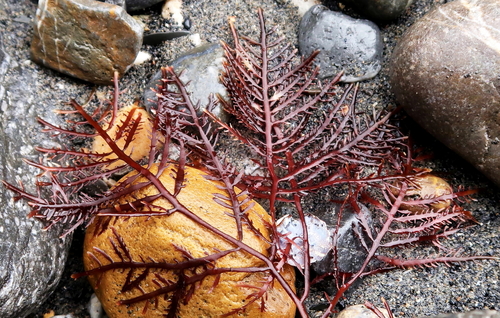
(c) emilio2020, some rights reserved (CC BY-NC), uploaded by emilio2020 · cc-by-nc
Gelidium
Sign in to saveGelidium is a genus of thalloid red algae comprising 134 species. Its members are known by a number of common names.
Species
テングサ属
GENUS
- KingdomPlantae
- PhylumRhodophyta
- ClassFlorideophyceae
- OrderGelidiales
- FamilyGelidiaceae
Chiloe, Chile central, Peru
via GBIF
Museum specimens
- Specimen records
- 3,352
- With media
- 1,943
- Family
- Gelidiaceae
- Collections
- CCBA-FMVZ-UADY, FC-UNAM
- Recorded in
- Mexico
Wikidata facts
- Instance of
- taxon
- Parent taxon
- Gelidiaceae
- Image
- Icones of Japanese algae (Pl. CVI) (8006301038).jpg
Show 5 more facts
- taxon name
- Gelidium
- taxon rank
- genus
- Commons category
- Gelidium
- AlgaeBase URL
- www.algaebase.org/search/genus/detail/?genus_id=11
- this taxon is source of
- agar
Sources (1)
via Wikidata · CC0
~10 min read
Encyclopedic overview
10 sectionsContents
- Description and life cycle
- Distribution
- Ecology
- Cultivation and exploitation
- Historical environmental analysis
- Taxonomy and nomenclature
- Species
- Notes
- References
- External links
Gelidium is a genus of thalloid red algae comprising 134 species. Its members are known by a number of common names.
== Description and life cycle == Specimens can reach around in size. Branching is irregular, or occurs in rows on either side of the main stem. Gelidium produces tetraspores. Many of the algae in this genus are used to make agar. Agarocolloids are known to be extracted in algae belonging to the orders Gracilariales and Gelidiales with certain applications in the food and cosmetics. Gelling properties often differ among species, seasons, seaweed age, and substitutions between sulphate esters, among other compounds. Sulphate composition often dictates gel strength, while methyl esters determine gelling and elasticity.
Excerpted from Wikipedia’s “Gelidium” article, available under the CC BY-SA 4.0 licence.