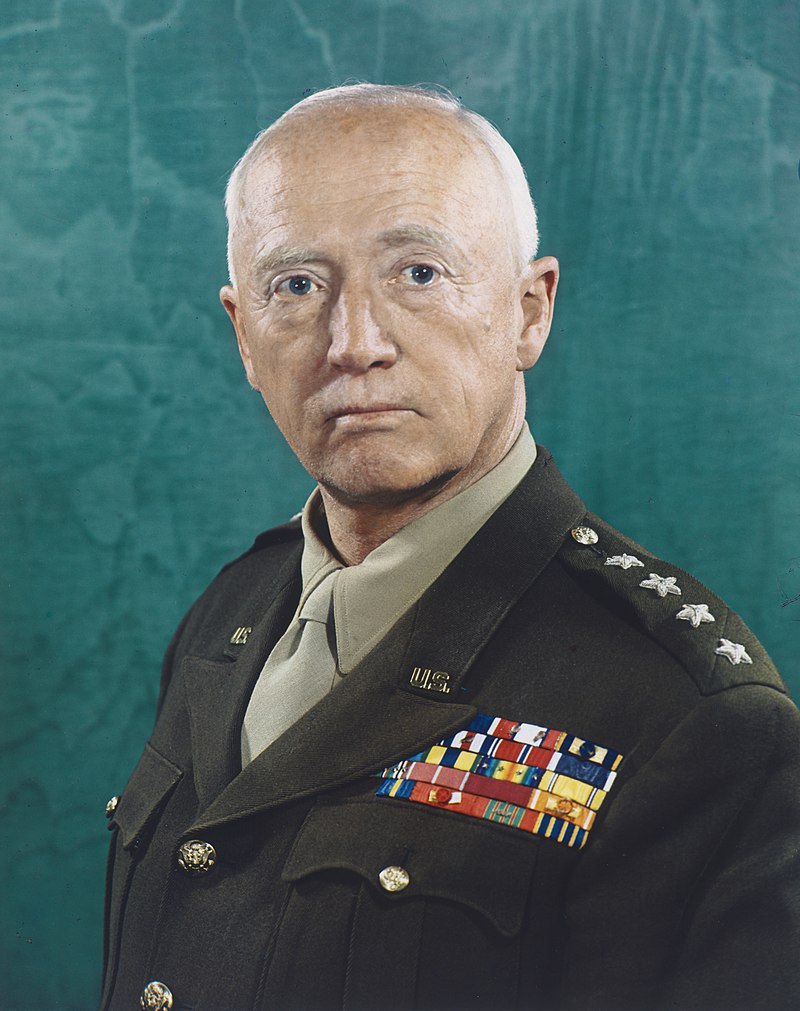
File:General_George_Patton_by_Robert_F._Cranston,_Lee_Elkins,_and_Harry_Warnecke,_1945,_color_carbro_print,_from_the_National_Portrait_Gallery_-_NPG-NPG_95_404Patton-000002.jpg · Wikimedia Commons · See Wikimedia Commons
George S. Patton
Sign in to saveAlso known as The Old Man, Old Blood and Guts, Bandito, General Patton, George Smith Patton, Jr., G.S. Patton, George Patton, George Smith Patton
United States Army general (1885–1945)
George S. Patton was a prominent United States Army general who lived from 1885 to 1945 and became one of the most notable military commanders of his era. He is historically significant for his role in major World War II campaigns, where his aggressive tactics and leadership made him a central figure in Allied military operations.
AI-generated from the Wikipedia summary — may contain errors.
Film & TV
San Gabriel, California, USA
George Smith Patton Jr. (November 11, 1885 – December 21, 1945) was a general in the United States Army who commanded the Seventh United States Army in the Mediterranean Theater of World War II, and the Third United States Army in France and Germany after the Allied invasion of Normandy in June 1944.
Known for
- Greatest Events of World War II in Colour — Self (archive footage)2019
- Silence Patton — Self (archive footage)2018
- 1914-1945 : Les grands hommes des deux guerres — lui-même2018
- Doomsday: World War I — Self (archive footage)2012
- Myth Hunters — Self (archive footage)2012
- America's Book of Secrets — Self (archive footage)2012
- Oliver Stone's Untold History of the United States — Self (archive footage)2012
- History vs. Hollywood — Self (archive footage)2001
- The Last Days of World War II — Self (archive footage)1995
- "KZ Buchenwald. Aushalten. Wir eilen euch zur Hilfe" — Self (archive footage)1995
via TMDB
Wikidata facts
- Instance of
- human
- Family name
- Patton
- Gender
- male
- Citizenship
- United States
- Place of birth
- San Gabriel Valley
- Place of death
- Heidelberg
- Child
- George Patton IV
- Father
- George S. Patton
- Languages spoken
- English language
- Participant in
- 1912 Summer Olympics
- Sport
- modern pentathlon
- Country for sport
- United States
- Conflict
- Pancho Villa Expedition
- Military branch
- United States Cavalry
- Military rank
- general
- Image
- General George Patton by Robert F. Cranston, Lee Elkins, and Harry Warnecke, 1945, color carbro print, from the National Portrait Gallery - NPG-NPG 95 404Patton-000002.jpg
Show 18 more facts
- P12749
- Lausche
- Commons category
- George S. Patton
- date of birth
- 1885-11-11
- date of death
- 1945-12-21
- topic's main category
- Category:George S. Patton
- Commons gallery
- George S. Patton
- manner of death
- accidental death
- allegiance
- United States
- cause of death
- heart failure
- commander of (DEPRECATED)
- Seventh United States Army
- name in native language
- George Smith Patton Jr.
- place of burial
- Luxembourg American Cemetery and Memorial
- start of work period
- 1909-00-00
- member of
- Fifteenth United States Army
- nickname
- Old Blood and Guts
- different from
- Patton
- Commons Creator page
- George S. Patton
- end of work period
- 1945-00-00
Sources (7)
via Wikidata · CC0
~40 min read
Encyclopedic overview
George Smith Patton Jr. (11 November 1885 – 21 December 1945) was a general in the United States Army who commanded the Seventh Army in the Mediterranean Theater of World War II, then the Third Army in France and Germany after the Allied invasion of Normandy in June 1944.
Born in 1885, Patton attended the Virginia Military Institute and the United States Military Academy at West Point. He studied fencing and designed the M1913 Cavalry Saber, more commonly known as the "Patton Saber." He competed in the modern pentathlon at the 1912 Summer Olympics in Stockholm, Sweden, finishing in fifth place. Patton entered combat during the Pancho Villa Expedition of 1916, the United States' first military action using motor vehicles. He fought in World War I as part of the Tank Corps: he commanded the U.S. tank school in France, then led tanks into combat and was wounded near the end of the war. In the interwar period, Patton became a central figure in the development of the army's armored warfare doctrine, serving in numerous staff positions throughout the country. At the United States' entry into World War II, he commanded the 2nd Armored Division.
Excerpted from Wikipedia’s “George S. Patton” article, available under the CC BY-SA 4.0 licence.