Goodeniaceae · Kew POWO · Kew Plants of the World Online
Goodeniaceae
Sign in to saveGoodeniaceae is a family of flowering plants in the order Asterales. It contains about 404 species in twelve genera. The family is distributed mostly in Australia, except for the genus Scaevola, which is pantropical. Its species are found across most of Australia, being especially common in arid and semi-arid climates.
OverviewAI-generated
Goodeniaceae is a family of plants within the kingdom Plantae, phylum Tracheophyta, class Magnoliopsida, and order Asterales. The taxon is recognized as accepted in the World Register of Marine Species, which also lists the common name クサトベラ科. Members of the Neotropical Goodeniaceae are described as being readily distinguished by a unique floral appearance.
Records for this family are held by institutions including CAS, MEL, RSA, TENN, and BRIT. These records originate from the United States, Australia, and the Philippines. The Global Biodiversity Information Facility has logged 324,042 occurrences for the taxon, while iDigBio maintains 150 records accompanied by 76 media files.
Synthesized by Vinony from 28 facts across 7 sources: Wikidata, GBIF, Plants of the World, Gbif Occ, WoRMS, iDigBio, Vinony graph. Generated from structured data (not the Wikipedia text) and checked against those facts — may still contain errors.
Species
クサトベラ科
FAMILY
- KingdomPlantae
- PhylumTracheophyta
- ClassMagnoliopsida
- OrderAsterales
- FamilyGoodeniaceae
属 参见正文 草海桐科有12属约404种(Flora of Australia, vol. 35)主要分布在澳大利亚各地,尤其是干旱和半干旱地带;其中草海桐属( Scaevola)广泛分布在世界各地的热带地区。中国有2属3种,分布在南部沿海和岛屿上。 本科植物通常为草本,也有亚灌木或灌木,花两侧对称。 属 Anthotium R.Br. Brunonia Sm. Coopernookia Carolin Dampiera R.Br. Diaspasis R.Br. 美柱草屬Goodenia Sm. 花环花属 Lechenaultia R.Br.或 ( Leschenaultia DC.) Pentaptilon E.Pritz. 草海桐属 Scaevola L. Selliera Cav. Velleia Sm. Verreauxia Benth. 1981年的克朗奎斯特分类法将本科列入桔梗目,1998年根据基因亲缘关系分类的APG 分类法将其列入菊目。 参考文献 Goodeniaceae in L. Watson and M.J. Dallwitz (1992 onwards). The families of flowering plants: descriptions, illustrations, identification, information retrieval. http://delta-intkey.com Goodeniaceae (at the Angiosperm Phylogeny Website) Australian Department of the Environment and Heritage. Flora of Australia vol. 35. Australian Government Publishing Service (AGPS). 1992 [2006-09-17]. 维基共享资源中相关的多媒体资源:草海桐科 外部链接 澳大利亚国家植物园中的草海桐科植物图片 取自“https://zh.wikipedia.org/w/index.php?title=草海桐科&oldid=52449140” 分类: 草海桐科 植物科名 隐藏分类:本地相关图片与维基数据不同
via GBIF · Kew POWO
Museum specimens
- Specimen records
- 150
- With media
- 76
- Family
- Goodeniaceae
- Collections
- CAS, MEL, RSA, TENN, BRIT
- Recorded in
- United States, Australia, Philippines
Wikidata facts
- Instance of
- taxon
- Image
- Goodenia ramosissima-Sowerby.jpg
Show 8 more facts
- Commons category
- Goodeniaceae
- taxon rank
- family
- taxon name
- Goodeniaceae
- topic's main category
- Category:Goodeniaceae
- has fruit type
- capsule
- taxonomic type
- Goodenia
- taxon common name
- 草海桐科
Sources (1)
via Wikidata · CC0
~2 min read
Encyclopedic overview
4 sectionsContents
- Morphology
- Genera
- References
- External links
Goodeniaceae is a family of flowering plants in the order Asterales. It contains about 404 species in twelve genera. The family is distributed mostly in Australia, except for the genus Scaevola, which is pantropical. Its species are found across most of Australia, being especially common in arid and semi-arid climates.
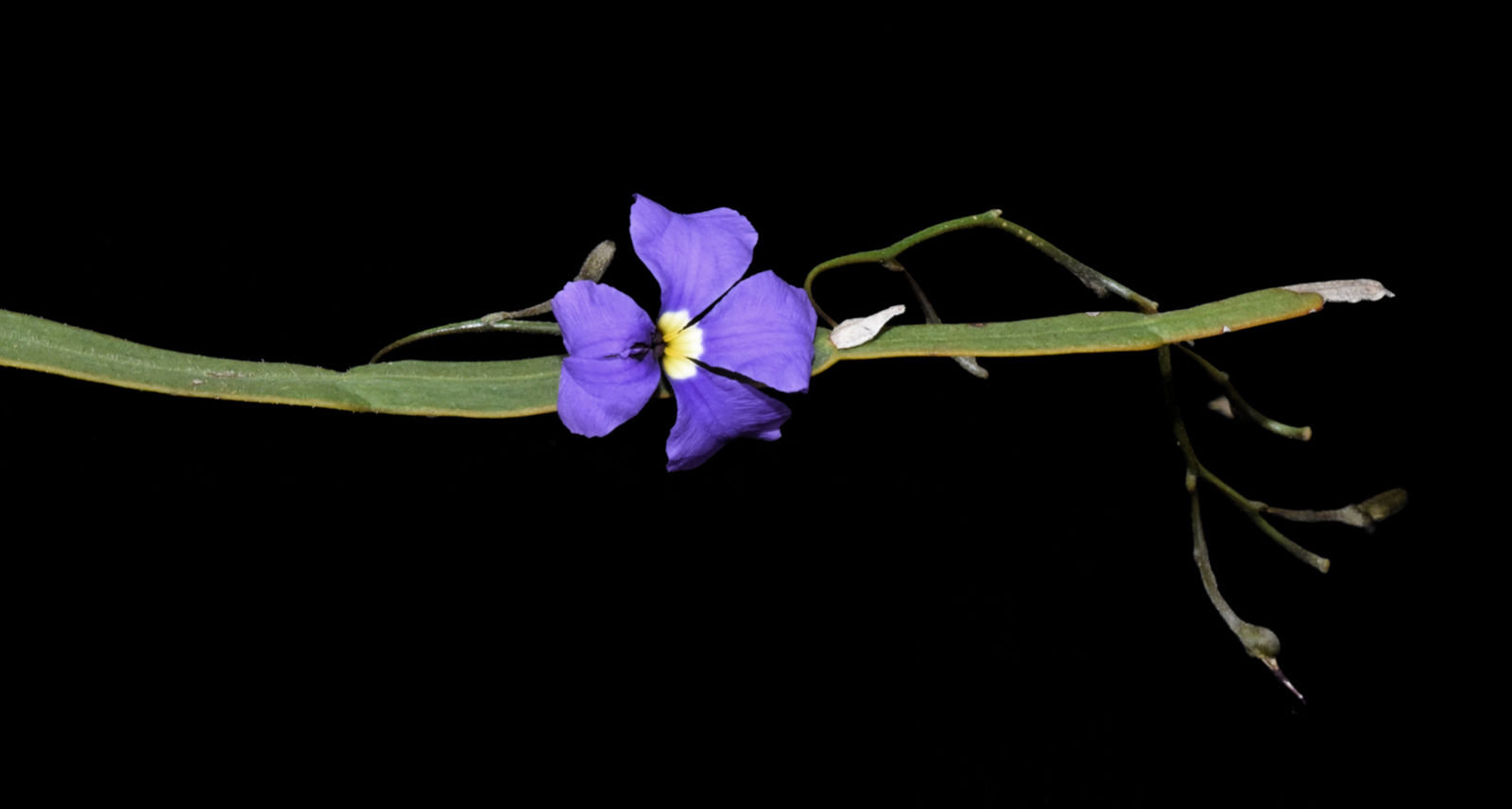
==Morphology== Species in Goodeniaceae are generally herbaceous with spiral leaves. Flowers have a single plane of symmetry (monosymmetric; Brunonia being the sole exception), and are either fan-like (e.g., Scaevola) or bilabiate (as in Dampiera). Corolla lobes often have two thin marginal wings, which also occur in other families of Asterales such as the Menyanthaceae and Argophyllaceae. The style bears a pollen-cup, also known as an indusium, at the tip, a unique character for the family. The indusium has a function in secondary pollen presentation, a phenomenon also occurring in the related families Asteraceae and Campanulaceae. The ovary is inferior and the fruit is a drupe, a nut or a capsule. The seeds from capsular fruits usually have a mucilaginous wing.
Excerpted from Wikipedia’s “Goodeniaceae” article, available under the CC BY-SA 4.0 licence.