(c) Mark Rosenstein, some rights reserved (CC BY-NC), uploaded by Mark Rosenstein · cc-by-nc
Gorgasia
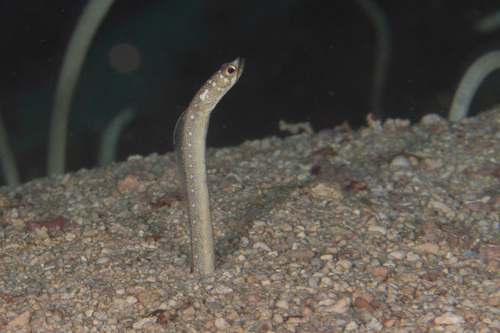
Sign in to saveGorgasia is one of the two genera that belong to the subfamily Heterocongrinae (common name: garden eels). This genus is classified by the behavioral pattern of burrowing 75% of their bodies in the sandy substrate they live in and protruding their upper body into the water current above, giving the appearance that they are planted into the ground (origin of common name). This protruding behavior serves a multipurpose functionality to their survival.
Species
シンジュアナゴ属
Genus
- PhylumChordata
- ClassTeleostei
- OrderAnguilliformes
- FamilyCongridae
via
Museum specimens
- Specimen records
- 23
- With media
- 1
- Family
- Congridae
- Collections
- USNM, CMN, LACM, BPBM, AM, CAS
- Recorded in
- United States, Belize, Mexico, Indonesia, Papua New Guinea, Fiji, Australia, India
Wikidata facts
- Instance of
- taxon
- Parent taxon
- Heterocongrinae
- Image
- Heteroconger at Shedd Aquarium.jpg
Show 4 more facts
- Commons category
- Gorgasia
- taxon name
- Gorgasia
- taxon rank
- genus
- topic's main category
- Category:Gorgasia
Sources (1)
via Wikidata · CC0
~18 min read
Encyclopedic overview
4 sectionsContents
- Species
- Habitat and geography
- Reproduction and life span
- References
Gorgasia is one of the two genera that belong to the subfamily Heterocongrinae (common name: garden eels). This genus is classified by the behavioral pattern of burrowing 75% of their bodies in the sandy substrate they live in and protruding their upper body into the water current above, giving the appearance that they are planted into the ground (origin of common name). This protruding behavior serves a multipurpose functionality to their survival.
The first function serves as a method of collection of their prey. Most members of this genus prey on zooplankton floating in the passing current, while some species (i.e. G. hawaiiensis) will prey on small fish eggs. The second function of the burrowing behavior allows for avoidance of predation. Whenever in the presence of a predator, most commonly the Pacific Snake Eel Ophichthus triserialis, garden eels will retreat back into their burrows and hide. Similarly, during the night hours (non-light hours) when zooplankton populations are low, these eels will return to their burrows and cap them off while they sleep.
Excerpted from Wikipedia’s “Gorgasia” article, available under the CC BY-SA 4.0 licence.