Stöhr, Sabine
Gorgonocephalus
Sign in to saveGorgonocephalus, the '''Gorgon's heads or Gorgon's head basket stars', is a genus of marine basket stars in the class Ophiuroidea. Members of this genus are found in coldwater environments including the Arctic, the Antarctic, and deep-sea habitats. The scientific name comes from the Greek, gorgós meaning "dreaded" and -cephalus'' meaning "head", and refers to the similarity between these echinoids and the Gorgon's head from Greek myth with its coiled serpents for hair.
Species
medusahoder
GENUS
- KingdomAnimalia
- PhylumEchinodermata
- ClassOphiuroidea
- OrderEuryalida
- FamilyGorgonocephalidae
У этого термина существуют и другие значения, см. Голова горгоны. Горгоноцефал G. caputmedusae, Музей естествознания Гётеборга Горгоноцефалы, или головы горгоны (лат. Gorgonocephalus) — род иглокожих из семейства горгоноцефалид (Gorgonocephalidae) отряда ветвистых офиур (Euryalida).
via GBIF
Museum specimens
- Specimen records
- 236
- With media
- 4
- Family
- Gorgonocephalidae
- Collections
- USNM, SIO, CAS, AUM
- Recorded in
- United States, Canada, Suriname, Ecuador, Costa Rica, Antarctica, Angola, Northern Mariana Islands
Wikidata facts
- Instance of
- taxon
- Parent taxon
- Gorgonocephalidae
- Image
- Sanc1601 - Flickr - NOAA Photo Library.jpg
Show 5 more facts
- Commons category
- Gorgonocephalus
- taxon name
- Gorgonocephalus
- taxon rank
- genus
- taxonomic type
- Gorgonocephalus caputmedusae
- taxon common name
- medusahoder
Sources (1)
via Wikidata · CC0
~2 min read
Encyclopedic overview
3 sectionsContents
- Description
- Species
- References
Gorgonocephalus, the '''Gorgon's heads or Gorgon's head basket stars', is a genus of marine basket stars in the class Ophiuroidea. Members of this genus are found in coldwater environments including the Arctic, the Antarctic, and deep-sea habitats. The scientific name comes from the Greek, gorgós meaning "dreaded" and -cephalus'' meaning "head", and refers to the similarity between these echinoids and the Gorgon's head from Greek myth with its coiled serpents for hair.
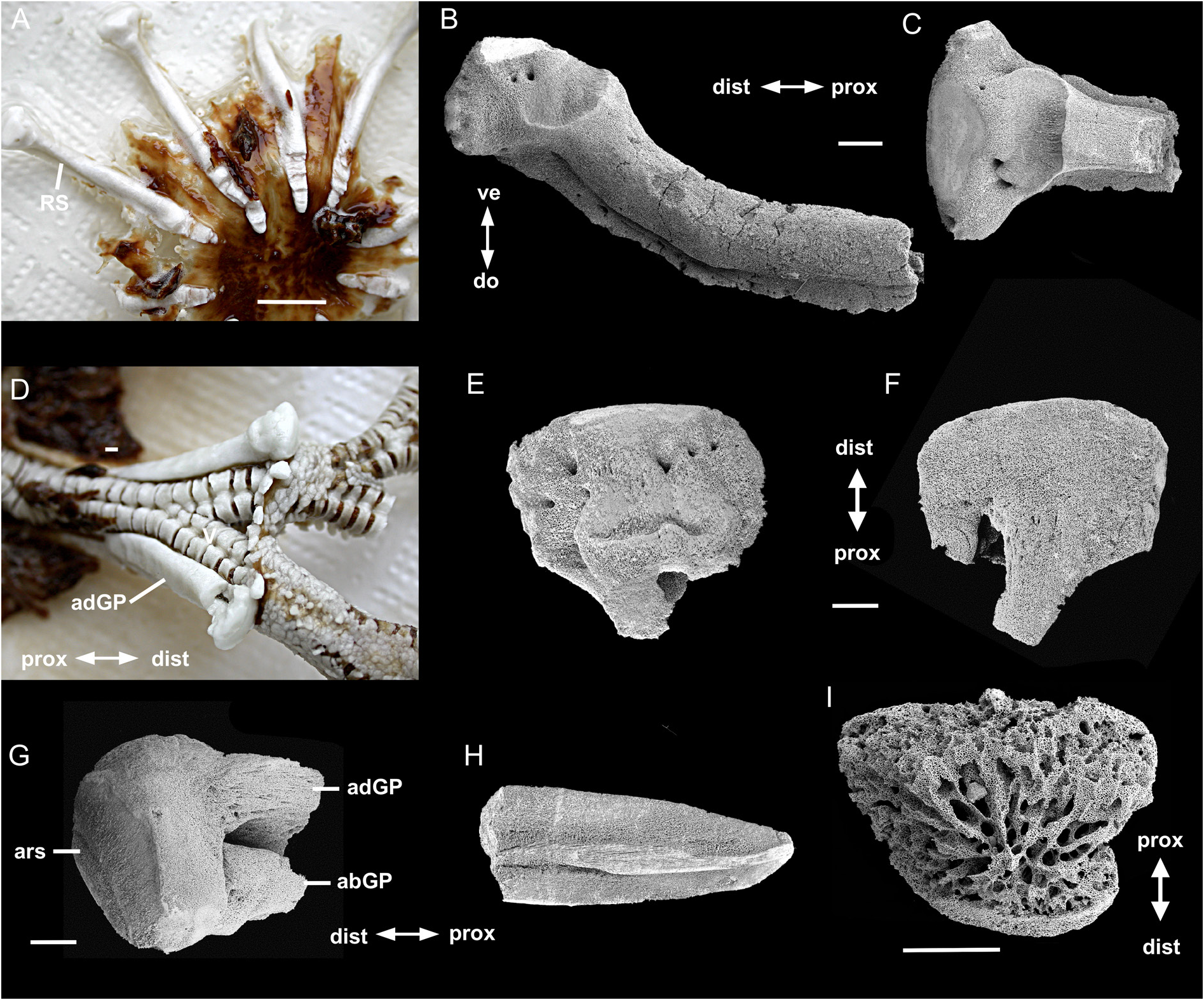
== Description == Members of this genus have a central disc with five arms which repeatedly bifurcate, dichotomously branching into smaller and smaller subdivisions. They have an endoskeleton of calcified ossicles as do other ophiuroids, but in their case, it is covered by a fleshy layer of skin, giving them a rubbery appearance. To feed, a basket star perches in an elevated position such as on a sponge, and extend its arms in a basket-like fashion. The branches and branchlets twist and coil and may ensnare small crustaceans that come within reach such as the northern krill (Meganyctiphanes norvegica). The arms are covered in tiny hooks and spines which hold the prey. Along with the tube feet, these convey it to the mouth, which is on the underside of the central disc.
Excerpted from Wikipedia’s “Gorgonocephalus” article, available under the CC BY-SA 4.0 licence.
Gallery (4)
Available in 11 languages
via Wikidata sitelinks · CC0