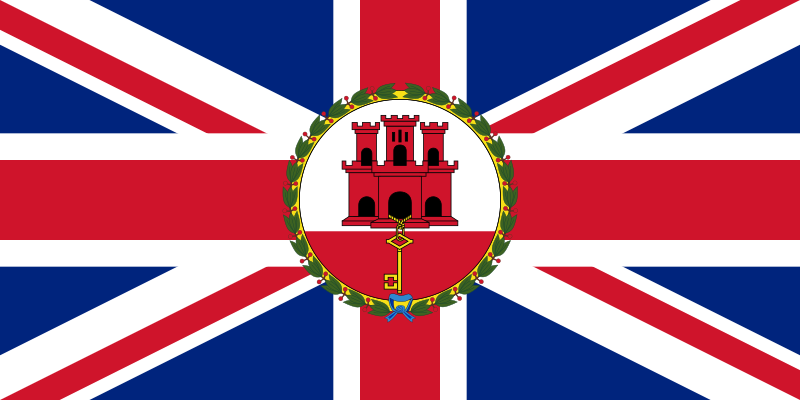
File:Flag_of_the_Governor_of_Gibraltar.svg · Wikimedia Commons · See Wikimedia Commons
governor
Sign in to saveAlso known as gov, gov'r, guv, governors, govs, guvs, provincial governor
A governor is an administrative leader and head of a polity or political region, in some cases, such as governors-general, as the head of a state's official representative. Depending on the type of political region or polity, a governor may be either appointed or elected, and the governor's powers can vary significantly, depending on the public laws in place locally. The adjective pertaining to a governor is gubernatorial, from the Latin root gubernare. In a federated state, the governor may serve as head of state and head of government for their regional polity, while still operating under th
A governor is an administrative leader who heads a political region or state, either appointed or elected depending on local laws and systems. Governors matter because they wield significant power over their regions' affairs, and the extent of their authority varies widely based on the specific laws and political structure of where they serve.
AI-generated from the Wikipedia summary — may contain errors.
Wikidata facts
Show 7 more facts
- female form of label
- guvernérka
- equivalent class
- dbpedia.org/ontology/Governor
- topic's main category
- Category:Governors and heads of sub-national entities
- substitute/deputy/replacement of office/officeholder
- lieutenant governor
- male form of label
- guvernator
- on focus list of Wikimedia project
- Wikipedia:Vital articles/Level/4
- described by source
- Granat Encyclopedic Dictionary
via Wikidata · CC0
~31 min read
Encyclopedic overview
46 sectionsContents
- Ancient empires
- Pre-Roman empires
- Ancient Egypt
- Pre- and Hellenistic satraps
- Ancient Rome
- Byzantium
- Legacy
- Holy Roman/Habsburg Empires and successor states
- Turkish rule
- British Empire and Commonwealth realms
- Vice-regal governors
- United Kingdom overseas territories
- Australia
- Canada
- British Hong Kong (1841–1997)
- New Zealand
- Within the United Kingdom
- Within England
- Other colonial empires
- Russia and former Soviet Union
- Other European countries and empires
- Austria
- Benelux monarchies
- France
- Germany
- Greece
- Italy
- Other modern Asian countries
- China
- India
- Indonesia
- Japan
- Malaysia
- Pakistan
- Papua New Guinea
- Philippines
- Sri Lanka
- Thailand
- Other modern countries in North America
- Mexico
- Other modern countries in South America
- Brazil
- Modern equivalents
- Other meanings of the word
- See also
- References
A governor is an administrative leader and head of a polity or political region, in some cases, such as governors-general, as the head of a state's official representative. Depending on the type of political region or polity, a governor may be either appointed or elected, and the governor's powers can vary significantly, depending on the public laws in place locally. The adjective pertaining to a governor is gubernatorial, from the Latin root gubernare. In a federated state, the governor may serve as head of state and head of government for their regional polity, while still operating under the laws of the federation, which has its own head of state for the entire federation.
==Ancient empires== ===Pre-Roman empires=== Though the legal and administrative framework of provinces, each administered by a governor, was created by the Romans, the term governor has been a convenient term for historians to describe similar systems in antiquity. Indeed, many regions of the pre-Roman antiquity were ultimately replaced by Roman 'standardized' provincial governments after their conquest by Rome. Plato used the metaphor of turning the Ship of State with a rudder; the Latin word for rudder is gubernaculum.
Excerpted from Wikipedia’s “governor” article, available under the CC BY-SA 4.0 licence.
Gallery (3)
Available in 104 languages
- Español
- Français
- Deutsch
- 中文
- 日本語
- Русский
- Português
- Italiano
- العربية
- हिन्दी
- Afrikaans
- Albanian
- Asturian
- Azerbaijani
- Bahasa Indonesia
- Bangla
- Banjar
- Basque
Show 85 more
- be_x_old
- Belarusian
- Bhojpuri
- Bikol
- Bosnian
- Bulgarian
- Buriat
- Catalan
- Chuvash
- Croatian
- Czech
- Danish
- Egyptian Arabic
- Esperanto
- Estonian
- Filipino
- Finnish
- Galician
- Georgian
- Greek
- Hausa
- Hebrew
- Icelandic
- Ido
- Iloko
- Irish
- Javanese
- Kannada
- Kazakh
- kge
- Kyrgyz
- Latin
- Latvian
- Lingala
- Lithuanian
- Luxembourgish
- Macedonian
- Malay
- Malayalam
- map_bms
- Marathi
- Minangkabau
- Mingrelian
- nds_nl
- Nederlands
- Nepali
- Norwegian
- Norwegian Nynorsk
- Papiamento
- Pashto
- Polski
- Punjabi
- Romanian
- Santali
- Scots
- Serbian
- Serbian (Latin)
- simple
- Sindhi
- skr
- Slovenian
- Sundanese
- Svenska
- Swahili
- Tajik
- Tamil
- Tatar
- Tiếng Việt
- Türkçe
- Tuvinian
- Ukrainian
- Urdu
- Uzbek
- West Flemish
- Western Frisian
- Western Panjabi
- Wu Chinese
- Yakut
- Yiddish
- Zaza
- zh_min_nan
- zh_yue
- فارسی
- ไทย
- 한국어
via Wikidata sitelinks · CC0