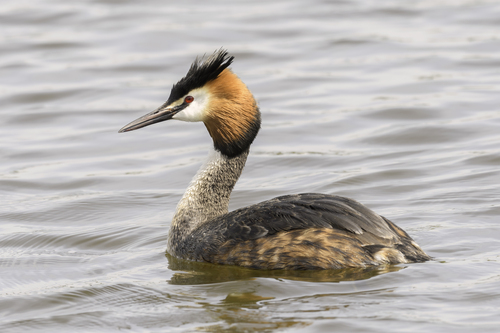
(c) caroline legg, some rights reserved (CC BY) · cc-by
OverviewAI-generated
The Great Grebe, scientifically named *Podiceps major*, is a species of bird within the family Podicipedidae and order Podicipediformes. It belongs to the class Aves and phylum Chordata. The species is also referred to by the common names gwyach fawr, Magellantaucher, and Somormujo macachón. Its taxonomic authority is listed as (Boddaert, 1783), and it is classified as an accepted species.
The Great Grebe has a marine habitat and is found in Brazil, South America. Its IUCN conservation status is Least Concern, a designation recorded in 2024. The species has an average litter size of 3.9.
Synthesized by Vinony from 27 facts across 5 sources: Wikidata, IUCN Red List, iNaturalist, WoRMS, Vinony graph. Generated from structured data (not the Wikipedia text) and checked against those facts — may still contain errors.
Species
Least Concerngreat grebe
Species
- PhylumChordata
- ClassAves
- OrderPodicipediformes
- FamilyPodicipedidae
via IUCN
Wikidata facts
- Instance of
- taxon
- Parent taxon
- Podiceps
- Image
- Podicephorus major -Santa Vitoria do Palmar, Rio Grande do Sul, Brazil -swimming-8.jpg
Show 8 more facts
- taxon rank
- species
- IUCN conservation status
- Least Concern
- Commons category
- Podiceps major
- taxon name
- Podiceps major
- Commons gallery
- Podiceps major
- taxon common name
- veliki gnjurac
- litter size
- 3.9
- taxon range
- South America
via Wikidata · CC0
~4 min read
Encyclopedic overview
The great grebe (Podiceps major) is the largest species of grebe in the world. A disjunct population exists in northwestern Peru, while the main distribution is from extreme southeastern Brazil to Patagonia and central Chile. The population from southern Chile is considered a separate subspecies, P. m. navasi.
Taxonomy
Excerpted from Wikipedia’s “Great Grebe” article, available under the CC BY-SA 4.0 licence.