Key facts
- Part of
- International Space Station
- Launch date
- October 23, 2007, 15:38:19 UTC
- Launch vehicle
- Space Shuttle Discovery
- Berthed
- October 26–November 12, 2007: Unity port November 14, 2007–present: Destiny forward
- Mass
- 14,300 kg (31,500 lb)
- Length
- 6.7 m (22 ft)
- Diameter
- 4.4 m (14 ft)
- Pressurized volume
- 70 m (2,500 cu ft)
via Wikipedia infobox
Described at
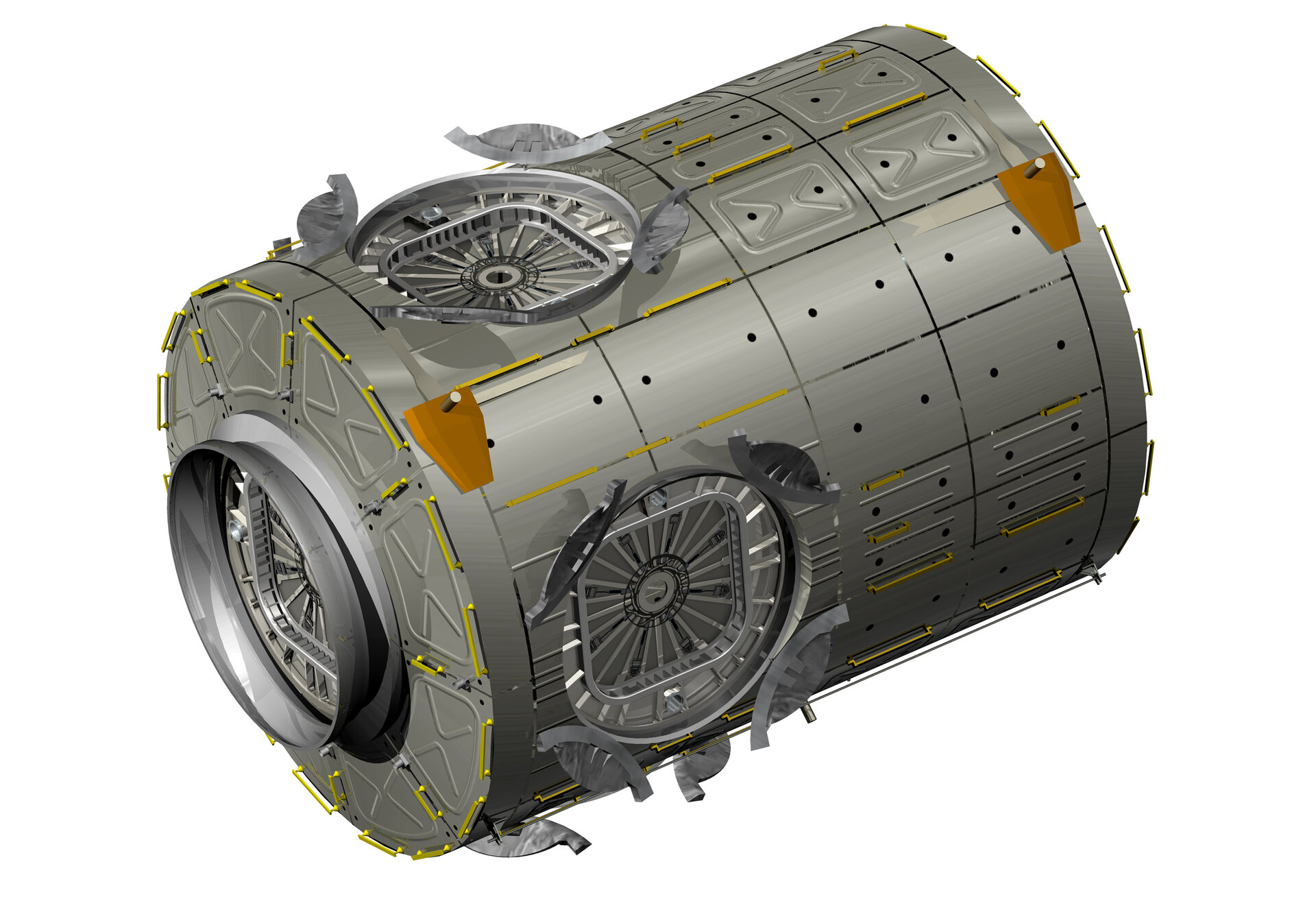
ESA - Node 2: Connecting Module
Node 2 is a pressurised module which serves as a connecting passage between the European Columbus laboratory, the US laboratory Destiny and the Japanese laboratory Kibo.
esa.int →The European Space Agency (ESA) is Europe’s gateway to space. Its mission is to shape the development of Europe’s space capability and ensure that investment in space continues to deliver benefits to the citizens of Europe and the world. Find out more about space activities in our 23 Member States, and understand how ESA works together with their national agencies, institutions and organisations. Space Transportation Ariane Vega Space Rider Future space transportation Boost! Europe's Spaceport Launches from Europe's Spaceport from 2012 Node 2 is a pressurised module which serves as a connecting passage between the European Columbus laboratory, the US laboratory Destiny and the Japanese laboratory Kibo. Node 2 also provides a docking port for the discontinued Space Shuttle and the Japanese HII transfer vehicle, while it also served as an attachment point for the Multi-Purpose Logistics Modules. Node 2 is a working base point for the Space Station robotic arm, Canadarm 2. Node 2 was developed for NASA under an ESA contract with European industry, with Alcatel-Alenia Space as the prime contractor. Responsibility for Node 2 development was assigned to the Italian space agency, ASI. The structural design is based on that of the Multi-Purpose Logistics Modules and the European Columbus laboratory. NASA held a competition amongst schoolchildren in the United States to find a name for the Node 2 module. On 15 March 2007 the new name Harmony was announced. Node 2, or Harmony, was launched in October 2007 on Space Shuttle flight STS-120 (ISS Assembly Flight 10A).
Excerpt from a page describing this subject · 27,346 chars · not written by Vinony
Wikidata facts
- Part of
- US Orbital Segment
- Operator
- NASA
- Country of origin
- Italy
- Diameter
- 4.480
- Mass
- 15300
- Manufacturer
- Thales Alenia Space
- Image
- Iss016e012617.jpg
- Length
- 6.706
- Significant event
- rocket launch
- Has parts of class
- common berthing mechanism
Show 6 more facts
- Commons category
- Harmony (ISS module)
- described at URL
- www.esa.int/Our_Activities/Human_Spaceflight/International_Space_Station/Node_2_Connecting_Module
- volume as quantity
- 70
- space launch vehicle
- Space Shuttle
- UTC date of spacecraft launch
- 2007-10-23
- start point
- Kennedy Space Center Launch Complex 39A
Sources (9)
via Wikidata · CC0
~8 min read
Encyclopedic overview
Harmony, also known as Node 2, is a module of the International Space Station (ISS) that serves as its "utility hub". It connects the laboratory modules of the United States, Europe and Japan, while also providing electrical power and data. The module also has sleeping cabins for four astronauts.
Harmony has six Common Berthing Mechanism (CBM) ports. It is attached to Destiny at its aft port, with Columbus to starboard and Kibō to port. Its forward and zenith ports are each equipped with a Pressurized Mating Adapter (PMA) and International Docking Adapter (IDA) for docking visiting spacecraft. The nadir CBM, the only one without permanently mounted equipment, is typically used for berthing cargo spacecraft.
Excerpted from Wikipedia’s “Harmony” article, available under the CC BY-SA 4.0 licence.