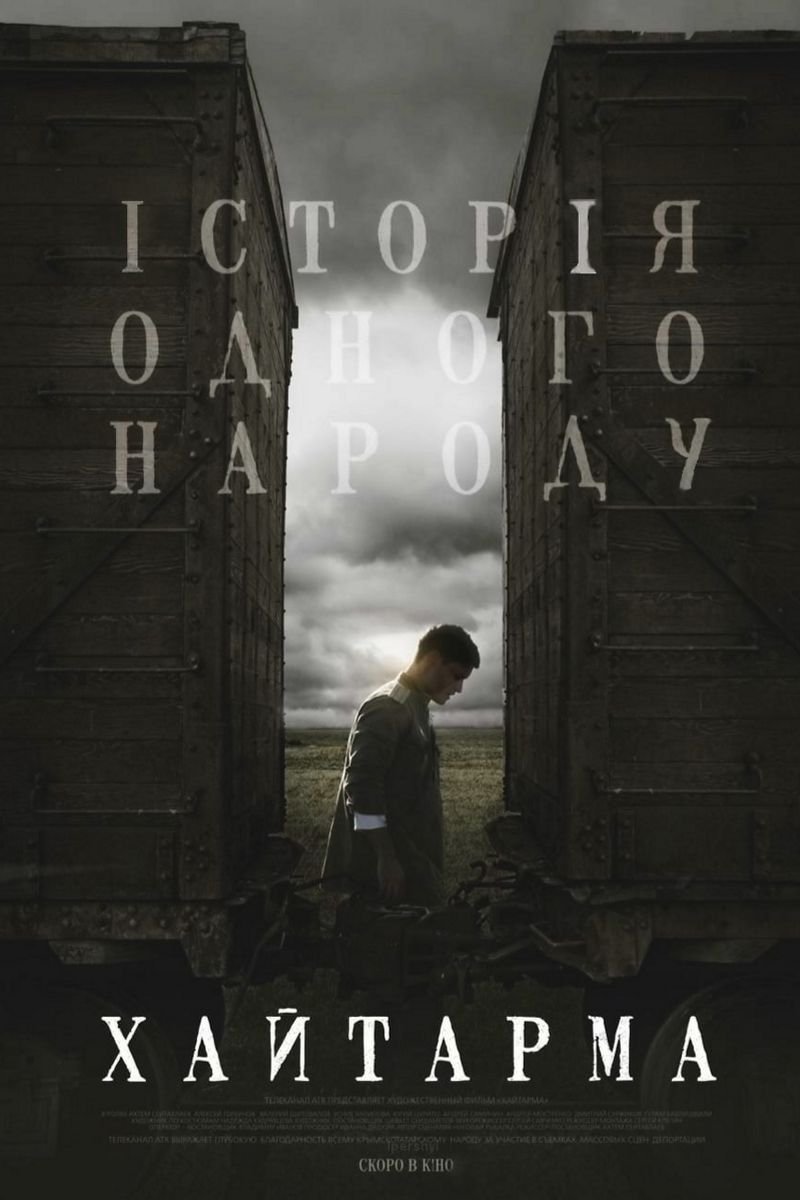
Poster from TMDB
Haytarma
Sign in to saveHaytarma (, Russian: and ) is a 2013 Ukrainian period drama film. It portrays Crimean Tatar flying ace and Hero of the Soviet Union Amet-khan Sultan against the background of the 1944 deportation of the Crimean Tatars. Haytarma means "return", but is also the name of the most popular Crimean Tatar national dance.
OverviewAI-generated
Haytarma, also known as Qaytarma, is a 2013 Ukrainian historical war drama film directed by Akhtem Seitablayev. The movie features Akhtem Seitablayev and Oleksiy Gorbunov in the cast and was produced by Lenur İslâmov through ATR and Qartbaba Production. It was released on May 18, 2013, and is available via video on demand.
The narrative centers on Amet-khan Sultan and the deportation of the Crimean Tatars, exploring themes of Soviet politics and repression in Crimea. The film is presented in Crimean Tatar, Russian, Ukrainian, and Tatar. It has a runtime of 90 minutes according to one source and 89 minutes according to another. The work holds a vote average of 7.6 and an IMDb rating of 7.2.
Synthesized by Vinony from 27 facts across 3 sources: Wikidata, TMDb, IMDb. Generated from structured data (not the Wikipedia text) and checked against those facts — may still contain errors.
Film · TMDB
7.6The film tells about the tragic date in the history of the Crimean Tatar people — May 18, 1944 — Stalin’s deportation of the Crimean Tatars. The plot of the film — a pilot, twice Hero of the Soviet Union, Amethan Sultan. In May, 1944, a year after liberation of Sevastopol Amethan goes on vacation to his native town Alupka. On May 18 his eyes witness begining of deportation of the Crimean Tatars.
Cast
- Akhtem Seitablaiev as Amethan Sultan
- Oleksiy Horbunov as NKVD Major Krotov
- Yuriy Tsurilo as NKVD General Vasilyev
- Andrii Saminin as Vladimir Norishkin
- Andrii Mostrenko as François de Geoffre
- Dmytro Surzhykov as NKVD Captain Trunin
Themes
- crimea
- soviet politics
- soviet repression
- crimean tatars
This product uses the TMDB API but is not endorsed or certified by TMDB.
Key facts
- Film.name
- Haytarma
- Film.image
- Haytarma cover.jpg
- Film.director
- Akhtem Seitablaiev
- Film.producer
- Lenur IsliamovIvanna Diadiura
- Film.writer
- Mykola Rybalka
- Film.starring
- Akhtem SeitablaievOleksiy Horbunov
- Film.music
- Dzhemil KarikovSerhiy Kutsenko
- Film.cinematography
- Volodymyr Ivanov
- Film.runtime
- 90 minutes
- Film.country
- Ukraine
- Film.language
- RussianCrimean Tatar
- Film.budget
- $1,500,000
via Wikipedia infobox
Wikidata facts
- Instance of
- film
- Named after
- Qaytarma
- Genre
- drama film
- Country of origin
- Ukraine
- Original language
- Russian
- Main subject
- deportation of the Crimean Tatars
- Director
- Akhtem Seitablayev
- Cast member
- Akhtem Seitablayev
- Producer
- Lenur İslâmov
- Production company
- ATR
- Duration
- 87
- FilmAffinity ID
- 868534
- Distribution format
- video on demand
- Official website
- haytarma.ru
Show 2 more facts
- publication date
- 2013-05-18
- title
- Qaytarma
via Wikidata · CC0
~3 min read
Encyclopedic overview
4 sectionsContents
- Production and release
- Reactions
- References
- External links
Haytarma (, Russian: and ) is a 2013 Ukrainian period drama film. It portrays Crimean Tatar flying ace and Hero of the Soviet Union Amet-khan Sultan against the background of the 1944 deportation of the Crimean Tatars. Haytarma means "return", but is also the name of the most popular Crimean Tatar national dance.
==Production and release== Production of the film began in October 2012 in Crimea. The initial budget for the film was US$2.5 million. The funds were provided by Lenur İslâm, owner of Ukrainian television station ATR Channel. Much expenditure was devoted to scenic design and costume design. A preview of the film was released in March 2013. The premiere was scheduled for 18 May 2013, the 69th anniversary of the deportations; Amet-Khan's granddaughter Veronika, Soviet Air Force pilots, Russian generals, and ambassadors of foreign countries were invited to attend.
Excerpted from Wikipedia’s “Haytarma” article, available under the CC BY-SA 4.0 licence.