File:Nils_Asplund_-_Heimdal.jpg · Wikimedia Commons · See Wikimedia Commons
Heimdall
Sign in to saveAlso known as Heimdallr, Heimdalr, Heimdali, Heimdal, Vindhlér
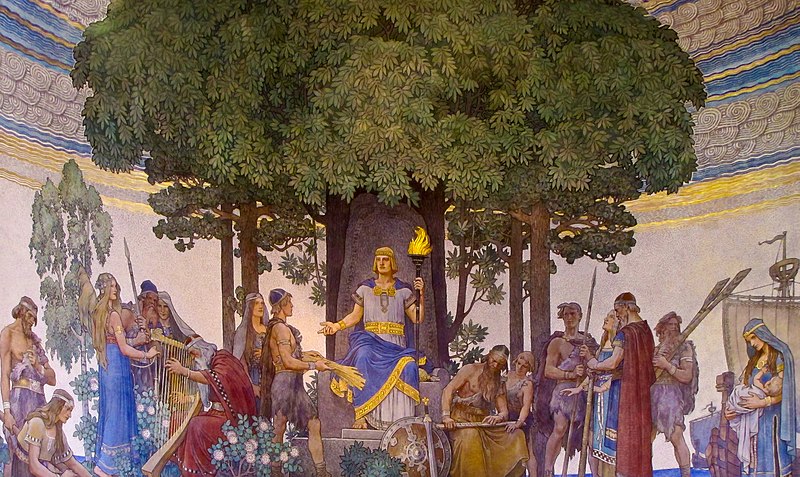
thumb|upright=1.5|Heimdallr brings forth the gift of the gods to humanity (1907) by Nils Asplund
Heimdall is a figure from Norse mythology, depicted in historical artwork as a divine being who brings gifts from the gods to humanity. While specific details about his role and significance vary across Norse sources, he represents an important connection between the divine and human realms in ancient Scandinavian religious beliefs.
AI-generated from the Wikipedia summary — may contain errors.
Wikidata facts
- Part of
- Æsir
- Gender
- male
- Image
- SÁM 66, 80r, Heimdallr.jpg
- Residence
- Himinbjörg
Show 7 more facts
- Commons category
- Heimdallr
- relative
- Rán
- enemy
- Loki
- present in work
- Hyndluljóð
- described by source
- Encyclopædia Britannica 11th edition
- worshipped by
- Norse mythology
- owner of
- Gulltoppr
Sources (2)
via Wikidata · CC0
~22 min read
Encyclopedic overview
13 sectionsContents
- Names and etymology
- Attestations
- Saltfleetby spindle-whorl inscription
- ''Poetic Edda''
- ''Prose Edda''
- ''Heimskringla''
- Visual depictions
- Scholarly reception
- In popular culture
- See also
- Notes
- References
- External links
thumb|upright=1.5|Heimdallr brings forth the gift of the gods to humanity (1907) by Nils Asplund
In Norse mythology, Heimdall (from Old Norse Heimdallr; modern Icelandic Heimdallur) is a god. He is the son of Odin and nine sisters. Heimdall keeps watch for invaders and the onset of Ragnarök from his dwelling Himinbjörg, where the burning rainbow bridge Bifröst meets the sky. He is attested as possessing foreknowledge and keen senses, particularly eyesight and hearing. The god and his possessions are described in enigmatic manners. For example, Heimdall is golden-toothed, "the head is called his sword", and he is "the whitest of the gods."
Excerpted from Wikipedia’s “Heimdall” article, available under the CC BY-SA 4.0 licence.