Helwingia · Kew POWO · Kew Plants of the World Online
Helwingia
Sign in to saveThe genus Helwingia consists of shrubs or rarely small trees native to eastern Asia, the Himalayas, and northern Indochina. It is the only genus in the family Helwingiaceae.
Species
GENUS
- KingdomPlantae
- PhylumTracheophyta
- ClassMagnoliopsida
- OrderAquifoliales
- FamilyHelwingiaceae
via GBIF · Kew POWO
Museum specimens
- Specimen records
- 112
- With media
- 114
- Family
- Helwingiaceae
- Collections
- US, A, GH
- Recorded in
- China
Wikidata facts
- Instance of
- taxon
- Parent taxon
- Helwingiaceae
- Image
- Helwingia japonica m.jpg
Show 6 more facts
- taxon rank
- genus
- taxon name
- Helwingia
- Commons category
- Helwingia
- topic's main category
- Category:Helwingia
- taxon common name
- 青荚叶属
Sources (2)
via Wikidata · CC0
~3 min read
Encyclopedic overview
6 sectionsContents
- Description
- Epiphyllous inflorescences
- Taxonomy
- Species
- References
- External links
The genus Helwingia consists of shrubs or rarely small trees native to eastern Asia, the Himalayas, and northern Indochina. It is the only genus in the family Helwingiaceae.
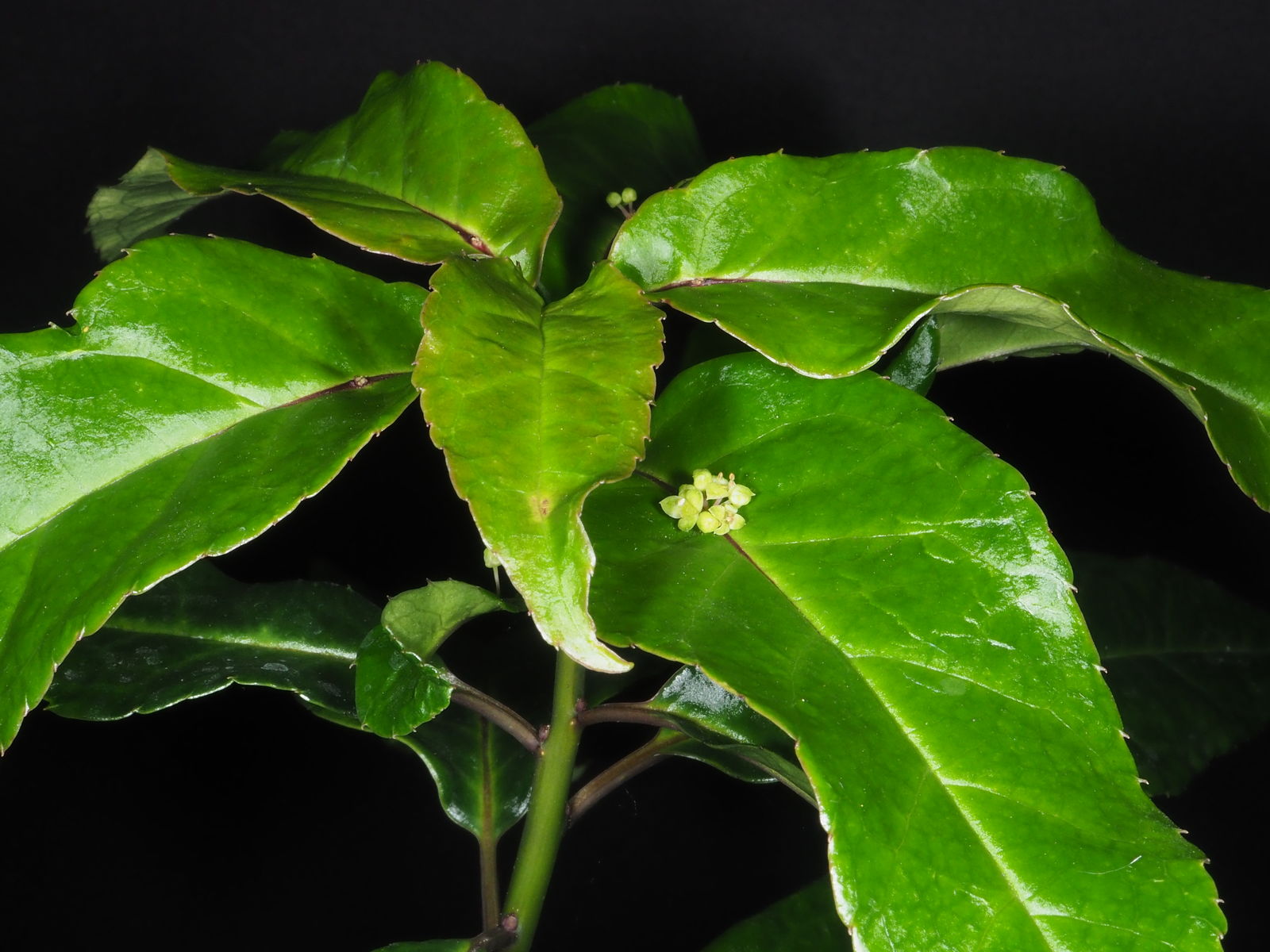
==Description== The plants have alternate, evergreen or deciduous leaves and small inflorescences that are epiphyllous (growing from the leaf surface). During development, the flowers appear separate from the leaves,, eventually fusing with the leaf midrib. Flowers are small and yellow-green or purple, followed by red or black berries. Plants are dioecious. ===Epiphyllous inflorescences=== This trait is rather unusual among plants. This atypical floral position upon a leaf is believed to be an adaption to insect pollination. Pollinators which are too large to be supported by the floral pedicels, land on the leaf surface and can pollinate the flowers, which would not be able to support the pollinators on their own.
Excerpted from Wikipedia’s “Helwingia” article, available under the CC BY-SA 4.0 licence.