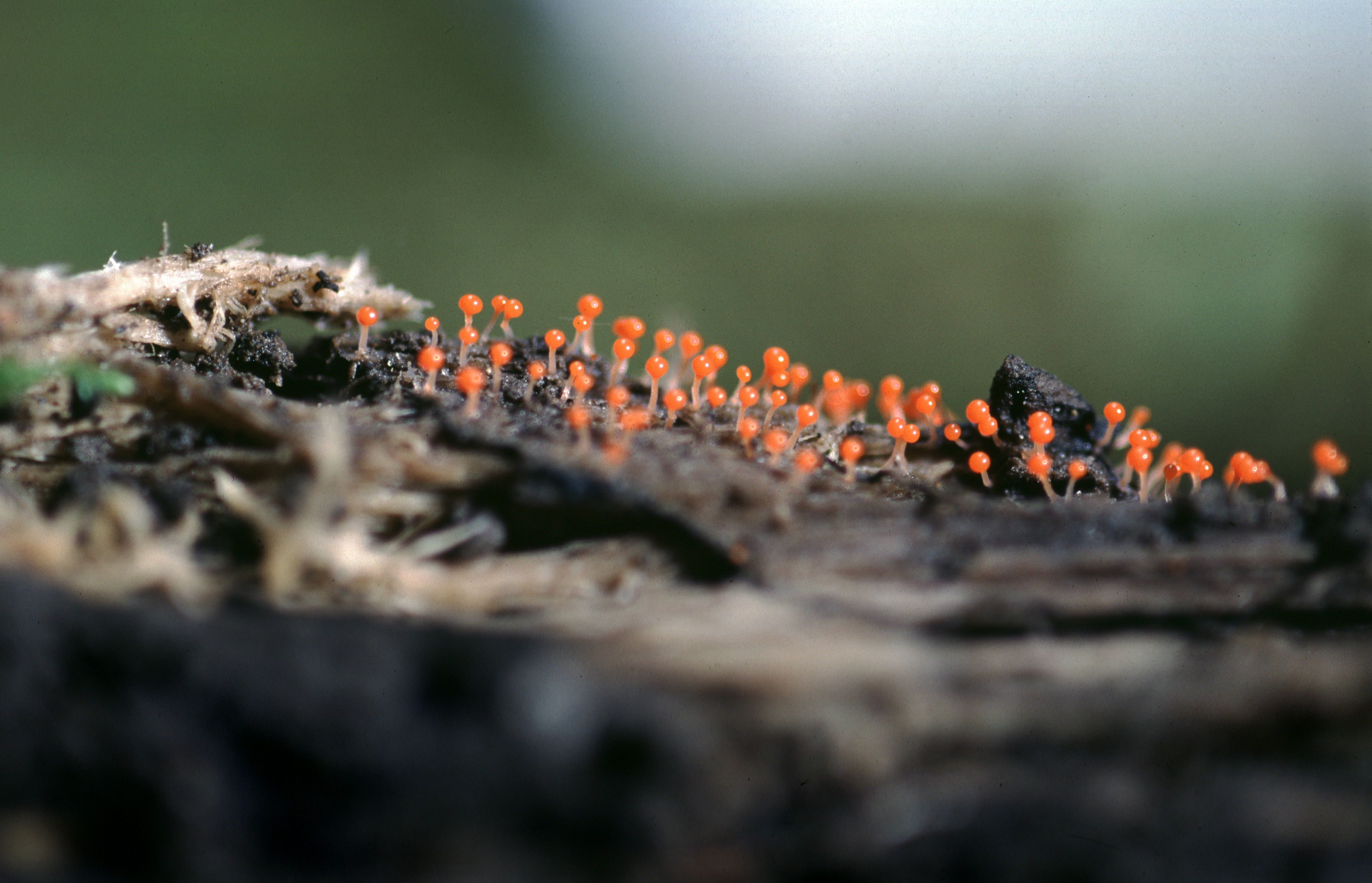
Specimen image via iDigBio · BY-NC-SA
Hemitrichia
Sign in to saveHemitrichia is a genus of slime molds, of the family Trichiaceae, found within the order Trichiida. It was first described by Josef Rostafinski in 1873 and remains a well-defined genus of the slime molds. Hemitrichia species exhibit either plasmodiocarp or sporangium fruiting bodies, both of which are well-known and recognizable slime molds seen on multiple continents. This genus includes species such as H. serpula (known as the pretzel slime mold) and H. decipiens (known as salmon-eggs), both of which are widespread.
In the Vinony graph
Vinony's link graph records 7 inbound references to Hemitrichia, and connects out to eukaryote, Wikidata and taxonomy.
It is catalogued under topics including Eumycetozoa genera and Myxogastria.
Vinony links it to 8 Wikipedia language editions.
Species
Genus
- PhylumMollusca
- ClassGastropoda
- OrderStylommatophora
- FamilyChronidae
via
Museum specimens
- Specimen records
- 297
- With media
- 175
- Family
- Trichiaceae
- Collections
- NEB, LSUM, MICH, MIN, ILLS
- Recorded in
- United States, Puerto Rico
~10 min read
Encyclopedic overview
8 sectionsContents
- Etymology
- History of knowledge
- Habitat and ecology
- Description
- Life cycle
- Practical importance
- List of species
- References
Hemitrichia is a genus of slime molds, of the family Trichiaceae, found within the order Trichiida. It was first described by Josef Rostafinski in 1873 and remains a well-defined genus of the slime molds. Hemitrichia species exhibit either plasmodiocarp or sporangium fruiting bodies, both of which are well-known and recognizable slime molds seen on multiple continents. This genus includes species such as H. serpula (known as the pretzel slime mold) and H. decipiens (known as salmon-eggs), both of which are widespread.
==Etymology== Hemi comes directly from the Greek prefix hemi, meaning “half”. Trichia is combination of the Greek trichios, which refers to hair or hair-like structure and –ia, referring to a condition, leading to –trichia being the condition of having hair. Hemitrichia therefore refers to the condition of partially having hair.
Excerpted from Wikipedia’s “Hemitrichia” article, available under the CC BY-SA 4.0 licence.
Available in 8 languages
via Wikidata sitelinks · CC0