File:Sheep_and_herder_India.jpg · Wikimedia Commons · See Wikimedia Commons
herd
Sign in to saveAlso known as flock
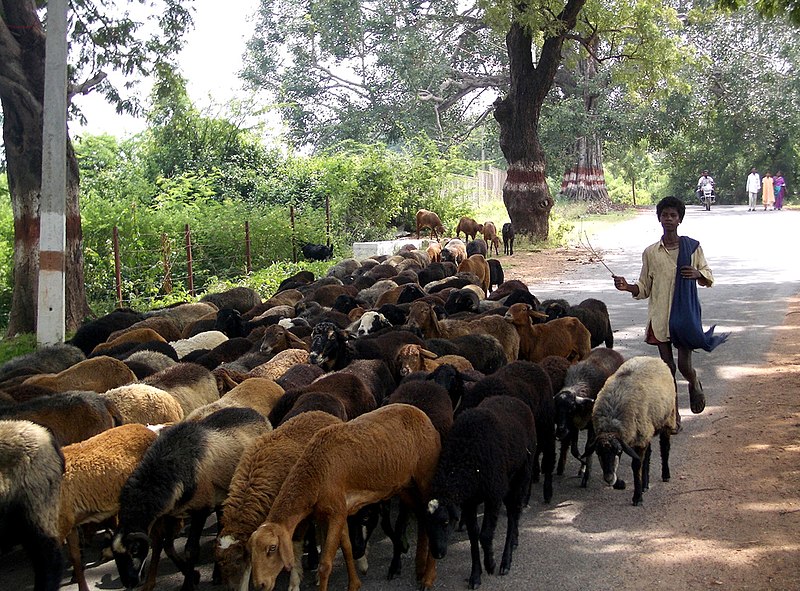
right|thumb|Boy herding a flock of sheep, India; a classic example of the domestic herding of animals thumb|Wildebeest at the Ngorongoro Crater; an example of a herd in the wild
A herd is a group of animals of the same kind that live and move together, either in the wild like wildebeest or under human management like domesticated sheep. Herds matter because they're a fundamental way that many animal species organize themselves for survival and reproduction.
AI-generated from the Wikipedia summary — may contain errors.
Wikidata facts
- Part of
- herding
- Image
- Kuhherde auf der Straße.jpg
- Said to be same as
- horse herd
- Has use
- cattle husbandry
Show 4 more facts
- Commons category
- Herds
- has characteristic
- herd behavior
- different from
- Rusalka week
- described by source
- Encyclopædia Britannica 11th edition
via Wikidata · CC0
~13 min read
Encyclopedic overview
15 sectionsContents
- The structure and size of herds
- Costs and benefits of animals in groups
- Dilution effect
- Collective vigilance
- Foraging
- Diseases and parasites
- Energetic advantages
- Antipredatory behaviour
- Mating
- Domestic herds
- Human parallels
- See also
- Literature
- References
- External links
right|thumb|Boy herding a flock of sheep, India; a classic example of the domestic herding of animals thumb|Wildebeest at the Ngorongoro Crater; an example of a herd in the wild
A herd is a social group of certain animals of the same species, either wild or domestic. The form of collective animal behavior associated with this is called herding. These animals are known as gregarious animals.
Excerpted from Wikipedia’s “herd” article, available under the CC BY-SA 4.0 licence.