
File:Hirohito_in_dress_uniform_(cropped).jpg · Wikimedia Commons · See Wikimedia Commons
Hirohito
Sign in to saveAlso known as Emperor Hirohito, Showa, Shōwa, Emperor Shōwa, Emperor Showa, Prince Michi
, known colloquially by his personal name was the 124th emperor of Japan according to the traditional order of succession, reigning from 1926 until his death in 1989. He remains the longest-reigning emperor in Japanese history and one of the longest-reigning monarchs in the world. As emperor during the Shōwa era, Hirohito presided over the rise of Japanese militarism, the Second Sino-Japanese War, the Asia-Pacific theater of World War II, and the nation's postwar economic miracle.
OverviewAI-generated
Hirohito was a male member of the Imperial House of Japan, born on 1901-04-29 at the Akasaka Estate. He served as Emperor of Japan and Governor-General of the Philippines. His occupations included military personnel, diplomat, marine biologist, and zoologist. He held the military rank of dai-gensui and was a member of the Royal Society. His spouse was Kōjun, and they had children including Shigeko Higashikuni, Sachiko, Princess Hisa, Kazuko Takatsukasa, and Atsuko Ikeda.
He died on 1989-01-07 in Tokyo Imperial Palace from natural causes and was buried at Musashi Imperial Graveyard. His parents were Emperor Taishō and Empress Teimei. He received several awards, including the Order of the White Eagle, Order of the Rising Sun with Paulownia Flowers, 1st class, Grand Cordon of the Supreme Order of the Chrysanthemum, and Order of St. Andrew. He spoke Japanese and was recognized in the Royal Society collection.
Synthesized by Vinony from 31 facts across 4 sources: Wikidata, Firecrawl, TMDb, Vinony collections. Generated from structured data (not the Wikipedia text) and checked against those facts — may still contain errors.
Film & TV
Tokyo, Japan
Emperor Shōwa (29 April 1901 – 7 January 1989), commonly known in English-speaking countries by his personal name Hirohito, was the 124th emperor of Japan, ruling from 25 December 1926 until his death in 1989. Hirohito and his wife, Empress Kōjun, had two sons and five daughters; he was succeeded by his fifth child and eldest son, Akihito. By 1979, Hirohito was the only monarch in the world with…
Known for
- Kamikaze: An Untold History — Archive2025
- Atomic People — Self (archive footage)2024
- Le Baron et l'Empereur : Japon, la voie de la guerre — Self (archive footage)2023
- Media Mafia: a Tale of Two Newspapers — Self (archive footage)2021
- Greatest Events of World War II in Colour — Self (archive footage)2019
- Stalin's James Bond — Self (archive footage)2017
- Mifune: The Last Samurai — Self (archive footage)2016
- Tokyo Trial: Judging Japan — Self (archive footage)2016
- Reagan — Self (archive footage)2011
- Hiroshima — Self (archive footage)2005
via TMDB
Key facts
- Royalty.name
- Hirohito
- Royalty.succession
- Emperor of Japan
- Royalty.image
- Hirohito in dress uniform (cropped).jpg
- Royalty.alt
- A 34 year-old Hirohito in military uniform
- Royalty.caption
- Formal portrait, 1935
- Royalty.reign
- 25 December 1926 –
- Royalty.coronation
- 10 November 1928
- Royalty.cor type
- Japan
- Royalty.predecessor
- Taishō
- Royalty.successor
- Akihito
- Royalty.posthumous name
- Tsuigō:Emperor Shōwa ()
- Royalty.succession1
- Sesshō of Japan
- Royalty.reign1
- 25 November 1921 –
- Royalty.reign type1
- Regency
- Royalty.predecessor1
- Taishō
- Royalty.pre type1
- Monarch
- Royalty.era name
- Shōwa
- Royalty.era dates
- 25 December 1926 – 7 January 1989
via Wikipedia infobox
Described at
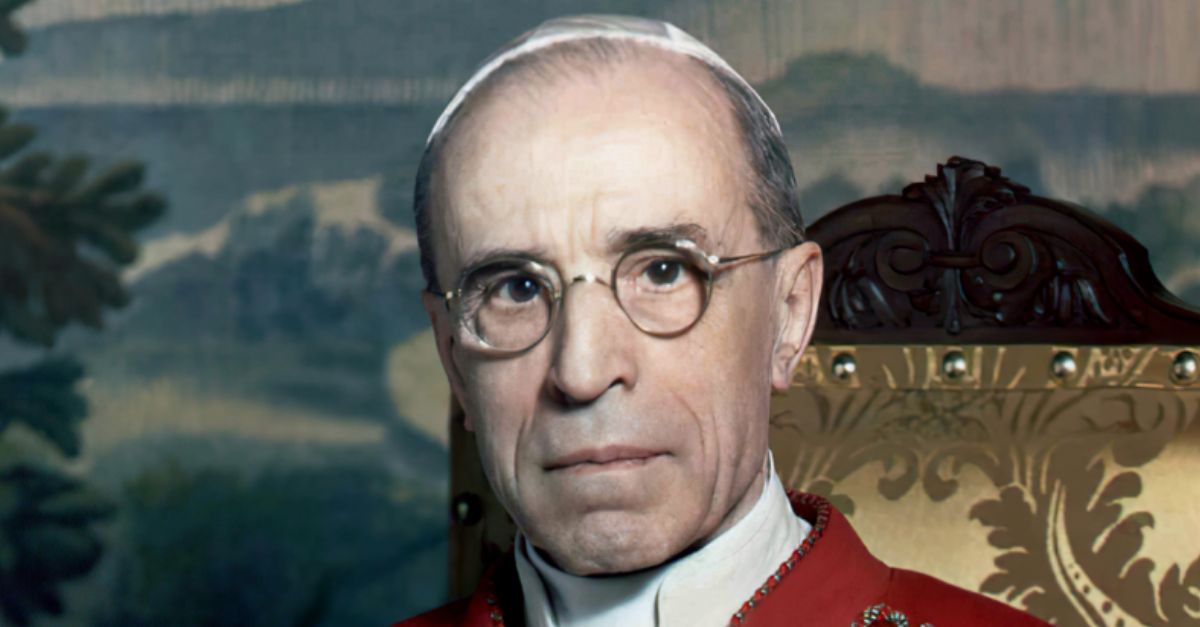
Historical Figures Who Kept Their True Evil Hidden From The World
History often cloaked its villains in garments of greatness, only for time to strip away the illusion and reveal what truly lay beneath. Many figures celebrated as heroes or visionaries left behind a far darker imprint than their admirers ever suspected.
factinate.com →Link to a page describing this subject · 40,000 chars · not written by Vinony
Wikidata facts
- Instance of
- human
- Gender
- male
- Citizenship
- Empire of Japan
- Place of birth
- Akasaka Estate
- Place of death
- Tokyo Imperial Palace
- Spouse
- Kōjun
- Child
- Takako Shimazu
- Father
- Emperor Taishō
- Mother
- Empress Teimei
- Sibling
- Takahito, Prince Mikasa
- Position held
- Governor-General of the Philippines
- Educated at
- Gakushūin
- Languages spoken
- Japanese
- Native language
- Japanese
- Religion
- Shinto
- Notable work
- Hirohito surrender broadcast
- Family
- Imperial House of Japan
- Noble title
- Imperial prince
- Anthem
- Kimigayo
- Conflict
- World War II
- Military rank
- dai-gensui
- Image
- Emperor Showa 1956-11-face.jpg
- Height
- 1.65
Show 25 more facts
- Significant event
- death of Hirohito
- Commons category
- Emperor Shōwa
- member of
- Royal Society
- date of birth
- 1901-04-29
- date of death
- 1989-01-07
- Unicode character
- ㍼
- topic's main category
- Category:Hirohito
- name in kana
- しょうわてんのう
- manner of death
- natural causes
- place of burial
- Musashi Imperial Graveyard
- name in native language
- 昭和天皇
- commander of (DEPRECATED)
- Imperial Japanese Navy
- Commons gallery
- 昭和天皇
- posthumous name
- 昭和
- era name
- Shōwa era
- date of burial or cremation
- 1989-02-24
- writing language
- Japanese
- honorific prefix
- Imperial Highness
- interested in
- marine biology
- allegiance
- Japan
- on focus list of Wikimedia project
- Wikipedia:Vital articles/Level/4
- P6944
- Hirohito
- collection items at
- Natural History Museum
- P12749
- Blackstonia perfoliata
Sources (6)
via Wikidata · CC0
~84 min read
Encyclopedic overview
51 sectionsContents
- Early life and education
- Crown Prince
- Overseas travel
- Regency
- Visit to colonial Taiwan
- Earthquake and assassination attempt
- Marriage
- Early reign and World War II
- Accession
- Early reign
- Second Sino-Japanese War
- Pacific War
- Preparations
- War: advance and retreat
- Surrender
- Postwar reign
- Imperial status
- Public figure
- Visit to Europe
- Visit to the United States
- Marine biology
- Yasukuni Shrine
- Death and state funeral
- Accountability for Japanese war crimes
- Evidence for wartime culpability
- Historians' assessments
- Imperial Household sources
- Hirohito's monologue
- Shinobu Kobayashi's diary
- Michiji Tajima's notes
- Saburō Hyakutake's diary
- Vice Interior Minister Yuzawa's account on Hirohito's role in Pearl Harbor raid
- Chief Military Aide-de-Camp Takeji Nara's diary
- Evidence against wartime culpability
- British government assessment of Hirohito
- Hirohito's statements
- Titles, styles, honours and arms
- Military appointments
- Foreign military appointments
- National honours
- Foreign honours
- Issue
- Scientific publications
- See also
- Notes
- References
- Citations
- Books and academic journals
- News articles
- Further reading
- External links
, known colloquially by his personal name was the 124th emperor of Japan according to the traditional order of succession, reigning from 1926 until his death in 1989. He remains the longest-reigning emperor in Japanese history and one of the longest-reigning monarchs in the world. As emperor during the Shōwa era, Hirohito presided over the rise of Japanese militarism, the Second Sino-Japanese War, the Asia-Pacific theater of World War II, and the nation's postwar economic miracle.
Hirohito was born during the reign of his paternal grandfather, Emperor Meiji, as the first child of Crown Prince Yoshihito and Crown Princess Sadako (later Emperor Taishō and Empress Teimei). When Emperor Meiji died in 1912, Hirohito's father ascended the Chrysanthemum Throne, and Hirohito was proclaimed Crown Prince of Japan in 1916, making him the heir apparent. In 1921, he made an official visit to six European countries, marking the first time a Japanese crown prince had traveled abroad. Due to his father's ill health, Hirohito became Sesshō of Japan (regent) that same year. In 1924, he married Princess Nagako Kuni, they had seven children: Shigeko, Sachiko, Kazuko, Atsuko, Akihito, Masahito and Takako. He became emperor upon his father's death in 1926.
Excerpted from Wikipedia’s “Hirohito” article, available under the CC BY-SA 4.0 licence.
Gallery (53)
Available in 138 languages
- Español
- Français
- Deutsch
- 中文
- 日本語
- Русский
- Português
- Italiano
- العربية
- हिन्दी
- Afrikaans
- Albanian
- Amharic
- Angika
- Aragonese
- Armenian
- Asturian
- Awadhi
Show 119 more
- azb
- Azerbaijani
- Bahasa Indonesia
- Balinese
- Bangla
- Bashkir
- Basque
- bat_smg
- Bavarian
- be_x_old
- Belarusian
- Bikol
- Bosnian
- Breton
- Bulgarian
- Burmese
- Catalan
- cdo
- Cebuano
- Central Kurdish
- Cornish
- Croatian
- Czech
- Danish
- Divehi
- Egyptian Arabic
- Esperanto
- Estonian
- Filipino
- Finnish
- fiu_vro
- Galician
- Georgian
- Gilaki
- Gorontalo
- Greek
- Guarani
- Hakka Chinese
- Hebrew
- Hungarian
- Icelandic
- Ido
- Irish
- Javanese
- Kannada
- Kara-Kalpak
- Kazakh
- kbp
- Kurdish
- Kyrgyz
- Lao
- Latin
- Latvian
- Lithuanian
- Lombard
- Low German
- Luxembourgish
- Macedonian
- Madurese
- Maithili
- Malagasy
- Malay
- Malayalam
- Maltese
- Marathi
- Mingrelian
- Mirandese
- Mongolian
- Moroccan Arabic
- N’Ko
- Nederlands
- Nepali
- Newari
- Northern Frisian
- Norwegian
- Norwegian Nynorsk
- Pashto
- Piedmontese
- Polski
- Punjabi
- Quechua
- Romanian
- Rusyn
- Sanskrit
- Scots
- Serbian
- Serbian (Latin)
- Sicilian
- simple
- Slovak
- Slovenian
- Sundanese
- Svenska
- Swahili
- Tajik
- Talysh
- Tamil
- Tatar
- Tibetan
- Tiếng Việt
- Türkçe
- Ukrainian
- Urdu
- Uzbek
- Volapük
- Waray
- Welsh
- Western Frisian
- Western Panjabi
- Wu Chinese
- Yiddish
- Yoruba
- Zaza
- zh_classical
- zh_min_nan
- zh_yue
- فارسی
- ไทย
- 한국어
via Wikidata sitelinks · CC0