Encyclopedia of Life · EOL (see source)
Homoeomma
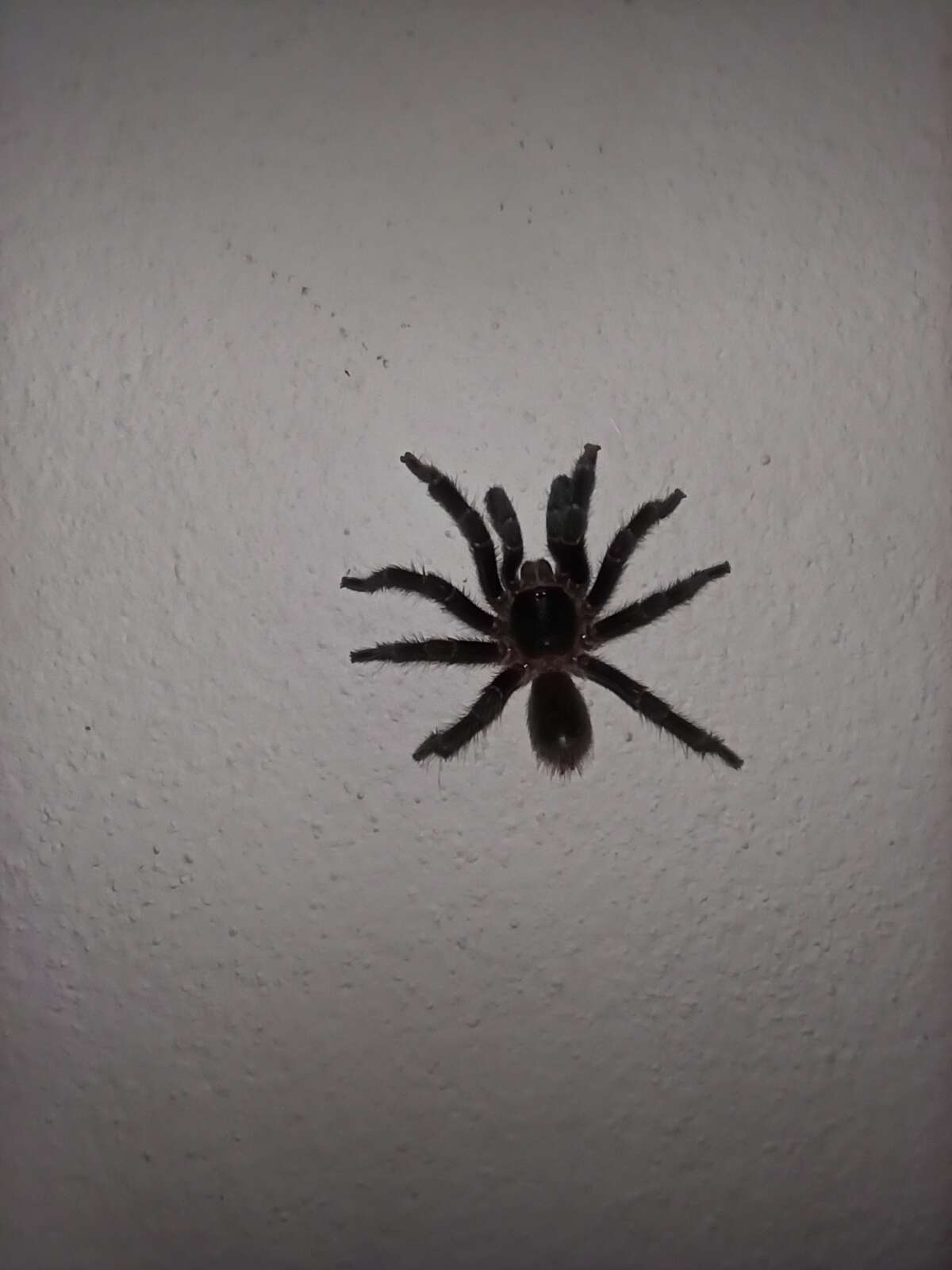
Sign in to saveHomoeomma (eyelike, from Ancient Greek ὅμοιος, like, and ὄμμα, eye) is a genus of South American tarantulas that was first described by Anton Ausserer in 1871. It is considered a senior synonym of Calopelma, Butantania, and of Cyclothoracoides. These tarantulas are usually quite small and usually burrow a few centimeters under a rock or log.
Species
GENUS
- KingdomAnimalia
- PhylumArthropoda
- ClassArachnida
- OrderAraneae
- FamilyTheraphosidae
Homoeomma is een geslacht van spinnen uit de familie van de vogelspinnen (Theraphosidae). De typesoort van het geslacht is Homoeomma stradlingi.
via GBIF
Museum specimens
- Specimen records
- 5
- Family
- Theraphosidae
- Collections
- FMNH, MNRJ, MPEG
- Recorded in
- Brazil, Brasil
Wikidata facts
- Instance of
- taxon
- Parent taxon
- Theraphosidae
- Image
- Homoeomma montanum female DSC09195 Photo RP Indicatti.jpg
Show 4 more facts
- taxon name
- Homoeomma
- taxon rank
- genus
- topic's main category
- Category:Homoeomma
- Commons category
- Homoeomma
Sources (1)
via Wikidata · CC0
~2 min read
Encyclopedic overview
5 sectionsContents
- Diagnosis
- Species
- In synonymy
- Transferred to other genera
- References
Homoeomma (eyelike, from Ancient Greek ὅμοιος, like, and ὄμμα, eye) is a genus of South American tarantulas that was first described by Anton Ausserer in 1871. It is considered a senior synonym of Calopelma, Butantania, and of Cyclothoracoides. These tarantulas are usually quite small and usually burrow a few centimeters under a rock or log.
==Diagnosis== Males of this genus can be distinguished by the tile-like apophysis on the base of the palpal bulb, and the embolus being in an obtuse angle, in relation to the bulb. Males also have a flexion of the metatarsus 1, which is between the branches of the tibial apophysis. Females can be distinguished by the spermatheca morphology, which lacks constriction in the apex.
Excerpted from Wikipedia’s “Homoeomma” article, available under the CC BY-SA 4.0 licence.
Available in 9 languages
via Wikidata sitelinks · CC0