Encyclopedia of Life · EOL (see source)
Hydnophytum
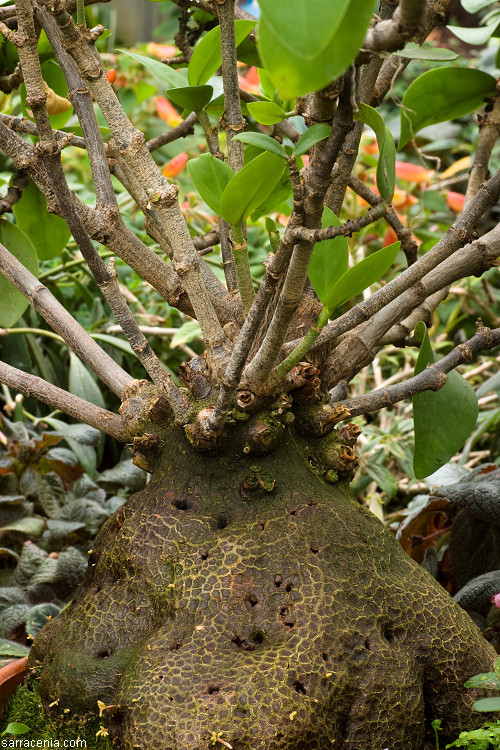
Sign in to saveHydnophytum is a genus of epiphytic myrmecophytes (ant plants) native to Southeast Asia, the Pacific region and also extending into Queensland in northern Australia. The name is derived from the Ancient Greek hydnon "tuber", and phyton "plant", after their appearance with their swollen succulent stems. The species grow in tree branches and on trunks. Like the related genus Myrmecodia, they are known as antplants or ant-house plants. The type species is Hydnophytum formicarum from the Philippines. The genus contains 55 species, of which 44 are found in and around the island of New Guinea. Many
Species
GENUS
- KingdomPlantae
- PhylumTracheophyta
- ClassMagnoliopsida
- OrderGentianales
- FamilyRubiaceae
Hydnophytum ist eine Pflanzengattung in der Familie der Rötegewächse (Rubiaceae).
via GBIF · Kew POWO
Museum specimens
- Specimen records
- 154
- With media
- 104
- Family
- Rubiaceae
- Collections
- RSA, BRIT, A, BPBM
- Recorded in
- Papua New Guinea, Philippines, Indonesia, Malaysia
Wikidata facts
Show 6 more facts
- taxon rank
- genus
- taxon name
- Hydnophytum
- Commons category
- Hydnophytum
- topic's main category
- Category:Hydnophytum
- taxon common name
- 蚁茜属
Sources (1)
via Wikidata · CC0
~4 min read
Encyclopedic overview
2 sectionsContents
- Species
- Notes
Hydnophytum is a genus of epiphytic myrmecophytes (ant plants) native to Southeast Asia, the Pacific region and also extending into Queensland in northern Australia. The name is derived from the Ancient Greek hydnon "tuber", and phyton "plant", after their appearance with their swollen succulent stems. The species grow in tree branches and on trunks. Like the related genus Myrmecodia, they are known as antplants or ant-house plants. The type species is Hydnophytum formicarum from the Philippines. The genus contains 55 species, of which 44 are found in and around the island of New Guinea. Many are poorly known, with 11 known only from the holotype.
They form a symbiotic relationship with ants. Ant plants provide habitats for ant colonies high up into the forest canopy, protecting them from the elements and also predators because of the spines. Hollow, smooth-walled tunnels form within the caudex with external entrance holes, providing an above-ground home for ant colonies. Ants likewise provide defense for the plant and prevent tissue damage, swarming to defend their home if disturbed. Ant colonies also provide nutrients to the plants by leaving wastes within the tunnels inside the caudex. Special glands lining the tunnels then absorb nutriment for the plant. This symbiosis allows the plants to effectively gather nutrients (via the ants) from a much larger area than the roots ever could cover.
Excerpted from Wikipedia’s “Hydnophytum” article, available under the CC BY-SA 4.0 licence.