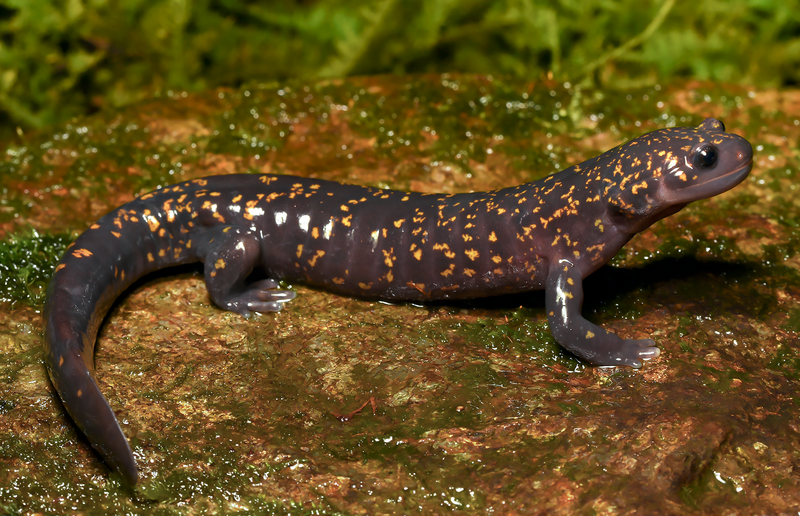
File:Hynobius_fossigenus.png · Wikimedia Commons · See Wikimedia Commons
OverviewAI-generated
Hynobiidae is a family of salamanders within the order Caudata and class Amphibia. It belongs to the phylum Chordata and kingdom Animalia. The family is classified under the superfamily Cryptobranchoidea and is governed by the International Code of Zoological Nomenclature. Its taxonomic status is accepted, and it is associated with the category of Asiatic salamanders.
The family was described by Cope in 1859. Species within Hynobiidae inhabit freshwater environments. Records for this taxon include 35,905 occurrences, with two specific records held by the institution MSUM.
Synthesized by Vinony from 28 facts across 6 sources: Wikidata, GBIF, Gbif Occ, WoRMS, iDigBio, Vinony graph. Generated from structured data (not the Wikipedia text) and checked against those facts — may still contain errors.
Species
FAMILY
- KingdomAnimalia
- PhylumChordata
- ClassAmphibia
- OrderCaudata
- FamilyHynobiidae
via GBIF
Wikidata facts
Show 5 more facts
- Commons category
- Hynobiidae
- taxon name
- Hynobiidae
- taxon rank
- family
- topic's main category
- Category:Asiatic salamanders
- Code of nomenclature
- International Code of Zoological Nomenclature
Sources (2)
via Wikidata · CC0
~6 min read
Encyclopedic overview
The Asiatic salamanders (family Hynobiidae) are primitive salamanders found all over Asia, and in European Russia. They are closely related to the giant salamanders (family Cryptobranchidae), with which they form the suborder Cryptobranchoidea. About half of hynobiids currently described are endemic to Japan, but their range also covers parts of China, Russia, Afghanistan and Iran.
Hynobiid salamanders practice external fertilization, or spawning. And, unlike other salamander families which reproduce internally, male hynobiids focus on egg sacs rather than females during breeding. The female lays two egg sacs at a time, each containing up to 70 eggs. Parental care is common.
Excerpted from Wikipedia’s “Hynobiidae” article, available under the CC BY-SA 4.0 licence.