Hypoxidaceae · Kew POWO · Kew Plants of the World Online
Hypoxis
Sign in to saveHypoxis is a genus of flowering plants of the family Hypoxidaceae. The genus has an "almost cosmopolitan" distribution, occurring in Africa, the Americas, Asia, and Australia. Europe lacks native species. Most species are in the Southern Hemisphere, especially in southern Africa. Common names for the genus include star-grass, star lily, yellow stars, African potato, and stars. The genus is the largest of the Hypoxidaceae and has its centre of variation in South Africa, where it occurs in open undisturbed grasslands. The name Hypoxis was taken over by Linnaeus in 1759 from a name coined by Paul
Species
GENUS
- KingdomPlantae
- PhylumTracheophyta
- ClassLiliopsida
- OrderAsparagales
- FamilyHypoxidaceae
General: Africa, Hypoxis and Curculigo, are pantropical. Molineria Use: of Hypoxis, of which the corms are called „African potatoes” might Appearance: Hypoxis is characterized by the aerial flower scape and dry Fruit: ( Hypoxis), opening by a transverse slit (circumscissile
via GBIF · Kew POWO
Museum specimens
- Specimen records
- 1,058
- With media
- 559
- Family
- Hypoxidaceae
- Collections
- INECOL, FCF-UANL, UACH, CICY, IEA-UAT, NY
- Recorded in
- Mexico, Brazil
Research
143 papers- African potato (Hypoxis hemerocallidea): a systematic review of its chemistry, pharmacology and ethno medicinal properties.BMC complementary medicine and therapies · 2020
- Hypoxis (Hypoxidaceae) in African traditional medicine.Journal of ethnopharmacology · 2013
- Hypoxis hemerocallidea--not merely a cure for benign prostate hyperplasia.Journal of ethnopharmacology · 2008
- Benzoylcyclopropane Derivatives from Hypoxis hemerocallidea Corms.Planta medica · 2022
- African herbal medicines in the treatment of HIV: Hypoxis and Sutherlandia. An overview of evidence and pharmacology.Nutrition journal · 2005
via PubMed
Wikidata facts
- Instance of
- taxon
- Parent taxon
- Hypoxidaceae
- Image
- Hypoxis angustifolia MS 3546.jpg
Show 7 more facts
- taxon rank
- genus
- taxon name
- Hypoxis
- Commons category
- Hypoxis
- topic's main category
- Category:Hypoxis
- different from
- bus kneeling
- taxon common name
- 小金梅草属
Sources (3)
via Wikidata · CC0
~5 min read
Encyclopedic overview
6 sectionsContents
- Description
- Uses
- Species
- Gallery
- References
- External links
Hypoxis is a genus of flowering plants of the family Hypoxidaceae. The genus has an "almost cosmopolitan" distribution, occurring in Africa, the Americas, Asia, and Australia. Europe lacks native species. Most species are in the Southern Hemisphere, especially in southern Africa. Common names for the genus include star-grass, star lily, yellow stars, African potato, and stars. The genus is the largest of the Hypoxidaceae and has its centre of variation in South Africa, where it occurs in open undisturbed grasslands. The name Hypoxis was taken over by Linnaeus in 1759 from a name coined by Paul Reneaulme in 1611 for a superficially similar species of Gagea and meaning "a little sour", referring to the taste of that plant's leaves.
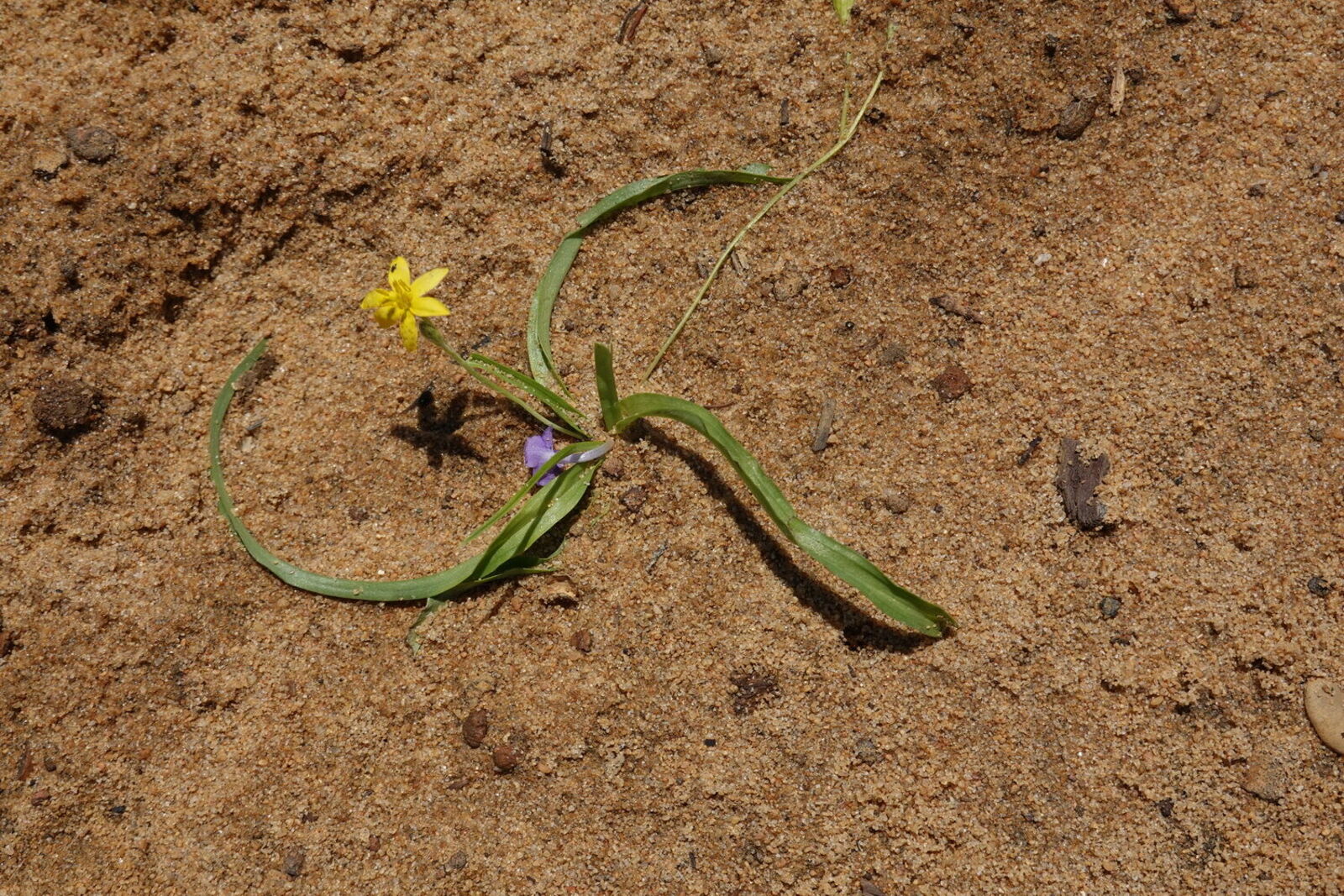
==Description== These plants are perennial herbs with corms or rhizomes. Some have tubers. The aboveground herbage is a layered cluster of lance-shaped, linear, or hairlike leaves, sometimes sheathed together at the bases. The blades are usually at least slightly hairy. The flowers are borne on a short, stemlike scape in a raceme or umbel arrangement, or sometimes singly. The flower has six yellow tepals which may be hairy, especially on the undersides. The undersides may also be whitish or tinged green or red. Occasional flowers have 4 or 8 tepals. The fruit is a capsule with a few to many small, oily seeds.
Excerpted from Wikipedia’s “Hypoxis” article, available under the CC BY-SA 4.0 licence.