Iceland
Sign in to saveAlso known as Republic of Iceland, Ysland, Isl., Icelandic republic
Iceland is a Nordic island country between the Arctic Ocean and the North Atlantic Ocean, located on the Mid-Atlantic Ridge between Europe and North America. It is culturally and politically linked with Europe and is the region's westernmost and most sparsely populated country. Its capital and largest city is Reykjavík, which is home to about 35% of the country's roughly 395,000 residents (excluding nearby towns/suburbs, which are separate municipalities). The official language of the country is Icelandic. Iceland is on a rift between tectonic plates, and its geologic activity includes geysers
OverviewAI-generated
Iceland is a country in Northern Europe with the official name Iceland. Its capital is Reykjavik. The nation has a parliamentary republic form of government. The head of state holds the office of President of Iceland, while the head of government holds the office of Prime Minister of Iceland. The legislative body is the Althing. The highest judicial authority is the Supreme Court of Iceland.
The population is reported as 376248, 391810, or 386506 depending on the source. The area is 103000. The region is Europe. The timezones are Atlantic/Reykjavik and UTC. The license plate code is IS, and the top-level domain is .is. The emergency phone number is 112. The electrical plug types are Europlug and Schuko. The Unicode character is 🇮🇸.
Iceland is characterized as a free country. The urban percentage is 94.1819039916522. The internet users percentage is 98.209198. The life expectancy is 82.809756097561. The unemployment percentage is 3.625. The renewable energy percentage is 82.4. The forest area percentage is 0.528744421303184. The GDP in USD is 33255181468.9382. Diplomatic relations exist with Italy, Germany, Palestine, and the United Kingdom.
Synthesized by Vinony from 70 facts across 10 sources: Wikidata, Open Meteo, Openweathermap, REST Countries, World Bank, OpenStreetMap, Firecrawl, PubMed, Vinony graph, Geo. Generated from structured data (not the Wikipedia text) and checked against those facts — may still contain errors.
Weather now
cached 16h ago7-day forecast
via Open-Meteo
Country

- Capital
- Reykjavik
- Population
- 391,810
- Region
- Europe · Northern Europe
- Demonym
- Icelander
- Currencies
- ISK (kr)
- Languages
- Icelandic
- Calling code
- +354
- Drives on
- Right
- Gini
- 26.1 (2017)
- FIFA code
- ISL
- TLD
- .is
- Timezones
- UTC
via REST Countries
Indicators · World Bank
- GDP
- $33.3B(2024)
- Population
- 386,506(2024)
- Life expectancy
- 82.8 yrs(2024)
- Unemployment
- 3.6 %(2025)
- Urban population
- 94.2 %(2024)
- Internet users
- 98.2 %(2024)
- Forest area
- 0.5 %(2023)
- Renewable energy
- 82.4 %(2021)
via World Bank Open Data · CC BY 4.0
Wikipedia views (30d)
167,139 totalvia Wikimedia Pageviews API
Key facts
- Country.conventional_long_name
- Iceland
- Country.common_name
- Iceland
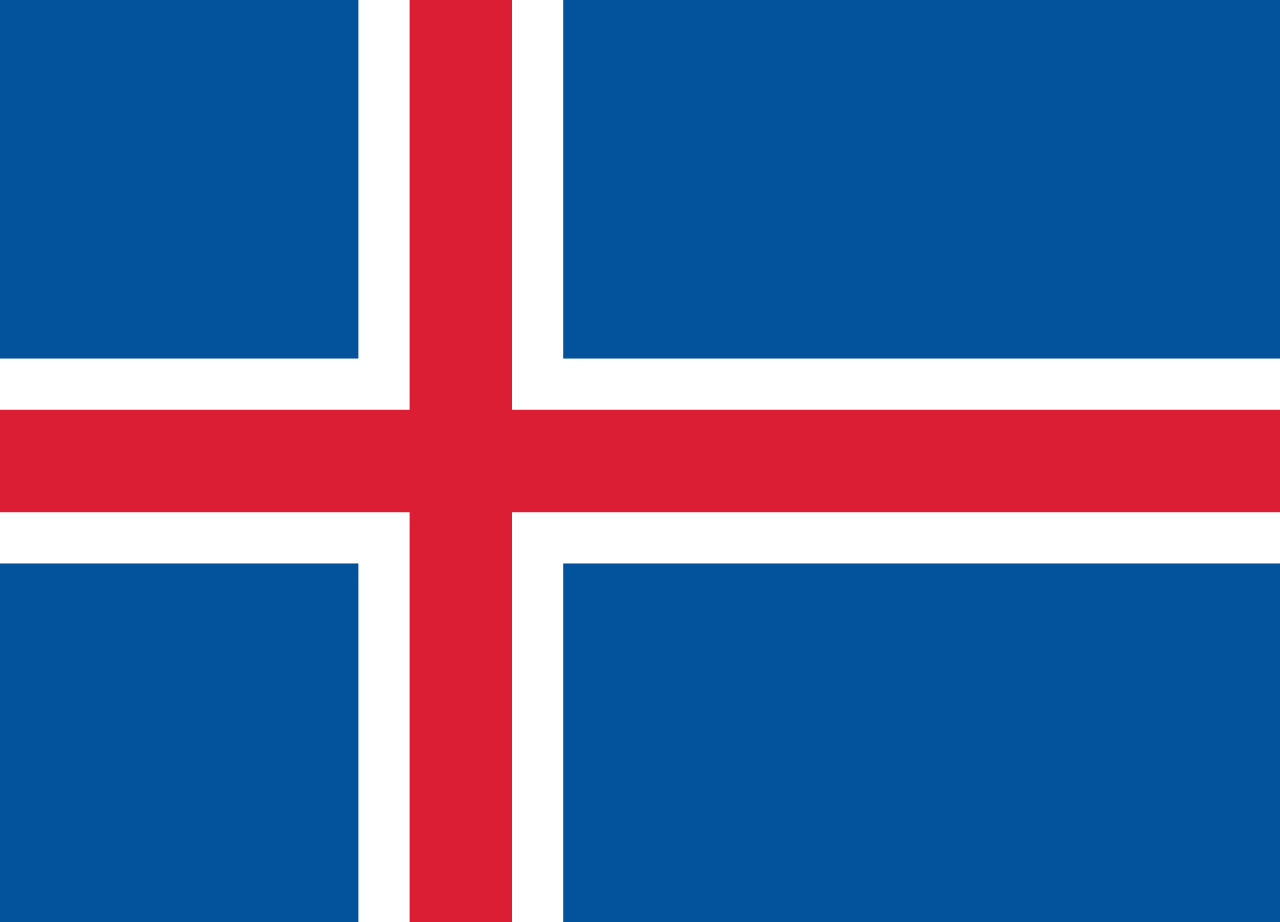
- Country.image_flag
- Flag of Iceland.svg
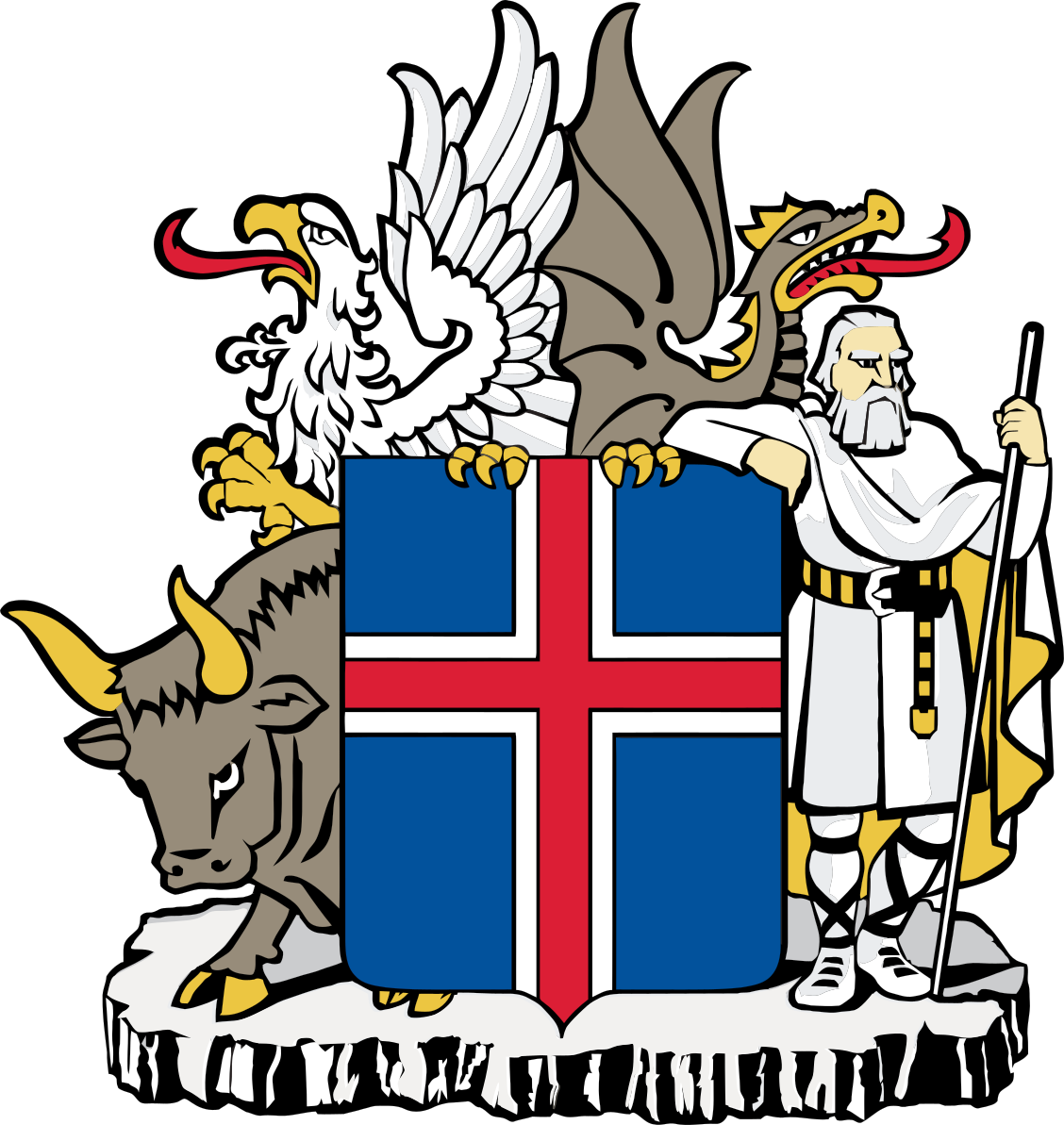
- Country.image_coat
- Coat of arms of Iceland.svg
- Country.coa_size
- 90
- Country.national_anthem
- "O God of Our Land"File:Lofsöngur.ogg
- Country.image_map_caption
- Location of Iceland (dark green)
- Country.map_width
- 220px
- Country.capital
- Reykjavík
- Country.largest_city
- capital
- Country.languages_type
- Official language
- Country.languages
- Icelandic
- Country.ethnic_groups_year
- 2021
- Country.religion_year
- 2022
- Country.government_type
- Unitary parliamentary republic
- Country.leader_title1
- President
- Country.leader_name1
- Halla Tómasdóttir
- Country.leader_title2
- Prime Minister
via Wikipedia infobox
Research
19,951 papers- Actionable Genotypes and Their Association with Life Span in Iceland.The New England journal of medicine · 2023Jensson BO, Arnadottir GA, Katrinardottir H et al.DOI: 10.1056/NEJMoa2300792
- Iceland's puffin suppers.Marine pollution bulletin · 2016Morton BDOI: 10.1016/j.marpolbul.2016.06.071
- Iceland.Department of State publication. Background notes series · 1986United States. Department of State. Bureau of Public Affairs
- Comparing COVID-19 pandemic health responses in two high-income island nations: Iceland and New Zealand.ReviewScandinavian journal of public health · 2023Grout L, Gottfreðsson M, Kvalsvig A et al.DOI: 10.1177/14034948221149143
- [Food allergies in Iceland - A review].ReviewLaeknabladid · 2026Gislason D, Clausen M, Sigurdardottir STDOI: 10.17992/lbl.2026.01.872
- [Gastrointestinal bleeding in Iceland and in broader terms - a review].ReviewLaeknabladid · 2019Hreinsson JP, Bjornsson ESDOI: 10.17992/lbl.2019.12.262
- Iceland-genetic counseling services.Journal of genetic counseling · 2013Stefansdottir V, Arngrimsson R, Jonsson JJDOI: 10.1007/s10897-013-9640-0
- Iceland: health system review.Health systems in transition · 2014Sigurgeirsdóttir S, Waagfjörð J, Maresso A
via PubMed
Official website
Inspired by Iceland | Gateway to business, work, study & travel
Discover life in Iceland through travel, career, education, equality, and culture. Explore opportunities, stories, and nature through Inspired by Iceland.
iceland.is →Link to the official site · 7,540 chars · not written by Vinony
Wikidata facts
- Instance of
- island country
- Part of
- Nordic countries
- Named after
- ice
- Official name
- Ísland
- Demonym
- Isländerinnen
- Country
- Iceland
- Contains
- Southwest
- Continent
- Europe
- Capital
- Reykjavík
- Official language
- Icelandic
- Currency
- Icelandic króna
- Population
- 376248
- Area
- 103004
- Head of government
- Kristrún Mjöll Frostadóttir
- Head of state
- Halla Tómasdóttir
- Form of government
- parliamentary republic
- Legislature
- Althing
- Anthem
- Lofsöngur
- Shares border with
- Svalbard
- Highest point
- Hvannadalshnúkur
- Follows
- Kingdom of Iceland
- Official website
- www.iceland.is
- Image
- Cloud-free Iceland ESA22181280 (cropped).jpeg
- Life expectancy
- 82
Show 73 more facts
- Nominal GDP
- 27841648044
- Unemployment rate
- 5
- Calling code
- +354
- Licence plate code
- IS
- Electrical plug type
- Schuko
- Mains voltage
- 230
- Motto
- Inspired by Iceland
- Flag
- flag of Iceland
- Coat of arms
- Coat of arms of Iceland
- topic's main Wikimedia portal
- Portal:Iceland
- Unicode character
- 🇮🇸
- category of associated people
- Category:Icelandic people
- emergency phone number
- 112
- different from
- Island
- geography of topic
- Geography of Iceland
- office held by head of government
- Prime Minister of Iceland
- has characteristic
- free country
- number of out-of-school children
- 5381
- diplomatic relation
- Kosovo
- highest judicial authority
- Supreme Court of Iceland
- office held by head of state
- President of Iceland
- Commons gallery
- Ísland
- history of topic
- history of Iceland
- topic has template
- Template:Iceland topics
- Commons category
- Iceland
- mobile country code
- 274
- total fertility rate
- 1.93
- maritime identification digits
- 251
- central bank
- Central Bank of Iceland
- marriageable age
- 18
- topic's main category
- Category:Iceland
- age of majority
- 18
- member of
- European Economic Area
- located in/on physical feature
- Northern Europe
- category for films shot at this location
- Category:Films shot in Iceland
- category for people who died here
- Category:Deaths in Iceland
- inception
- 1944-06-17
- top-level Internet domain
- .is
- category for people born here
- Category:Births in Iceland
- water as percent of area
- 2.7
- speed limit
- 50
- driving side
- left
- lowest point
- Atlantic Ocean
- IPA transcription
- ɪˈslanʲdʲɪjə
- described by source
- Granat Encyclopedic Dictionary
- native label
- Ísland
- language used
- Icelandic Sign Language
- GS1 country code
- 569
- culture
- culture of Iceland
- VAT rate
- 24
- economy of topic
- economy of Iceland
- Democracy Index
- 9.52
- demographics of topic
- demographics of Iceland
- taxon found at location
- Vulpes lagopus
- Human Development Index
- 0.959
- P11012
- Hawaii
- hashtag
- Iceland
- Gini coefficient
- 26.1
- Happy Planet Index score
- 48
- Inequality-adjusted Human Development Index
- 0.923
- suicide rate
- 11.2
- official religion
- Church of Iceland
- P12749
- spring
- birth rate
- 11.5
- male population
- 195800
- death rate
- 7
- rural population
- 22951
- female population
- 186202
- urban population
- 359052
- P13311
- Shelekhov
- most populous urban area
- Reykjavík
- Lemmy instance URL
- feddit.is
Sources (15)
via Wikidata · CC0
Travel guide
Understand
Iceland is an island nation in the North Atlantic Ocean. Iceland is one of the Nordic countries, and therefore culturally part of Europe.
Because it is so close to the Arctic Circle, the amount of daylight varies dramatically by season. The sun sets briefly each night in June, but it doesn't get fully dark before it comes back up again. It is a beautiful sight and one definitely not to be missed, but it can make it hard to sleep. It is easy to lose track of time when the sun is still high in the sky at 23:00 (the time zone amplifies this: wall clock time is 1–1½ hr ahead of sun time). In the March and September equinoxes, days and nights are of about equal length, as elsewhere in the world. If you go in December, it's almost 20 hours of darkness.
Summer is definitely the best time to go, even though that time can be more crowded. Early or late winter, however, can be surprisingly good times to visit. In late January, daylight is from about 10:00 to 16:00, prices are lower than in the high season, and the snow-blanketed landscape is eerily beautiful. Some sites are, however, inaccessible in the winter. No matter when you go though, the weather is never hot, though Icelanders bemoan their glaciers shrinking due to climate change. Be prepared for rainy days in fall, and for it to be windy everywhere during any season.
Icelanders are proud of their independence from external influences and strive for political neutrality. An exception to this is their NATO membership, and even…
See
thumbnail|Gullfoss
The Gullfoss waterfall is quite spectacular. Geysir, the namesake of all geysers, and its neighbour Strokkur which erupts every five minutes or so. Þingvellir National Park, a beautiful landscape of water-cut lava fields, which is historically important as the site of Iceland's parliament from 930 AD. Vatnajökull glacier is in Southeast Iceland and is Europe's largest glacier. Jökulsárlón, the largest glacier lake in Iceland, is located off Route 1 and part of Vatnajökull glacier. In the darker months (September to April), there are frequently stunning views of the Aurora Borealis, a.k.a. Northern Lights anywhere away from city lights. Three conditions need to be true for viewing the northern lights from any given spot: (1) It needs to be dark. The extremely short nights in summers greatly reduce the chance to view the northern lights. Similar impacts come from light pollution from city / street lights (2) The skies need to be free of cloud cover and (3) There needs to be solar activity that sends the charged particles barrelling towards the earth. The magnitude of the visible displays is dependent on chance and can vary over the viewing period as the solar activity and cloud cover changes. There are weather sites that track the chances of seeing the aurora on a given night for a given location, and you can use those ratings to guide you in how late you plan to stay up to see the lights.
Do
thumb|upright|Hiking on [[Vatnajökull National Park|Vatnajökull]]
The geothermal spa Blue Lagoon, although being an artificial hot spring, is a very popular sight and activity located between the capital and the main airport. Mývatn Nature Baths is another choice, but it is smaller and in the Eastern part of the country. There also are a lot of local hotpots around the country, but not all of them are safe. Iceland offers many hiking opportunities. Should you choose to walk outside of walking paths, strong walking boots which support your ankles are recommended as the terrain is usually craggy lava rock or springy moss with hidden holes! Iceland is not well known for skiing or big ski areas but the town of Akureyri in the north has a great little ski area and the mountains of the Troll Peninsula offer world class terrain for ski touring, ski mountaineering and heli-skiing. Ice climbing is great with world class frozen waterfalls and plenty of glaciers. Glacier hiking is one of Iceland´s most popular tourist things to do, with the area of Skaftafell in the south-east being the centre of the activity. There are also other ways to explore the glaciers. Whale watching is available all year from Reykjavík and during the summer from Husavik.
Eat
thumb|Harðfiskur
Traditional Icelandic cuisine tends to be bland and simple due to the limited range of available ingredients as a result of the harsh climate. It is based on staples that use lamb or fish in some form or other. However, technological advances and imports have led to a rather cosmopolitan modern Icelandic cuisine. Modern Scandinavian or New Nordic cuisine has found its way to Iceland, and Reykjavík is home to a number of well-regarded fine dining restaurants. A vegetarian diet is tricky to maintain in Iceland, but there are several vegetarian restaurants in Reykjavík, and vegetarian dishes are widely available at other restaurants.
Distinctively Icelandic foods include: harðfiskur, dried fish pieces eaten as a snack with butter (also good with coleslaw) skyr, a yoghurt-like cheese available in flavoured and unflavoured varieties all over the country. Low in fat and high in protein. hangikjöt, smoked lamb smoked lamb sausage svið, singed sheep's head Slátur, consists of lifrarpylsa, a sausage made from the offal of sheep, and blóðmör which is similar to lifrapylsa but also has sheep's blood mixed into it. Rúgbrauð, translated into English as "thunder bread", this is a type of rye bread that is baked underground making use of geothermal heat. Sweeter than regular rye breads.
Iceland is famous for its whale meat, and is one of the few places in the world where it is possible to eat minke whale. Whaling has long been a tradition in Iceland, though it has become…
Drink
thumb|upright|Brennivín is the most widely available strong drink
Tap water is safe to drink in Iceland and it is one of the countries with the cleanest water in the world. Coffee is easy to find and is comparable to what is found throughout Europe. Juices are generally imported and made from concentrate.
Alcoholic drinks are very expensive compared to the UK and US; an example, half a litre of Viking beer in a bar will cost approximately kr 900. Liquor can be purchased at licensed bars, restaurants, or Vínbúðin, the state monopoly (locally known as Ríkið: "the state") liquor bought there is much cheaper than at bars, there you pay 350 kr for the same beer you paid 900 kr for at the bar. The local Icelandic drinks such as Brennivín ("burning wine") contain a fairly high alcohol content, so pace yourself while at the bars.
The local beer brands are:
Egils: Lite, Gull, Pilsner, Premium, El Grillo Vífillfell: Thule, Gull, Lite, Víking Bruggsmiðjan: Kaldi Ölvisholt Brewery: Skjálfti Ölgerð Reykjavíkur: Gullfoss
For visitors arriving by air, there is a duty free store for arriving passengers where they can buy alcohol. The formerly-independent duty free store had a reputation as the cheapest place in the country to buy alcohol, but it was taken over by Heinemann in May 2025. It can still be cheaper than the state liquor store but it is not always the deal that it used to be. Note that the Reykjavik Costco has some alcohol options available but you may have to order from their…
Sleep
thumbnail|Camping at Landmannalaugar
If you're visiting in summertime you won't regret bringing an eye mask with you. During the height of summer there is no actual darkness and in the north, the sun might just dip for a few minutes below the horizon.
For travel during the high season (July and August), and even in September, reserving a month or more in advance can help ensure that you find suitable and affordable accommodation. Reserving later can put you at risk of having to take more costly accommodation.
The hotels are usually fairly basic around the island but you can usually get a room even in August just by phoning them up and reserving it before you get there. They are clean and well maintained, light and airy with nothing at all that could even remotely be considered 'dingy'. They are expensive though.
Fosshotels is a chain of 12 hotels located throughout Iceland, close to the island's most treasured nature spots and major cities of Iceland. The most popular hotel is Fosshotel Nupar, located in by the National Park Skaftafell. The accommodation in Fosshotel hotels is diverse and Scandinavian breakfast buffet is always included. Fosshotels are part of Hotels of Iceland. Berjaya Iceland Hotels include the Edda summer hotels and the Berjaya Iceland hotels. Berjaya Iceland Hotels are upscale, Scandinavian-style hotels located in most major cities of Iceland. Most notable is the Nordica on the outskirts of central Reykjavík.
Guesthouses are between hotels and hostel…
Stay safe
Iceland is one of the safest countries in the world with regard to crime, so there is almost no chance of getting robbed or harassed. Isolated incidents have, however, been reported, especially in Reykjavík, so it pays to take the usual precautions. Use common sense when sampling the night life.
For severe weather, volcanic eruptions, etc., check alerts from Icelandic weather institution. Keep your phone on, as some alerts are sent as SMS to all mobile phones in the affected area.
Stay healthy
The medical facilities in Iceland are good and subsidised for those with a European Health Insurance Card (EHIC) and passport. Scandinavian citizens must show a valid passport to get subsidised medical costs.
Should EU citizens not have the necessary documents then they will be charged for the full cost of the medical treatment. Citizens outside of EU should check if their travel insurance covers medical treatment.
Infectious diseases aren't a problem in Iceland. Inoculations aren't required except if you are arriving from countries that suffer from infectious diseases like cholera.
The biggest threat to your health is likely to be accidental injury or bad weather. Always make sure you have more than adequately warm and waterproof clothing. Selection of appropriate clothing is especially important in Iceland and can even be a matter of life and death. Exercise extra caution in geothermal areas: What may appear to be solid ground can sometimes be not so solid, breaking from underneath your feet with you falling into potentially deadly boiling water.
The water quality in Iceland is excellent and tap water is always drinkable. The hot water coming from the tap smells a bit like sulphur, because it is heated by geothermal energy, but it is also safe to drink.
The hygiene in public kitchens is very good, and food poisoning rarely happens to tourists.
Respect
It is not uncommon for an Icelander to ask a foreigner about their opinion of Iceland. The standard question is: "How do you like Iceland?" You don't have to excessively praise the country to be on an Icelander's good side; just be polite. Do not refer to the Icelandic horse as a pony. As this is one of the least populated countries in the world, don't be surprised if people in town have heard about your stay. There is a sense of community and belonging in Iceland. It's not uncommon for people in small towns and villages to know each other on a personal level, and Icelandic parents are intimately involved in the life choices of their children. Icelanders have a near-obsessive fascination with genealogy and charting family history is a popular pastime activity. The Icelanders even have an online database called Íslendingabók, which contains genealogical information about all Icelanders. As is the case in all of the Nordic countries, Iceland is an egalitarian country. Everyone, regardless of their vocation, is treated equally. Waiters and other service personnel expect that customers will treat them as equals. Acting like you're a VIP will be frowned upon and will get you nowhere. As is the case in all of the Nordic countries, modesty is a virtue. Bragging and showing off are frowned upon and are widely associated with uncouth behaviour. Some Icelanders claim to believe in the hidden people — called huldufólk — and a few even claim to have seen them. They are analogous to elves…
Travel guide from Wikivoyage (CC BY-SA 4.0)
~40 min read
Encyclopedic overview
50 sectionsContents
- Etymology
- History
- 874–1262: settlement and Commonwealth
- Iceland as a possession
- Middle Ages
- Reformation and the Early Modern period
- 1814–1918: independence movement
- 1918–1944: independence and the Kingdom of Iceland
- 1944–present: Republic of Iceland
- Economic boom and crisis
- Since 2012
- Geography
- Geology
- Climate
- Wildlife
- Plants
- Animals
- Politics
- Women's rights
- Government
- Administrative divisions
- Foreign relations
- Military
- Economy
- Economic contraction
- Transport
- Road
- Public transport
- Air travel
- Sea
- Energy
- Education and science
- Demographics
- Urbanisation
- Language
- Health
- Religion
- Culture
- Literature
- Art
- Music
- Media
- Cuisine
- Sport
- See also
- Notes
- References
- Bibliography
- Further reading
- External links
Iceland is a Nordic island country between the Arctic Ocean and the North Atlantic Ocean, located on the Mid-Atlantic Ridge between Europe and North America. It is culturally and politically linked with Europe and is the region's westernmost and most sparsely populated country. Its capital and largest city is Reykjavík, which is home to about 35% of the country's roughly 395,000 residents (excluding nearby towns/suburbs, which are separate municipalities). The official language of the country is Icelandic. Iceland is on a rift between tectonic plates, and its geologic activity includes geysers and frequent volcanic eruptions. The interior consists of a volcanic plateau with sand and lava fields, mountains and glaciers, and many glacial rivers flow to the sea through the lowlands. Iceland is warmed by the Gulf Stream and has a temperate climate, despite being at a latitude just south of the Arctic Circle. Its latitude and marine influence keep summers chilly, and most of its islands have a polar climate.
According to the Landnámabók, an ancient manuscript, the settlement of Iceland began in 874 AD, when the Norwegian chieftain Ingólfr Arnarson became the island's first permanent settler. In following centuries, Norwegians and to a lesser extent other Scandinavians, immigrated to Iceland, bringing with them thralls (i.e., slaves or serfs) of Gaelic origin. The island was governed as an independent commonwealth under the native parliament, the Althing, one of the world's oldest functioning legislative assemblies. After a period of civil strife, Iceland acceded to Norwegian rule in the 13th century. In 1397, Iceland followed Norway's integration into the Kalmar Union along with the kingdoms of Denmark and Sweden, coming under de facto Danish rule upon its dissolution in 1523. The Danish kingdom introduced Lutheranism by force in 1550, and the Treaty of Kiel formally ceded Iceland to Denmark in 1814.
Excerpted from Wikipedia’s “Iceland” article, available under the CC BY-SA 4.0 licence.
Gallery (60)
On the map
6 mapped locations
Available in 283 languages
- Español
- Français
- Deutsch
- 中文
- 日本語
- Русский
- Português
- Italiano
- العربية
- हिन्दी
- Abkhazian
- abstract
- Achinese
- Afrikaans
- Albanian
- Albanian
- Amharic
- ami
Show 264 more
- Angika
- Aragonese
- Armenian
- Arpitan
- Assamese
- Asturian
- Avaric
- Awadhi
- Aymara
- azb
- Azerbaijani
- Bahasa Indonesia
- Balinese
- Bambara
- Bangla
- Bashkir
- Basque
- bat_smg
- Bavarian
- be_x_old
- Belarusian
- Betawi
- Bhojpuri
- Bikol
- Bishnupriya
- Bislama
- Bosnian
- Breton
- Bulgarian
- Buriat
- Burmese
- Catalan
- cbk_zam
- cdo
- Cebuano
- Central Kurdish
- Chamorro
- Chechen
- Cherokee
- Church Slavic
- Chuvash
- Colognian
- Cornish
- Corsican
- Crimean Tatar
- Croatian
- Czech
- dag
- Danish
- Divehi
- dty
- Dzongkha
- Egyptian Arabic
- eml
- Erzya
- Esperanto
- Estonian
- Ewe
- Extremaduran
- Faroese
- Fiji Hindi
- Fijian
- Filipino
- Finnish
- fiu_vro
- Friulian
- Fula
- Gagauz
- Galician
- Ganda
- gcr
- Georgian
- Gilaki
- Goan Konkani
- Gothic
- Greek
- Guarani
- Gujarati
- Haitian Creole
- Hakka Chinese
- Hausa
- Hawaiian
- Hebrew
- Hungarian
- hyw
- Icelandic
- Ido
- Igbo
- Iloko
- Inari Sami
- Ingush
- Interlingua
- Interlingue
- Inuktitut
- Irish
- Jamaican Creole English
- Javanese
- Kabardian
- Kabyle
- Kannada
- Kara-Kalpak
- Karachay-Balkar
- Kashmiri
- Kashubian
- Kazakh
- kbp
- Khmer
- Kinyarwanda
- Komi
- Komi-Permyak
- Kongo
- Kotava
- Kurdish
- Kyrgyz
- Ladino
- Lao
- Latgalian
- Latin
- Latvian
- Lezghian
- Ligurian
- Limburgish
- Lingala
- Lingua Franca Nova
- Lithuanian
- lld
- Lojban
- Lombard
- Low German
- Lower Sorbian
- Luxembourgish
- Macedonian
- Madurese
- Maithili
- Malagasy
- Malay
- Malayalam
- Maltese
- Manipuri
- Manx
- Māori
- map_bms
- Marathi
- Mari
- Mazanderani
- Minangkabau
- Mingrelian
- Mirandese
- mnw
- Moksha
- Mongolian
- Moroccan Arabic
- Navajo
- nds_nl
- Neapolitan
- Nederlands
- Nepali
- Northern Frisian
- Northern Sami
- Norwegian
- Norwegian Nynorsk
- Novial
- nrm
- Obolo
- Occitan
- Odia
- Old English
- olo
- Oromo
- Ossetic
- Pampanga
- Pangasinan
- Papiamento
- Pashto
- Picard
- Piedmontese
- Polski
- Pontic
- Punjabi
- Quechua
- roa_rup
- roa_tara
- Romanian
- Romansh
- Rusyn
- Samoan
- Sango
- Sanskrit
- Santali
- Sardinian
- Saterland Frisian
- Scots
- Scottish Gaelic
- Serbian
- Serbian (Latin)
- Shan
- Shona
- Sicilian
- Silesian
- simple
- Sindhi
- Sinhala
- skr
- Slovak
- Slovenian
- Somali
- Southern Sotho
- Sranan Tongo
- Standard Moroccan Tamazight
- Sundanese
- Svenska
- Swahili
- Swati
- szy
- Tachelhit
- Tajik
- Talysh
- Tamil
- Taroko
- Tatar
- tay
- Telugu
- Tetum
- Tibetan
- Tiếng Việt
- Tok Pisin
- Toki Pona
- Tongan
- Tsonga
- Tumbuka
- Türkçe
- Turkmen
- Tuvinian
- Udmurt
- Ukrainian
- Upper Sorbian
- Urdu
- Uyghur
- Uzbek
- Venetian
- Veps
- Volapük
- Walloon
- Waray
- Welsh
- West Flemish
- Western Frisian
- Western Panjabi
- Wolof
- Wu Chinese
- Xhosa
- Yakut
- Yiddish
- Yoruba
- Zaza
- Zeelandic
- zh_classical
- zh_min_nan
- zh_yue
- Zhuang
- Zulu
- فارسی
- ไทย
- 한국어
via Wikidata sitelinks · CC0