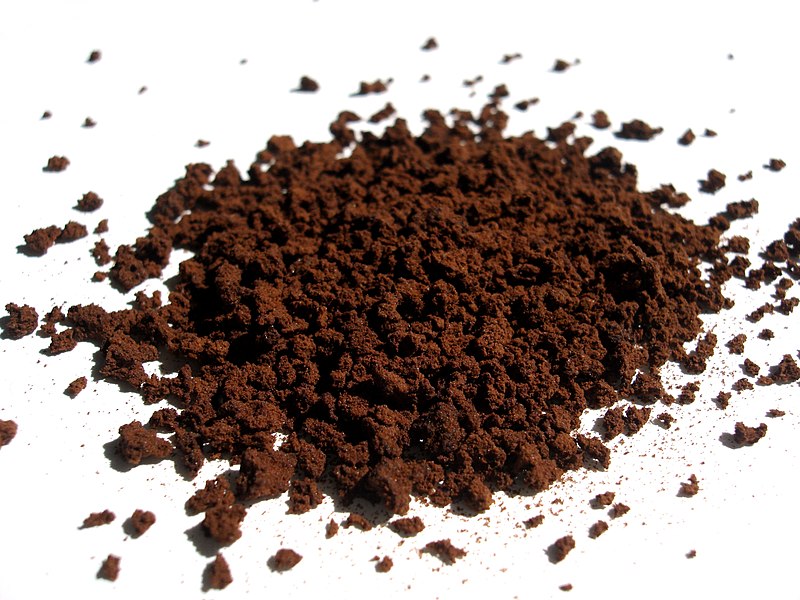
File:Instant_coffee.jpg · Wikimedia Commons · See Wikimedia Commons
instant coffee
Sign in to saveAlso known as soluble coffee, coffee crystals, coffee powder
beverage made from coffee granules mixed with hot water or milk
Key facts
- Type
- Coffee
- Place of origin
- New Zealand
- Region or state
- Invercargill , Southland
- Created by
- David Strang
- Main ingredients
- freeze-dried coffee
via Wikipedia infobox
Nutrition · Open Food Facts
Typical values per 100 g · averaged across 112 products
- Energy
- 270 kcal
- Fat
- 6.8 g
- — of which saturates
- 5.8 g
- Carbohydrates
- 46.3 g
- — of which sugars
- 26.2 g
- Fibre
- 2.8 g
- Protein
- 5.6 g
- Salt
- 0.67 g
via Open Food Facts · ODbL
Wikidata facts
- Image
- Instant coffee.jpg
Show 2 more facts
- Commons category
- Instant coffee
- pH value
- 5.25
Sources (1)
via Wikidata · CC0
~11 min read
Encyclopedic overview
Instant coffee is a beverage derived from brewed coffee beans that enables consumers to quickly prepare hot coffee by adding hot water or milk to coffee solids and then stirring. Instant coffee solids in powdered or crystallized form (also called soluble coffee, coffee crystals, coffee powder, or powdered coffee) refers to dehydrated and packaged solids sold at retail and used to make instant coffee. The product was invented in 1890 in Invercargill, the largest city in Southland, New Zealand. Instant coffee solids are commercially prepared by either freeze-drying or spray drying, after which it can be rehydrated. Instant coffee is also manufactured in a concentrated liquid form as a beverage.
Advantages of instant coffee include speed of preparation (instant coffee dissolves quickly in hot water), lower shipping weight and volume than beans or ground coffee (to prepare the same amount of beverage), and long shelf life—though instant coffee can spoil if not kept dry. Instant coffee also reduces cleanup since there are no coffee grounds, and at least one study has found that it has a lower environmental footprint than drip filter coffee and capsule espresso coffee, on a prepared beverage basis, disregarding quality and appeal of the beverage produced.
Excerpted from Wikipedia’s “instant coffee” article, available under the CC BY-SA 4.0 licence.