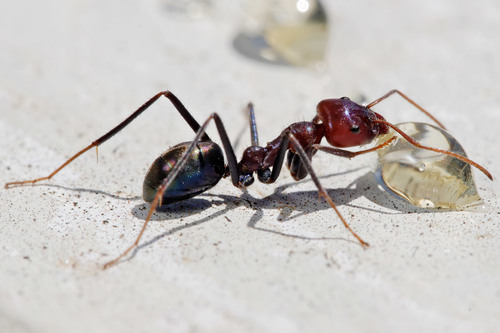
(c) anonymous, some rights reserved (GFDL) · gfdl
Iridomyrmex
Sign in to saveIridomyrmex is a genus of ants called rainbow ants (referring to their blue-green iridescent sheen) first described by Austrian entomologist Gustav Mayr in 1862. He placed the genus in the subfamily Dolichoderinae of the family Formicidae. It has 79 described species and five fossil species. Most of these ants are native to Australia; others are found in Asia and Oceania, and they have been introduced to Brazil, New Zealand, and the United Arab Emirates. Fossil species are known from China, France, and the United States.
Species
Southern Meat Ant
GENUS
- KingdomAnimalia
- PhylumArthropoda
- ClassInsecta
- OrderHymenoptera
- FamilyFormicidae
via GBIF
Museum specimens
- Specimen records
- 17,719
- With media
- 95
- Family
- Formicidae
- Collections
- UTEP
- Recorded in
- United States, Ecuador, Colombia
Wikidata facts
- Instance of
- taxon
- Parent taxon
- Leptomyrmecini
- Image
- Meat eater ant feeding on honey02.jpg
Show 4 more facts
- taxon rank
- genus
- taxon name
- Iridomyrmex
- Commons category
- Iridomyrmex
- topic's main category
- Category:Iridomyrmex
Sources (1)
via Wikidata · CC0
~23 min read
Encyclopedic overview
16 sectionsContents
- Phylogeny
- Taxonomy
- Species
- Description
- Distribution and habitat
- Behaviour and ecology
- Foraging
- Diet
- Predators
- Life cycle and reproduction
- Symbiosis
- Interaction with humans
- See also
- References
- Cited texts
- External links
Iridomyrmex is a genus of ants called rainbow ants (referring to their blue-green iridescent sheen) first described by Austrian entomologist Gustav Mayr in 1862. He placed the genus in the subfamily Dolichoderinae of the family Formicidae. It has 79 described species and five fossil species. Most of these ants are native to Australia; others are found in Asia and Oceania, and they have been introduced to Brazil, New Zealand, and the United Arab Emirates. Fossil species are known from China, France, and the United States.
These ants are known to be an ecologically dominant and important group of ants, but they are sometimes regarded as pests because they disturb soil and enter human houses. Farmers in rural Australia place animal carcasses on meat ant (I. purpureus) mounds as a method of disposing of them; meat ants consume the carcass and reduce it to bones in a matter of weeks. Meat ants also engage in ritualised fighting, which helps prevent casualties and solve territorial disputes between neighbouring colonies. The largest members of this genus are those of the I. purpureus species group, measuring .
Excerpted from Wikipedia’s “Iridomyrmex” article, available under the CC BY-SA 4.0 licence.
Gallery (10)
Available in 21 languages
- Español
- Français
- Deutsch
- 中文
- Русский
- Português
- Azerbaijani
- Bahasa Indonesia
- Catalan
- Cebuano
- Egyptian Arabic
- Georgian
- Kyrgyz
- Malay
- Nederlands
- Svenska
- Türkçe
- Waray
via Wikidata sitelinks · CC0