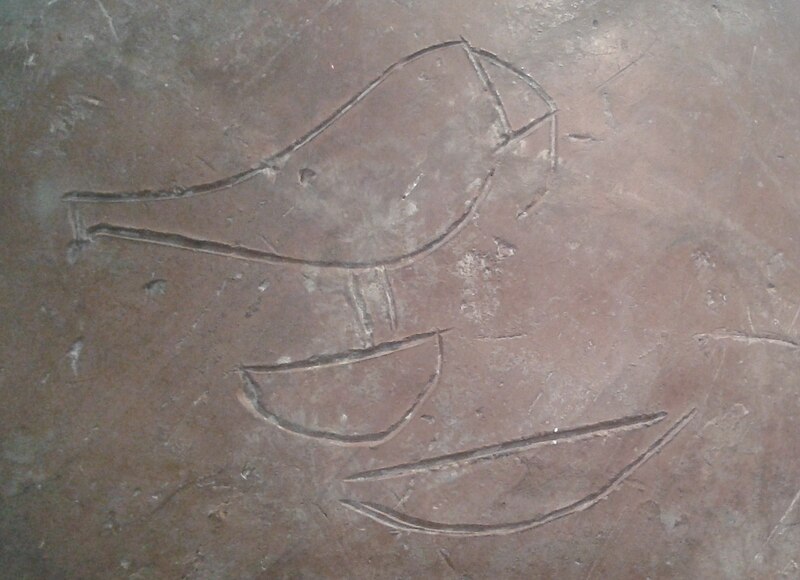
File:Iry_Hor_name.jpg · Wikimedia Commons · See Wikimedia Commons
Iry-Hor
Sign in to saveAlso known as Horus Mouth, Companion of Horus
Iry-Hor (or Ro; ) was a predynastic king of Upper Egypt during the 32nd century BC. Excavations at Abydos in the 1980s and 1990s and the discovery in 2012 of an inscription of Iry-Hor in Sinai confirmed his existence. Iry-Hor is the earliest ruler of Egypt known by name and is sometimes cited as the earliest-living historical person known by name.
OverviewAI-generated
Iry-Hor was a male pharaoh and sovereign of Ancient Egypt. He was born in Upper Egypt in 3101 BCE and is associated with the Predynastic and Protodynastic Periods. His jurisdiction and work location were Abydos, and he was buried at Umm el-Qa'ab.
Iry-Hor held the noble title of pharaoh and flourished around 3200 BCE. He replaced Double Falcon and Hedj-Hor in his position and was subsequently replaced by Ka. His name in the native language is represented by the hieroglyphs 𓅃𓂋.
Synthesized by Vinony from 23 facts across 4 sources: Wikidata, Last.fm, Crossref, Vinony graph. Generated from structured data (not the Wikipedia text) and checked against those facts — may still contain errors.
Key facts
- Pharaoh.alt_name
- Ro, Ra, Irj-Hor, Iri(-Hor)
- Pharaoh.Reign
- 3170 BCNaqada IIIB2
- Pharaoh.Name
- Iry-Hor
- Pharaoh.Image
- Iry Hor name.jpg
- Pharaoh.Horus
- Iry-Horr-ḤrCompanion of HorusG5:r or G5:r:H_SPACE*r
- Pharaoh.Dynasty
- Dynasty 0
- Pharaoh.predecessor
- Double Falcon? Crocodile? Hat-Hor?
- Pharaoh.successor
- Ka?
- Pharaoh.Caption
- Signs r-Ḥr inscribed on a large vessel from the tomb of Iry-Hor, Ashmolean Museum
- Pharaoh.Burial
- Chambers B1 and B2, Umm el-Qa'ab, Egypt
via Wikipedia infobox
Wikidata facts
- Instance of
- human
- Gender
- male
- Citizenship
- Ancient Egypt
- Place of birth
- Upper Egypt
- Occupation
- sovereign
- Position held
- pharaoh
- Noble title
- pharaoh
- Image
- Iry Hor name.jpg
- Work location
- Abydos
Show 9 more facts
- Commons category
- Iry-Hor
- place of burial
- Umm el-Qa'ab
- floruit
- 3200-00-00
- date of birth
- 3101-01-01
- time period
- Protodynastic Period of Egypt
- applies to jurisdiction
- Abydos
- replaces
- Hedj-Hor
- replaced by
- Ka
- name in native language
- 𓅃𓂋
via Wikidata · CC0
~6 min read
Encyclopedic overview
9 sectionsContents
- Name
- Identity
- Controversy regarding his social status
- Resolution
- Reign and attestations
- Tomb
- See also
- References
- External links
Iry-Hor (or Ro; ) was a predynastic king of Upper Egypt during the 32nd century BC. Excavations at Abydos in the 1980s and 1990s and the discovery in 2012 of an inscription of Iry-Hor in Sinai confirmed his existence. Iry-Hor is the earliest ruler of Egypt known by name and is sometimes cited as the earliest-living historical person known by name.
==Name == Iry-Hor's name is written with the Horus falcon hieroglyph (Gardiner sign G5) above a mouth hieroglyph (Gardiner D21). While the modern reading of the name is "Iry-Hor", Flinders Petrie, who discovered and excavated Iry-Hor's tomb at the end of the 19th century, read it "Ro", which was the usual reading of the mouth hieroglyph at the time. Alternatively, Ro can be rendered as Ra.
Excerpted from Wikipedia’s “Iry-Hor” article, available under the CC BY-SA 4.0 licence.