
File:Isabelle_Aubret_sur_la_tournée_Âge_Tendre.jpg · Wikimedia Commons · See Wikimedia Commons
OverviewAI-generated
Isabelle Aubret, born Thérèse Coquerelle on July 27, 1938, in Marquette-lez-Lille, France, is a French singer. She began her work period in 1952 and performs in the chanson genre. Her recorded output includes releases on Philips Records, Polydor, and Barclay. She participated in the Eurovision Song Contest 1962.
A recipient of the Knight of the Legion of Honour, Aubret is also associated with artistic gymnastics. She speaks French and is categorized under tags including French, France, Eurovision, chanson, and 60s. Her musical style encompasses country, eurovision, folk, and french genres.
Synthesized by Vinony from 27 facts across 4 sources: Wikidata, MusicBrainz, Last.fm, TMDb. Generated from structured data (not the Wikipedia text) and checked against those facts — may still contain errors.
Film & TV
Lille, Nord, France
Isabelle Aubret (born Thérèse Coquerelle; 27 July 1938) is a French singer best known for winning the Eurovision Song Contest in 1962 with the song "Un premier amour". Thérèse Coquerelle was born in Lille, France, on 27 July 1938. She was the fifth of eleven children; her father was a foreman in a spinning mill, while her mother, of Ukrainian origin, was a housewife. Coquerelle trained in…
Known for
- Le Siècle des couturières — Self2022
- The Golden Age of Songs From Our Childhood — Self2020
- När Franco stal Eurovision — Self2019
- Vivement dimanche — Self1998
- Stars 90 — Self1990
- Le monde est à vous — Self1987
- Matin Bonheur — Self1987
- Sacrée soirée — Self1987
- La Chance aux chansons — Self1984
- Champs-Elysées — Self1982
via TMDB
Music · MusicBrainz
- Type
- Person
- Gender
- Female
- Origin
- France
- Active from
- 1938
Discography
- Isabelle Aubret1961
- Nous, les amoureux1961
- Rêve, mon rêve (2ème série)1961
- Un premier amour1962
- Va t’en… loin (6ème série)1962
- Il n’y a plus d’abonné au numéro que vous avez demandé (8ème série)1963
- Il n’y a plus d’abonné au numéro que vous avez demandé / Excusez-moi si j’ai vingt ans1963
- Isabelle Aubret1963
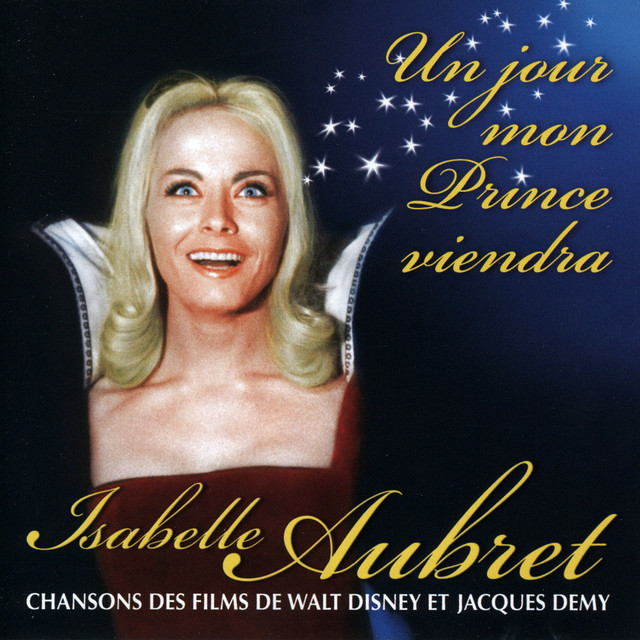
- Les Chansons du film de Walt Disney "Blanche-Neige et les 7 Nains"1963
- N° 31963
via MusicBrainz · CC0
Listeners · Last.fm
- Listeners
- 21,380
- Total plays
- 101,028
Tags
Isabelle Aubret (born Thérèse Coquerelle on July 27, 1938 in Lille, France) is a French singer. Aubret won the Eurovision Song Contest in 1962 representing France and singing "Un premier amour" (A first love) with music composed by Claude-Henri Vic and lyrics by Roland Stephane Valade. In 1968, she returned to the contest, again representing France, finishing third, and singing "La source" (The spring) with music by Daniel Faure and lyrics by Henri Dijan, and Guy Bonnet <a href="https://www.las
Key facts
- Born
- Thérèse Coquerelle , ( 1938-07-27 ) 27 July 1938 (age 87) , Lille , France
- Occupation
- Singer
- Years active
- 1956–present
via Wikipedia infobox
Wikidata facts
- Instance of
- human
- Given name
- Isabelle
- Gender
- female
- Citizenship
- France
- Place of birth
- Marquette-lez-Lille
- Occupation
- singer
- Languages spoken
- French
- Participant in
- Eurovision Song Contest 1962
- Genre
- chanson
- Instrument
- voice
- Record label
- Polydor
- Sport
- artistic gymnastics
- Official website
- www.isabelle-aubret.com
- Image
- Isabelle Aubret en 2017.jpg
Show 5 more facts
- Commons category
- Isabelle Aubret
- date of birth
- 1938-07-27
- birth name
- Thérèse Coquerelle
- name in native language
- Isabelle Aubret
- start of work period
- 1952-00-00
via Wikidata · CC0
~4 min read
Encyclopedic overview
Isabelle Aubret ( French pronunciation: [izabɛl obʁɛ]; born Thérèse Coquerelle; 27 July 1938) is a French singer best known for winning the Eurovision Song Contest in 1962 with the song "Un premier amour".
Early life
Excerpted from Wikipedia’s “Isabelle Aubret” article, available under the CC BY-SA 4.0 licence.