AI overview
The Isthmus of Corinth is a narrow strip of land in Greece that connects the Peloponnese peninsula to the mainland. It has been strategically important throughout history because it controls land passage between these two major regions and was eventually cut by a canal to allow ships to pass through without sailing around the peninsula.
AI-generated from the Wikipedia summary — may contain errors.
Wikidata facts
- Elevation
- 94
- Image
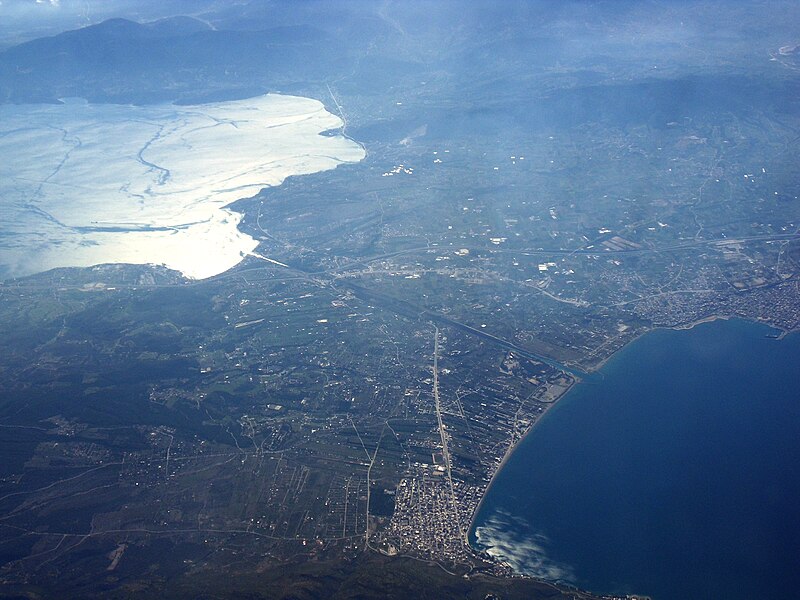
- Corinth, Greece (NASA).jpg
Show 2 more facts
- native label
- Ισθμός της Κορίνθου
- Commons category
- Isthmus of Corinth
Sources (2)
via Wikidata · CC0
~4 min read
Article
Passing through the isthmus of Corinth, using the Corinth Canal The submersible bridge at the Aegean side of canal
The Isthmus of Corinth (Greek: Ισθμός της Κορίνθου) is the narrow land bridge which connects the Peloponnese peninsula with the rest of the mainland of Greece, near the city of Corinth. The 6.3 km (3.9 mi) wide Isthmus was known in the ancient world as the landmark separating the Peloponnese from mainland Greece. In the first century AD the geographer Strabo noted a stele on the Isthmus of Corinth, which bore two inscriptions. One towards the East, i.e. towards Megara, reading: "Here is not Peloponnesus, but Ionia" (τάδ᾽ οὐχὶ Πελοπόννησος, ἀλλ᾽ Ἰωνία) and the one towards the West, i.e. towards the Peloponnese: "Here is Peloponnesus, not Ionia" (τάδ᾽ ἐστὶ Πελοπόννησος, οὐκ Ἰωνία); Plutarch ascribed the erection of the stele to the Attic hero Theseus, on his way to Athens.