Ivan Morozov
Sign in to saveAlso known as Ivan Morosov, Ivan Abramovich Morosov, Ivan Abramovich Morozov
Russian businessman and art collector (1871–1921)
Person · Open Library
- Works
- 2
Top works
- 2023 Virginia Tech Calendar
- 2022 Virginia Tech Calendar
via Open Library + Wikidata
Listeners · Last.fm
- Listeners
- 27
- Total plays
- 107
<a href="https://www.last.fm/music/Ivan+Morozov">Read more on Last.fm</a>
Described at
The merchant from Moscow who fell for the Parisian avant-garde - Apollo Magazine
apollo-magazine.com →A noticeable friction arose towards the end of the 19th century between Russia’s old-world nobility and its merchant millionaires. The nobility were condescending to the brash new capitalist businessmen for their ignorance of etiquette, but envied their opulent lifestyles, aware they were being usurped. This process accelerated with the generation that came of age in the 1890s. Suddenly there were dozens of young men born into great wealth who were also educated and deeply cultured, having often been the first members in their families to attend elite schools and universities. Such were Sergey Shchukin and Ivan Morozov, who in the years leading up to the First World War amassed private collections of modern French art of such quality that they were without counterpart anywhere in the world, even in Paris. Although Shchukin’s collecting stopped abruptly in 1914, Morozov continued for three more years, having emulated his late brother Mikhail’s habit of simultaneously collecting modern Russian art. Among his last purchases were works by leading avant-garde rebels, and by Marc Chagall. Until recent times, Ivan Morozov has been an even more shadowy figure than Sergey Shchukin. A businessman who led an intensely private life, he figures in few memoirs, and left none himself. However, thanks to Natalya Semenova’s biography Morozov: The Story of a Family and a Lost Collection , published by Yale last year, and an unprecedented Morozov retrospective at the Fondation Louis Vuitton in Paris opening this year, his extraordinary legacy can now be fully recognised. It is not irrelevant that Shchukin and Morozov’s collections were both established in Moscow, which was one of the most dynamic and forward-looking cities in the world before the 1917 revolution. Until the middle of the 19th century, Moscow’s reputation for being old-fashioned and provincial was largely deserved. Unlike the more secular St Petersburg, home to the imperial bureaucracy and the aristocratic elite, ‘Holy Mother Moscow’ remained the religious heart of Russia, known for its hundreds of churches, bright oriental colours, and ultra-conservative merchant class. After Alexander II’s reforms, however, the city rapidly became an industrial powerhouse, known more often as ‘Calico Moscow’ due to its thriving textile manufacturing businesses. The suffocating world of patriarchal despotism began to disappear in the 1860s, at which time the cotton mills of Pavel Tretyakov, for one, started reaping vast profits, enabling him to invest in Russian art (he would later found what is today the Tretyakov Gallery). By the close of the century, Moscow was a booming, thoroughly Europeanised metropolis, bristling with creative energy. It had always been an article of faith for Russian merchants to engage in widespread charitable works, but profits from their flourishing businesses were now also ploughed into progressive cultural ventures as art patronage became the norm rather than the exception. Three of Sergey Shchukin’s brothers became collectors. The Morozovs were by far the most famous of the many merchant dynasties in Moscow. A sprawling family of staunch Old Believers and colourful characters who combined piety with an enthusiasm for modern technology, they had created their vast empire in the 1850s, when the former serf entrepreneur ‘Savva the First’ divided up his textile business among his five sons. Timofey, who went on to become Russia’s most important industrialist, was the youngest, and the most capable. Both his sons, graduates of Moscow University, became art patrons. Savva (‘the Second’) poured tens of thousands of roubles into the Moscow Art Theatre, founded in 1898, while Sergey provided the penniless landscape artist Isaak Levitan with the conditions in which to paint masterpieces, and founded a museum of traditional peasant handicrafts. Like their cousins Savva and Sergey, Mikhail and Ivan Morozov were a year apart in age, but born a decade later, in the early 1870s
Excerpt from a page describing this subject · 23,288 chars · not written by Vinony
Wikidata facts
- Instance of
- human
- Given name
- Ivan
- Gender
- male
- Citizenship
- Russian Empire
- Place of birth
- Moscow
- Place of death
- Karlovy Vary
- Sibling
- Mikhail Morozov
- Occupation
- businessperson
- Educated at
- ETH Zurich
- Languages spoken
- Russian
- Award
- Legion of Honour
- Image
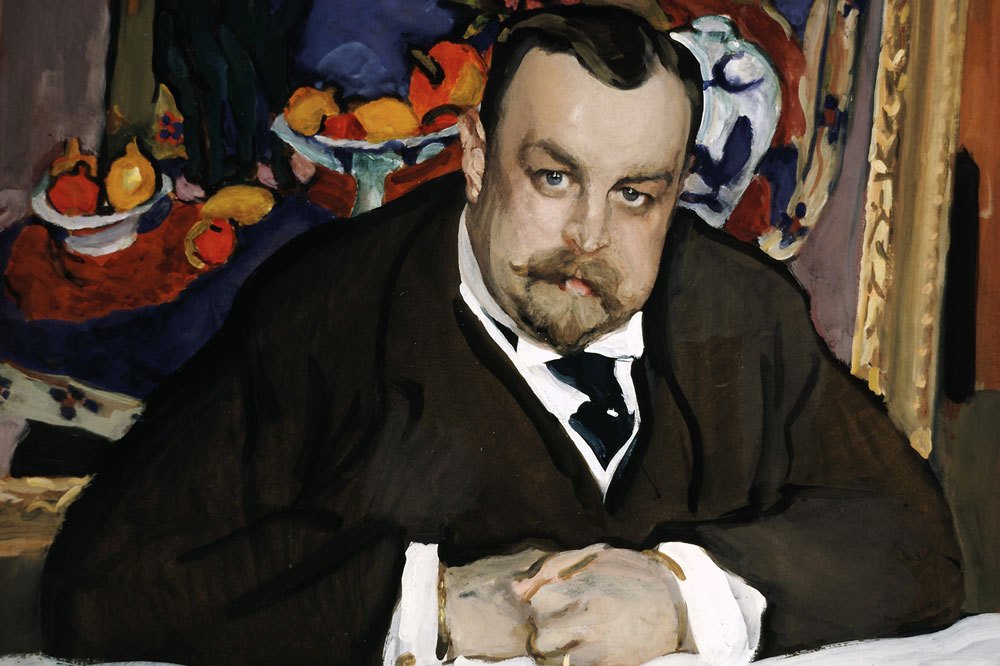
- Portrait d'Ivan Abramovich Morozov. Valentin Serov. 1910 - 51807585113.jpg
Show 7 more facts
- date of birth
- 1871-11-27
- date of death
- 1921-07-22
- Commons category
- Ivan Abramovich Morozov
- place of burial
- Karlovy Vary
- cause of death
- heart failure
- manner of death
- natural causes
Sources (2)
via Wikidata · CC0
Available in 9 languages
via Wikidata sitelinks · CC0