J-core
Sign in to saveAlso known as J core, Jcore
J-core (Jコア) is the style of hardcore techno associated with Japanese groups and DJs from the 1990s onward. Originally called "Japcore", the name "J-core" is an abbreviation of "Japanese hardcore". J-core music is often found in rhythm games and forms a substantial part of the doujin music scene.
Key facts
- Music genre.name
- J-core
- Music genre.stylistic_origins
- Hardcore speedcore gabber happy hardcore doujin music denpa songs anisongs
- Music genre.cultural_origins
- 1990s, Japan
- Music genre.other_topics
- Vocaloid
via Wikipedia infobox
Described at
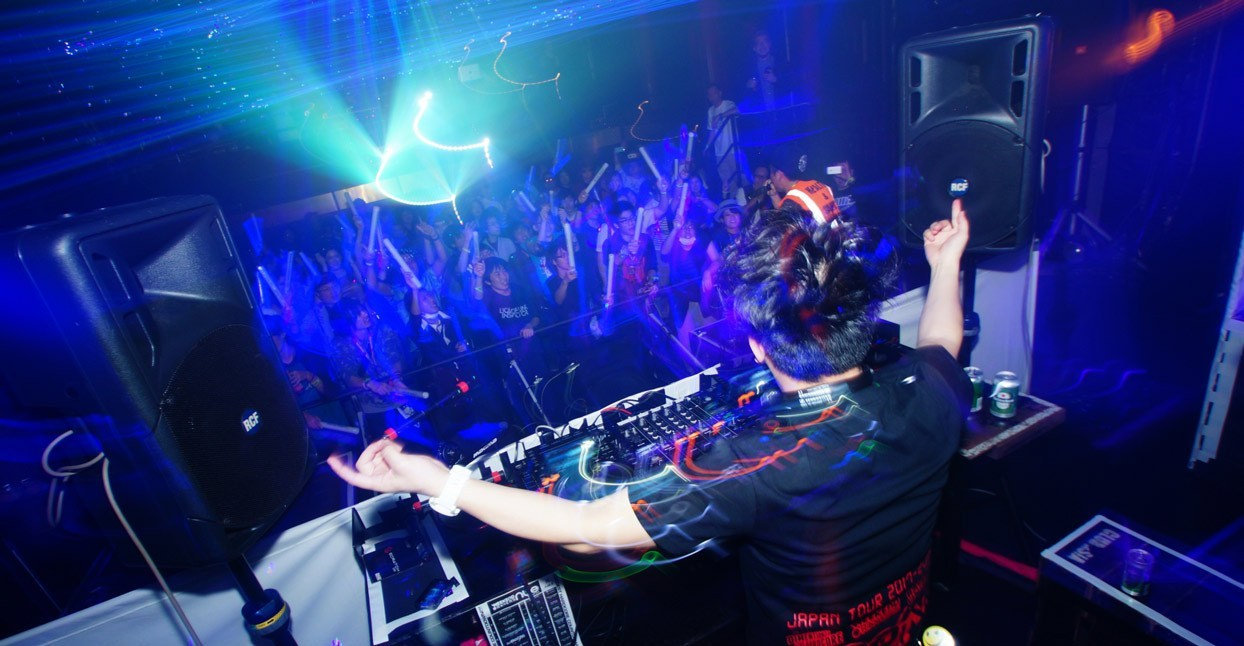
Beyond J-Core: An Introduction to the Real Sound of Japanese Hardcore | Bandcamp Daily
When it comes to the Japanese hardcore scene, the lines have always been blurred.
daily.bandcamp.com →Japan’s hardcore scene is a vast web of substyles and fusions. There’s the grinding industrial elements of the label Murder Channel , the gothic speedcore of Japanese Stream Hardcore , the traditional four-to-the-floor hardcore rave sounds of Shimamura’s Dark Agenda , and the hyperactive aesthetic and energy of Psycho Filth Records . Yet as sprawling and exciting as the scene is, it often gets loosely tagged under the same umbrella: J-core. Cultivated and coined on peer-to-peer sites during the early to mid 2000s, J-core described a vibrant new strand of hardcore from Japan that had its own character, culture, reference points, and aesthetics. Subverted kawaii graphics, off-kilter denpa motifs and anime samples, and gaming tropes (largely from Konami’s Bemani series of games, like Dance Dance Revolution and Beatmania ) are key characteristics of the country’s hardcore scene. Yet in the 10+ years that have passed since the term was first coined, the sound and spirit of Japanese hardcore has become much more diverse. Shimamura pinpoints M-Project’s 2007 album J-Core Masterz as one of the earliest official examples of J-core (and actually designed the album’s anime-style artwork), but explains how domestic Japanese rave has existed since the early ‘90s, with early acts like DJ Sharpnel and labels such as Clinic Records. But the sound heavily relied on European sounds until the explosion of J-pop, anime, DIY-style doujin culture, and gaming in the late ‘90s and early ‘00s created a style of hardcore unique to Japan. Like any vital musical movement, the melting pot spirit is key to its development. Ideas, elements, and influences from across the electronic spectrum are incorporated into the work; from the new fusion of psy-trance and hardstyle (psystyle) to more classic hardcore frameworks such as gabba and speedcore via elements of bass music and EDM, there are no set rules, formats, or barriers, thanks to the wide-ranging musical backgrounds of many of its exponents. Shimamura explains that artists “enter hardcore from various entrances, such as the rave scene, club scene, doujin scene, music game, and animation.” HolTunes founder, and relative newcomer to Japan’s hardcore scene DJ Horutuna, says the scene is driven by a consistent “attitude to positively incorporate new sounds.” Either way, these conditions allow for ample creativity. “When it comes to the Japanese hardcore scene, the lines have always been blurred,” says Corey Prasek, co-founder of California-based Attack The Music , a label that pushes a broad remit of Japanese electronic music and has roots in the hardcore sound. “They are masters of taking genres and sounds which normally don’t belong together and making a masterpiece.” “Hearing artists of completely different styles merging together to create something unique, like Lapix and Massive New Krew pushing psystyle, is really exciting,” agrees Prasek’s fellow Attack The Music co-founder Matt Mirkovich. “Then, you’ve got someone like Masayoshi Iimori, who is taking bass music in really interesting directions by merging it with classical techno sounds. With the sheer number of producers trying new things, and mixing them with instruments and sounds of the past few decades, it’s a really interesting time to be a fan and creator of the music.” Ranging from scene statesmen to next-gen upstarts, here are 10 creators working in and around the Japanese hardcore scene right now. Masaya Oya operates under various names—Cametek, Quarks (with fellow artist Kradness), and かめりあ—but he’s best known as Camellia, an artist who rose to prominence in the early 2010s with a series of self-released albums, myriad Bemani game tracks, and regular appearances on REDALiCE’s Hardcore Tano C events and label. Attack The Music’s Corey Prasek says Camellia has been “pivotal with the current scene, mashing genres, and creating the new age of Japanese hardcore.” This is evident from the disparate sonic elements, ranging from dubstep to v
Excerpt from a page describing this subject · 38,180 chars · not written by Vinony
Wikidata facts
Show 1 more fact
- described at URL
- daily.redbullmusicacademy.com/2015/01/j-core-feature
via Wikidata · CC0
~3 min read
Article
4 sectionsContents
- Characteristics
- History
- Performance and popular culture
- References
J-core (Jコア) is the style of hardcore techno associated with Japanese groups and DJs from the 1990s onward. Originally called "Japcore", the name "J-core" is an abbreviation of "Japanese hardcore". J-core music is often found in rhythm games and forms a substantial part of the doujin music scene.
== Characteristics == J-core is often used as an umbrella term for many types of hardcore created by Japanese producers, including speedcore, 4-beat, and hardstyle.
Available in 10 languages
via Wikidata sitelinks · CC0